
PAGE_HEADER
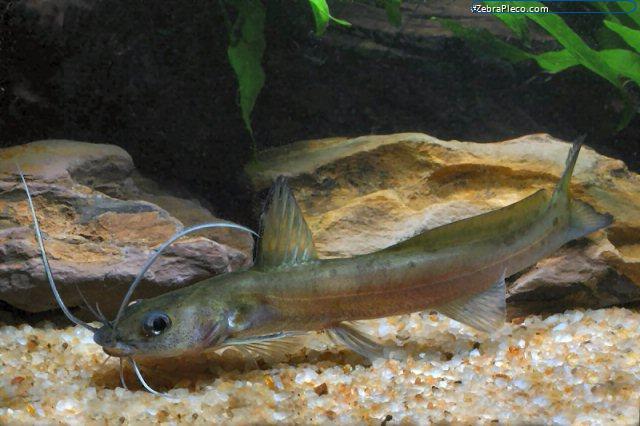
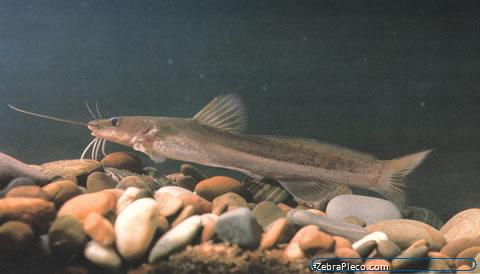
Hemibagrus macropterus Bleeker, 1870
Image Showcase
Photographs, diagnostic angles and morphological variants
Community & Keeper Tally
Member interactions, breeding records and forum mentions
Aquarium Care & Husbandry
Dietary requirements, tank setup, compatibility and breeding
Feeding & Diet
Will eat a wide variety of live, frozen and prepared foods. Meaty foods are particularly relished, as are smaller fishes. [View Member Food Stats]
Aquarium Furniture & Decor
Inhabits clear, swiftly flowing rivers with rocky bottoms; hides among submerged logs or rocks, so provide enough driftwood and rocks for cover.
Compatibility & Suggested Tankmates
Best kept alone, as it will kill anything it cannot eat.
Breeding Notes
Not reported in the aquarium.
In the wild, breeding takes place in June or July, and 1300 to 2000 eggs of up to 1.2 mm are laid. The larvae are fully developed in about 20 days.
Habitat & Water Parameters
Natural distribution, biotope water conditions and temperature ranges
Geographic Distribution
Asia: Yangtze river, China.
China Waters, Yangtze (click on these areas to find other species found there)
Login to view the map.
Species Description & Identification
Morphology, diagnostic traits and sexual dimorphism
Identification
Members of the genus Hemibagrus are bagrid catfishes that can attain standard lengths of up to 800 mm and are found in large rivers throughout the Indian subcontinent,Southeast and East Asia. Members of this genus have depressed heads,rugose head shields not covered by skin,a slender occipital process and moderately long adipose fins.
Single-chambered swim bladder, the adipose fin partially confluent with the principal rays of the caudal fin, and a dark brown body with few very small black spots or no spots.
Sexual Dimorphism (Sexing)
Males have an elongate genital papilla in front of the anal fin.
Taxonomy, Synonyms & Etymology
Classification history, linguistic derivations and variant forms
Synonyms
Mystus macropterus
Pronunciation
HEM ee BAG russ - mak rop ter uss
Etymology
From the Greek hemi- meaning half and bagrus, the catfish genus. The specific epithet comes from the Greek makros, meaning long and pteron, meaning fin; in reference to the long adipose fin.
There are 8 other speciesAcheilognathus macropterus
Bagrichthys macropterus
Calophysus macropterus
Centrarchus macropterus
Chiloglanis macropterus
Chrysichthys macropterus
Creteuchiloglanis macropterus
Scleromystax macropterus with this specific name.
Literature & Resources
Scientific publications, external links and citation tools
Literature & References
External Databases
Related Searches

