PAGE_HEADER
Phalacronotus bleekeri (Günther, 1864)
Image Showcase
Photographs, diagnostic angles and morphological variants

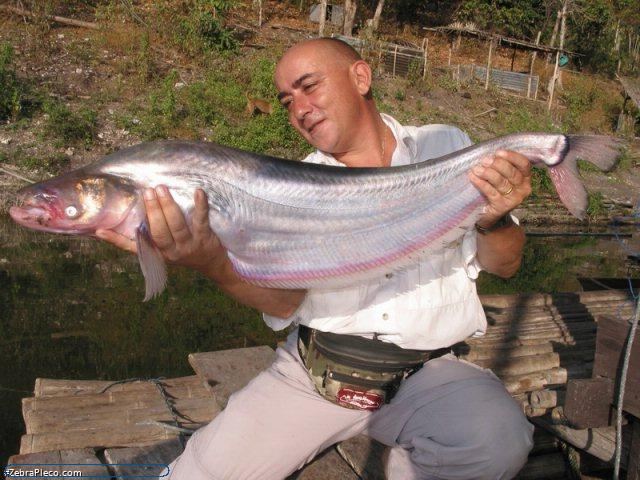
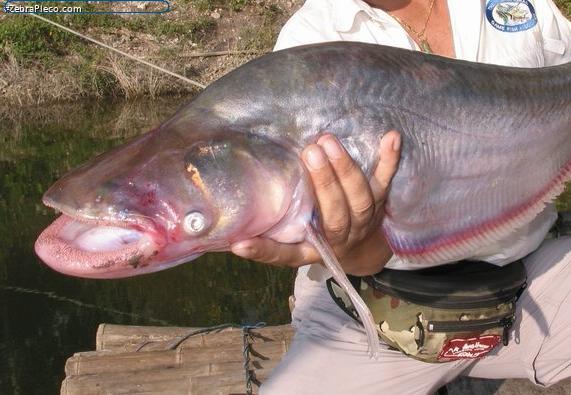
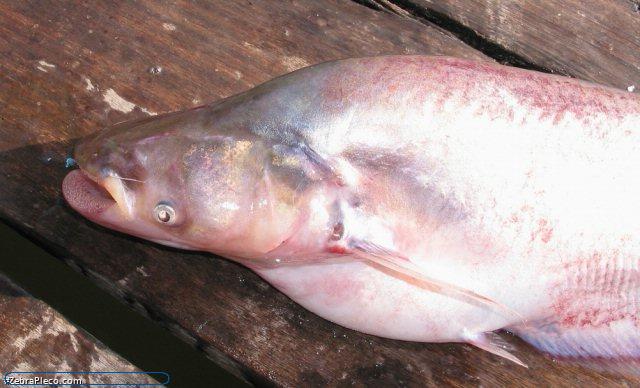
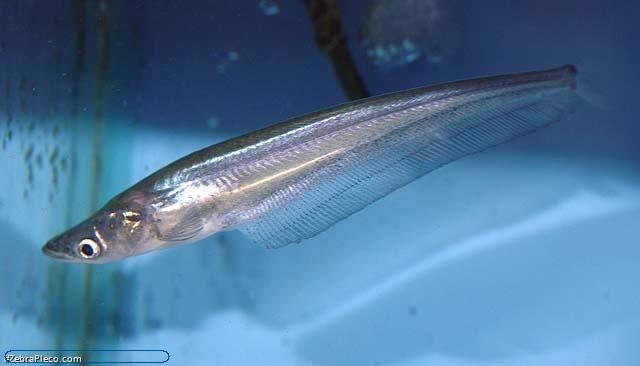
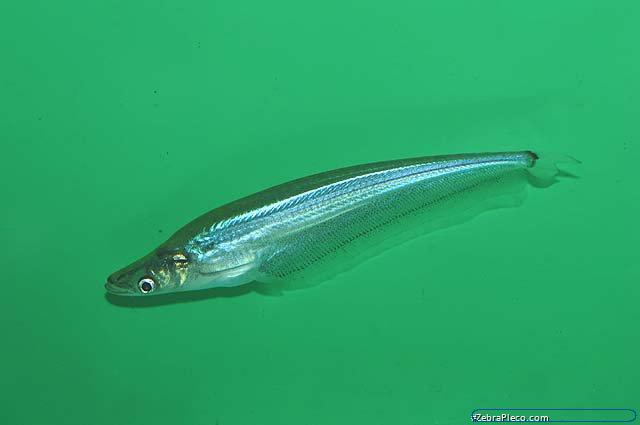
Community & Keeper Tally
Member interactions, breeding records and forum mentions
Aquarium Care & Husbandry
Dietary requirements, tank setup, compatibility and breeding
Feeding & Diet
Readily feeds on live/frozen foods and other prepared foods such as pellets. Will also eat small fishes/shrimps. [View Member Food Stats]
Aquarium Furniture & Decor
This fish is fairly active and needs open spaces to swim in. Provide plenty of vegetation for it to hide in during the day.
Compatibility & Suggested Tankmates
A relatively peaceful species that is compatible with most larger fish. Not safe with small fishes.
Breeding Notes
Undertakes lateral migrations from the Mekong River into smaller tributaries and into the floodplains at the onset of the flood season, returning to the main river channel when the water starts to recede at the beginning of the dry season.
Migrations are triggered by the first rainfall at the end of the dry season, as well as water level changes. Lunar cycle affects also the movements. Returns to the river from the floodplain and tributaries on, or immediately before, the full moon
Eggs are observed in May-September.
Not reported in aquaria.
Habitat & Water Parameters
Natural distribution, biotope water conditions and temperature ranges
Geographic Distribution
Asia: Cambodia and Thailand to Malaysia.
Cambodia waters (click on these areas to find other species found there)
Pacific, Malaysia Waters (click on these areas to find other species found there)
Thailand Waters (click on these areas to find other species found there)
Login to view the map.
Species Description & Identification
Morphology, diagnostic traits and sexual dimorphism
Identification
Head 4 2/3 times in SL; vomerine teeth in smoothly curved band; short maxillary barbel not extending beyond jaw; mandibular barbels shorter than
eye width; caudal peduncle lacking dark blotch at its base. Body depth 5.1-5.9 times in SL. Anal fin rays 77-85.
It is not easy to distinguish the
species of Phalacronotus reliably all the time.
Sexual Dimorphism (Sexing)
Males are more slender and have strong serrations on the posterior edge of the pectoral spine (females lack these serrations).
Taxonomy, Synonyms & Etymology
Classification history, linguistic derivations and variant forms
Synonyms
Cryptopterus bleekeri, Kryptopterus bleekeri, Micronema bleekeri
Pronunciation
- blee kehr aye
Etymology
Named after Pieter Bleeker, who contributed much to the knowledge of Southeast Asian ichthyology.
There are 6 other speciesChasmocranus bleekeri
Luciosoma bleekeri
Mystus bleekeri
Osteochilus bleekeri
Paracetopsis bleekeri
Triplophysa bleekeri with this specific name.
Literature & Resources
Scientific publications, external links and citation tools
Description Reference
Catalogue of the fishes in the British Museum v. 5, pp 44.
External Databases
Related Searches