
PAGE_HEADER
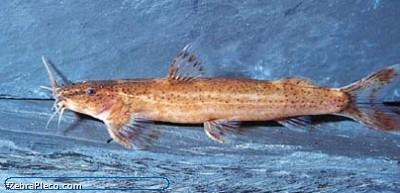
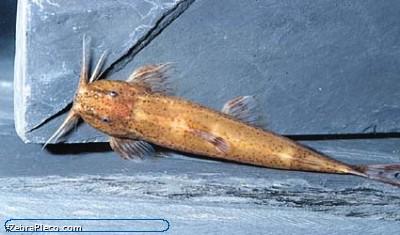
Amphilius sp. (2)
Image Showcase
Photographs, diagnostic angles and morphological variants
Community & Keeper Tally
Member interactions, breeding records and forum mentions
Aquarium Care & Husbandry
Dietary requirements, tank setup, compatibility and breeding
Feeding & Diet
The diet of Amphilius species has been reported to consist predominantly of benthic aquatic insects (Marriott et al. 1997; Skelton 2001; Walsh et al. 2000). [View Member Food Stats]
Breeding Notes
Unreported in the aquarium.
Habitat & Water Parameters
Natural distribution, biotope water conditions and temperature ranges
No geographic distribution or water chemistry data recorded.
Species Description & Identification
Morphology, diagnostic traits and sexual dimorphism
Identification
Most amphiliid species are found in fast-flowing water of clear, rocky streams at high elevations or rapids of large lowland rivers (Berra 2001; Roberts 2003).basins (Seegers et al. 2003). Species of Amphilius are adapted for fast flow and rocky habitats (Skelton 1986). Morphological adaptations for these habitats include expanded pectoral and pelvic fins with a thickened first ray, depressed body, dorsally directed eyes and reduced swim bladder (Skelton 1986; Walsh et al. 2000). The large pelvic fins form, in conjunction with the body, a feeble sucking disc that enables the fish to cling to rocks (Jackson 1961b).
Taxonomy, Synonyms & Etymology
Classification history, linguistic derivations and variant forms
Pronunciation
ahm FILL ee us
Etymology
Amphilius: Not clear; probably from the Greek amphi, meaning both sides and leios, meaning smooth.
There are 24 other speciesAcanthodoras sp(2)
Ancistrus sp(2)
Astroblepus sp(2)
Belonoglanis sp(2)
Brachyrhamdia sp(2)
Cetopsorhamdia sp(2)
Chrysichthys sp(2)
Farlowella sp(2)
Hypoptopoma sp(2)
Hypostomus sp(2)
Imparfinis sp(2)
Mastiglanis sp(2)
Otocinclus sp(2)
Panaqolus sp(2)
Parotocinclus sp(2)
Pimelodella sp(2)
Pseudacanthicus sp(2)
Pseudancistrus sp(2)
Pseudecheneis sp(2)
Rineloricaria sp(2)
Spatuloricaria sp(2)
Tatia sp(2)
Trachelyopterus sp(2)
Xiurenbagrus sp(2) with this specific name.
Literature & Resources
Scientific publications, external links and citation tools
Related Searches

