PAGE_HEADER
Ancistrus sp. (1)
Image Showcase
Photographs, diagnostic angles and morphological variants
Community & Keeper Tally
Member interactions, breeding records and forum mentions
Aquarium Care & Husbandry
Dietary requirements, tank setup, compatibility and breeding
Feeding & Diet
Ancistrus should be fed mainly on vegetarian foods. Prepared foods include algae wafers and spirulina based sinking food. Vegetables such as courgette/zucchini, and (English) cucumber are an excellent addition to the diet, along with the odd, small amount of more meaty foods. [View Member Food Stats]
Compatibility & Suggested Tankmates
A good complement to most aquariums, they are not aggressive to other species. Males may fight over territory if kept in too small a tank.
Tankmates: Appropriate with most community fish that aren't overly big or aggressive.
Breeding Notes
Has been bred in the aquarium.
Habitat & Water Parameters
Natural distribution, biotope water conditions and temperature ranges
No geographic distribution or water chemistry data recorded.
Species Description & Identification
Morphology, diagnostic traits and sexual dimorphism
Identification
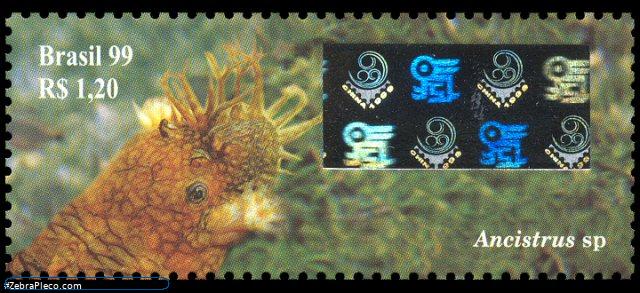
Mature males and sometimes females have soft tentacles (bushy fleshy growths) on the snout - this is unique to the genus Ancistrus.
Sexual Dimorphism (Sexing)
Typical for the genus with males possessing the so-called ''bushy nose''. Females also may have much smaller growths on the head but to a much lesser extent.
Taxonomy, Synonyms & Etymology
Classification history, linguistic derivations and variant forms
Pronunciation
an SISS truss
Etymology
The name Ancistrus is derived from the Greek word agkistron, meaning hook, in reference to the interopercular odontodes that are hooked.
There are 62 other speciesAcanthodoras sp(1)
Acestridium sp(1)
Amphilius sp(1)
Ancistomus sp(1)
Ancistrini sp(1)
Aspidoras sp(1)
Astroblepus sp(1)
Atopochilus sp(1)
Auchenipterichthys sp(1)
Batrochoglanis sp(1)
Belonoglanis sp(1)
Brachyglanis sp(1)
Brachyrhamdia sp(1)
Cetopsis sp(1)
Cetopsorhamdia sp(1)
Chaetostoma sp(1)
Channallabes sp(1)
Chiloglanis sp(1)
Chrysichthys sp(1)
Corydoras sp(1)
Delturus sp(1)
Euchilichthys sp(1)
Farlowella sp(1)
Guyanancistrus sp(1)
Hemiancistrus sp(1)
Hemipsilichthys sp(1)
Hisonotus sp(1)
Hypancistrus sp(1)
Hypoptopoma sp(1)
Hypostomus sp(1)
Imparfinis sp(1)
Lasiancistrus sp(1)
Leporacanthicus sp(1)
Leptorhamdia sp(1)
Lophiobagrus sp(1)
Microsynodontis sp(1)
Myoglanis sp(1)
Nemuroglanis sp(1)
Otocinclus sp(1)
Oxyropsis sp(1)
Panaqolus sp(1)
Panaque sp(1)
Parotocinclus sp(1)
Phreatobius sp(1)
Pimelodella sp(1)
Pseudancistrus sp(1)
Pseudecheneis sp(1)
Pseudolithoxus sp(1)
Pterygoplichthys sp(1)
Rhamdia sp(1)
Rhamdiopsis sp(1)
Rineloricaria sp(1)
Spatuloricaria sp(1)
Sturisomatichthys sp(1)
Synodontis sp(1)
Tatia sp(1)
Taunayia sp(1)
Trachelyopterus sp(1)
Trachyglanis sp(1)
Transancistrus sp(1)
Trichomycterus sp(1)
Xiurenbagrus sp(1) with this specific name.
Literature & Resources
Scientific publications, external links and citation tools
Related Searches