PAGE_HEADER
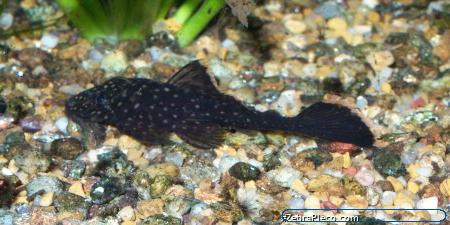
Lasiancistrus sp. (1)
Image Showcase
Photographs, diagnostic angles and morphological variants
Community & Keeper Tally
Member interactions, breeding records and forum mentions
Aquarium Care & Husbandry
Dietary requirements, tank setup, compatibility and breeding
Breeding Notes
Unreported in the aquarium.
Habitat & Water Parameters
Natural distribution, biotope water conditions and temperature ranges
No geographic distribution or water chemistry data recorded.
Species Description & Identification
Morphology, diagnostic traits and sexual dimorphism
Identification
Adult Lasiancistrus can be separated from all other loricariids by the presence of whisker-like odontodes on the cheeks. In addition, they have evertible cheek odontodes; three rows of plates on the caudal peduncle; and a modified, bar-shaped opercle. The caudal fin is slightly emarginate to forked, with the lower lobe longer than upper. Nuptial males have tentacules on the pectoral-fin spines longer than their associated odontodes; and transluscent tentacules on the snout that have odontodes associated with them. Nuptial males lack hypertrophied odontodes on top of the head and lack long, bristle-like odontodes on the leading edge of the pectoral-fin spine.
Sexual Dimorphism (Sexing)
Snout of nuptial males almost square (vs. rounded in females and juveniles). Adult males of most species (except Lasiancistrus tentaculatus) with whisker-like odontodes at anterolateral corner of snout; males of L. tentaculatus have tentacules instead of whisker-like odontodes along anterior margin of snout. Nuptial males have tentacules longer than their associated odontodes on the pectoral-fin spine.
General Remarks
See also Armbruster, J.W. (2005). Neotrop. ichthyol., 3(4):549-569.
Taxonomy, Synonyms & Etymology
Classification history, linguistic derivations and variant forms
Pronunciation
LASS ee an SISS truss
Etymology
Greek, lasios, -a, -on = hairy + Greek, agkistron = hook
There are 62 other speciesAcanthodoras sp(1)
Acestridium sp(1)
Amphilius sp(1)
Ancistomus sp(1)
Ancistrini sp(1)
Ancistrus sp(1)
Aspidoras sp(1)
Astroblepus sp(1)
Atopochilus sp(1)
Auchenipterichthys sp(1)
Batrochoglanis sp(1)
Belonoglanis sp(1)
Brachyglanis sp(1)
Brachyrhamdia sp(1)
Cetopsis sp(1)
Cetopsorhamdia sp(1)
Chaetostoma sp(1)
Channallabes sp(1)
Chiloglanis sp(1)
Chrysichthys sp(1)
Corydoras sp(1)
Delturus sp(1)
Euchilichthys sp(1)
Farlowella sp(1)
Guyanancistrus sp(1)
Hemiancistrus sp(1)
Hemipsilichthys sp(1)
Hisonotus sp(1)
Hypancistrus sp(1)
Hypoptopoma sp(1)
Hypostomus sp(1)
Imparfinis sp(1)
Leporacanthicus sp(1)
Leptorhamdia sp(1)
Lophiobagrus sp(1)
Microsynodontis sp(1)
Myoglanis sp(1)
Nemuroglanis sp(1)
Otocinclus sp(1)
Oxyropsis sp(1)
Panaqolus sp(1)
Panaque sp(1)
Parotocinclus sp(1)
Phreatobius sp(1)
Pimelodella sp(1)
Pseudancistrus sp(1)
Pseudecheneis sp(1)
Pseudolithoxus sp(1)
Pterygoplichthys sp(1)
Rhamdia sp(1)
Rhamdiopsis sp(1)
Rineloricaria sp(1)
Spatuloricaria sp(1)
Sturisomatichthys sp(1)
Synodontis sp(1)
Tatia sp(1)
Taunayia sp(1)
Trachelyopterus sp(1)
Trachyglanis sp(1)
Transancistrus sp(1)
Trichomycterus sp(1)
Xiurenbagrus sp(1) with this specific name.
Literature & Resources
Scientific publications, external links and citation tools
Related Searches