
PAGE_HEADER
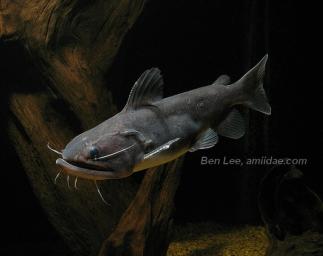
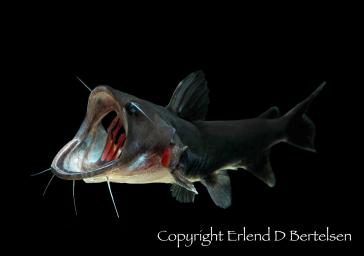
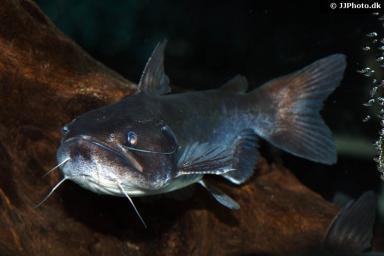
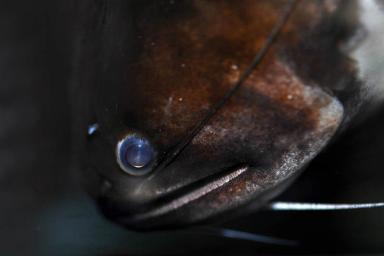
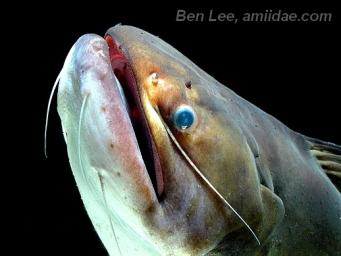 Close-up of head
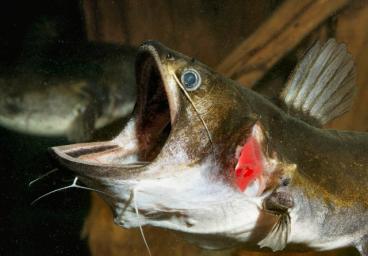 Close-up of extended mouth
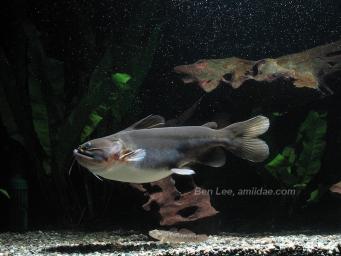
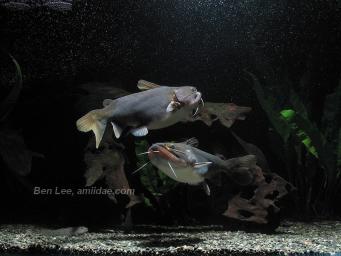
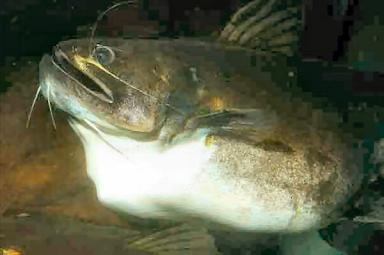 Recently fed
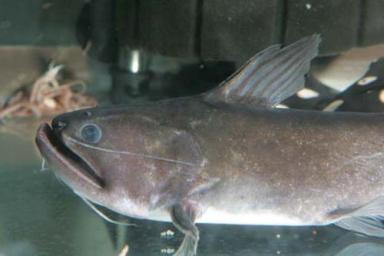
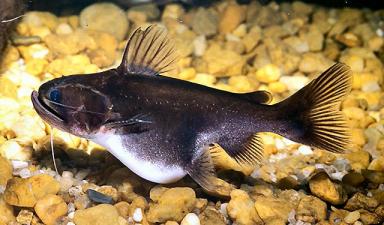
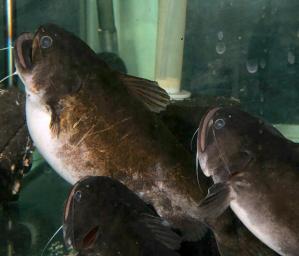 Puffed up with water!
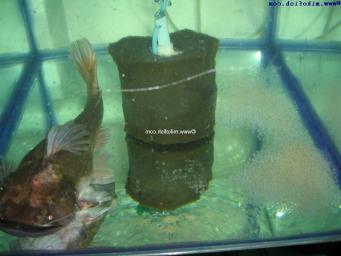 Adult with eggs
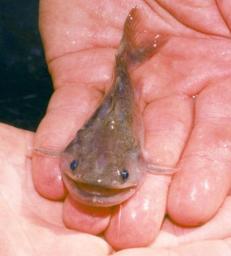
 Video
| ⇓ Zebra Pleco (Hypancistrus zebra) Data Sheet | |
|---|---|
| Scientific Name | Asterophysus batrachus Kner, 1858 |
| Common Names | Gulper Catfish Ogre Catfish, Stormundet Rovmalle (Danish, Denmark) |
| Type Locality | Marabitanos, Brazil. |
| Synonym(s) | |
| Pronunciation | Ass TERR oh fye suss - bat RACK uss |
| Etymology | Asterophysus: From the Greek aster, meaning star and physa, meaning bellows; in reference to the blind viliform processes around the periphery of the swimbladder characteristic of this genus. There is 1 other speciesClarias batrachus with this name. |
| ⇓ Species Information | |
| Size | 250mm or 9.8" SL. Find near, nearer or same sized spp. |
| Identification | The trapdoor like 'salmonesque' lower jaw is this species best external / visual characteristic. |
| Sexing | The leading rays of the male's anal fin are fused to form a urinogenital organ used (at least in related genera) in internal fertilisation of the female. This modification of the anal fin does not manifest itself until the male is approaching adulthood. |
| ⇓ Habitat Information | |
| Distribution | South America: Orinoco and Negro River basins. Amazon, Middle Amazon (Solimoes), Negro (click on these areas to find other species found there) Orinoco (click on these areas to find other species found there) Amazon, Middle Amazon (Solimoes), Negro Imported (click on these areas to find other species found there) Login to view the map. |
| IUCN Red List Category | Not Evaluated , a distribution map is available on the IUCN species page. Last assessed 2026. |
| pH | 5.6 - 7.0 |
| Temperature | 24.0-29.0°C or 75.2-84.2°F (Show species within this range) |
| Other Parameters | A blackwater species. |
| ⇓ Husbandry Information | |
| Feeding | These fish will literally try and eat anything. Krill appears a real favourite, but all foods are accepted. The fish becomes more active during the day when not recently fed, feeding should be as with large pimelodids, less and less frequent with age. You would expect to feed an adult weekly. This may not be possible in tanks where the fish is kept with other species and so the fish should be fed smaller regular portions of food which may reduce its activity during the day. User data. |
| Furniture | The fish like to rest and hide in driftwood piles during the day but should be given at least 3 quarters of the aquarium as open swimming room for nocturnal prowling. Tall plants can also be used to coax the fish out during daylight feeding time in less stark surroundings. Choice of substrate is unimportant. |
| Compatibility | Obviously care is required in housing fish with this species. Fish large enough not to be eaten but non-predatory to the point they will not eat the Asterophysus. |
| Suggested Tankmates | Fish large enough not to be eaten (amazingly for this species, this means at least twice the size of the Asterophysus, larger is less risky) but non-predatory to the point they will not eat the Asterophysus. Larger characins, doradids and loricariids are probably the best bet. |
| Breeding | Unreported in the aquarium. |
| Breeding Reports | There is no breeding report. |
| ⇓ Further Information | |
| Reference | Sitzungsberichte der Kaiserlichen Akademie der Wissenschaften. Mathematisch-Naturwissenschaftliche Classe v. 26 (s. 373), pp 403 [33], Pl. 5 (figs. 13-15). |
| Wishlists | There is no wish to keep this species. |
| Spotters | There is no record of this fish being seen. |
| ⇓ More Resources | |
| Forum BBCode | |
| Find CLOG | 15 mentions on the forum, starting 2nd Apr 04 |
 | Look up A. batrachus on PlanetCatfish.com |
 | Look up A. batrachus on Fishbase |
 | Look up A. batrachus on Encyclopedia of Life |
 | Look up A. batrachus on Global Biodiversity Information Facility |
 | LFS label creator ARN ref:1.22.247.961 |
| Last Update | Thu Jan 02, 2025 9:36 am (Species record created: Mon Nov 11, 2002 8:00 am) |
