
PAGE_HEADER
 Eating cichlid eggs!
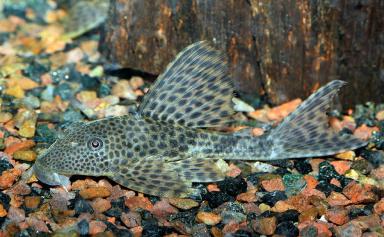
| ⇓ Zebra Pleco (Hypancistrus zebra) Data Sheet | |
|---|---|
| Scientific Name | Hypostomus punctatus Valenciennes, 1840 |
| Common Names | Common Pleco Pleco, Plettet Sugemalle (Danish, Denmark), Punktierter Schildwels (German, Germany) |
| Type Locality | Rio de Janeiro, Brazil. |
| Synonym(s) | Plecostomus punctatus |
| Pronunciation | hi POSS tow muss - punk TAT uss |
| Etymology | Greek, hypo = under + Greek, stoma = mouth. The specific epithet, punctatus, means spotted. There are 11 other speciesAuchenipterichthys punctatus Chilodus punctatus Chrysichthys punctatus Hemibagrus punctatus Henonemus punctatus Ictalurus punctatus Lepomis punctatus Malapterurus punctatus Parauchenoglanis punctatus Pimelodus punctatus Pterygoplichthys punctatus with this name. |
| ⇓ Species Information | |
| Size | 300mm or 11.8" SL. Find near, nearer or same sized spp. |
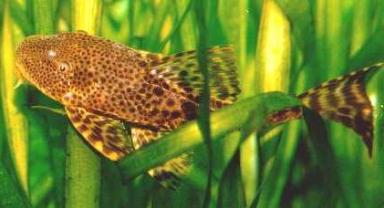
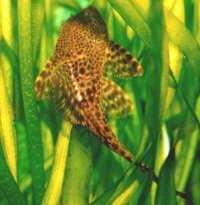
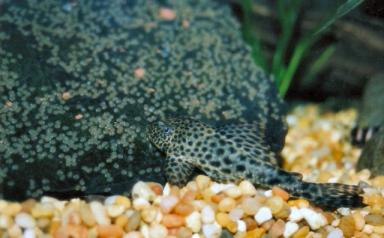
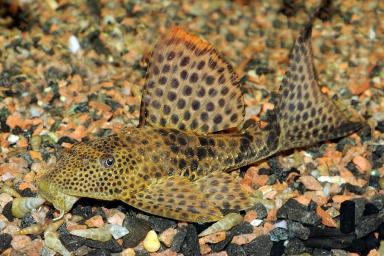
| Identification | Hypostomus with a brown colouration and spots are generally difficult to ID with any accuracy. This species has a light brown colouration with very dark brown spots but it is the fact that it is from the Rio Janeiro that makes the ID more reliable. |
| Sexing | Unknown |
| ⇓ Habitat Information | |
| Distribution | South America: coastal drainages of southeastern Brazil. Rio de Janeiro State Rivers (click on these areas to find other species found there) Login to view the map. |
| IUCN Red List Category | Least Concern , a distribution map is available on the IUCN species page. Last assessed 2020. |
| pH | 5.0 - 8.2 |
| Temperature | 22.0-29.0°C or 71.6-84.2°F (Show species within this range) |
| ⇓ Husbandry Information | |
| Feeding | Lettuce, peas, frozen spinach and any prepared food that reaches the bottom. Larger fish enjoy prawns. Algae (especially soft brown) will be eaten immediately. Will learn to eat floating pellets from the surface if the food drifts to the sides of the aquarium. User data. |
| Furniture | An appropriately sized shady retreat is all this fish requires. Will not eat plants, but any individual larger then 10cm or so may inadvertently pull up plants not entirely established. They are more likely to burrow if adequate hiding places are missing. |
| Compatibility | Larger individuals are territorial towards conspecifics, however not predatory and able to look after itself. Safe with small fish. |
| Suggested Tankmates | Larger individuals are territorial towards conspecifics, however not predatory and able to look after itself. Safe with small fish. Good for an appropraitely sized community tank. |
| Breeding | Unreported in the aquarium, but thought to spawn in mud burrows dug into the side of riverbanks. |
| Breeding Reports | There is no breeding report. |
| ⇓ Further Information | |
| Reference | Histoire naturelle des poissons v. 15, pp 493. |
| Wishlists | There is no wish to keep this species. |
| Spotters | There is no record of this fish being seen. |
| ⇓ More Resources | |
| Forum BBCode | |
| Find CLOG | 43 mentions on the forum, starting 1st May 04 |
 | Look up H. punctatus on PlanetCatfish.com |
 | Look up H. punctatus on Fishbase |
 | Look up H. punctatus on Encyclopedia of Life |
 | Look up H. punctatus on Global Biodiversity Information Facility |
 | LFS label creator ARN ref:1.4.17.87 |
| Last Update | Thu Jan 02, 2025 9:37 am (Species record created: Sat May 05, 2001 7:00 am) |
