
PAGE_HEADER
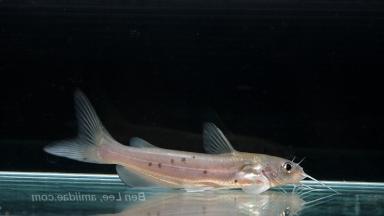 Juvenile
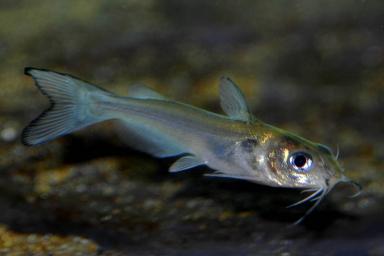
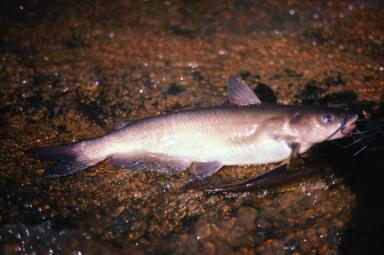 Juvenile
 Memphis, Tennessee
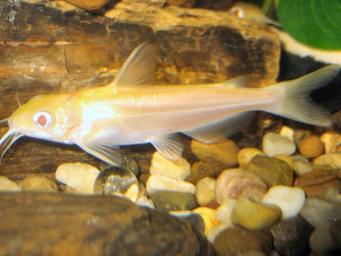 Adult
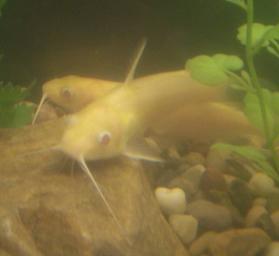 Albino
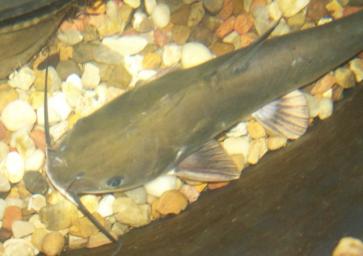 Albino
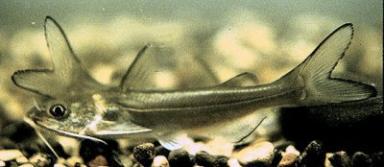 Dorsal view
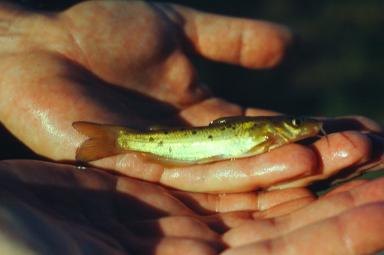
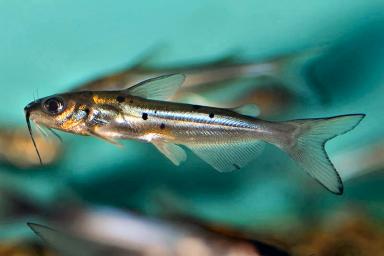 Juvenile
 Juvenile
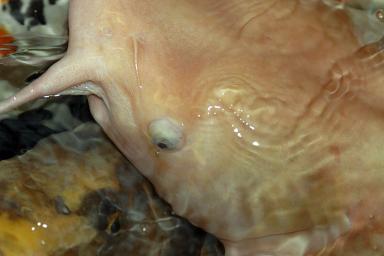
 Close-up of head
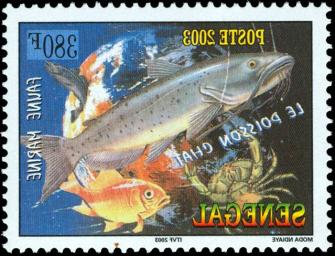
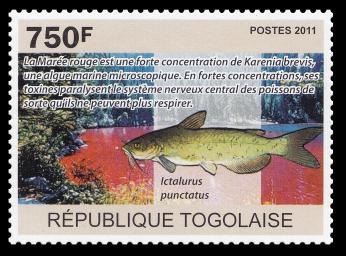 Stamp
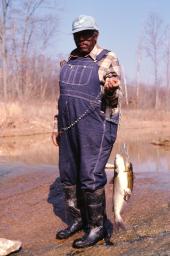 Chihuahua, Northern Mexico
 With local fisherman
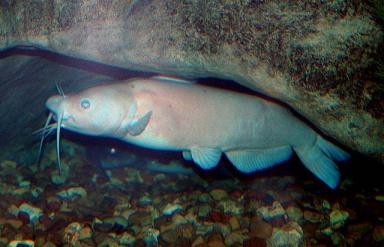
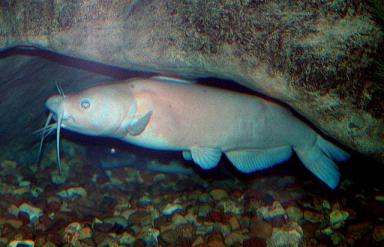 Adult albino
 Video
| ⇓ Zebra Pleco (Hypancistrus zebra) Data Sheet | |
|---|---|
| Scientific Name | Ictalurus punctatus (Rafinesque, 1818) |
| Common Names | Channel Catfish Getuepfelter Gabelwels (German, Germany), Plettet Dværgmalle (Danish, Denmark) |
| Type Locality | Ohio River, U.S.A. |
| Synonym(s) | Ichthaelurus robustus, Ictalurus anguilla, Ictalurus lacustris punctatus, Ictalurus okeechobeensis, Ictalurus simpsonii, Pimelodus argyrus, Pimelodus caudafurcatus, Pimelodus furcifer, Pimelodus graciosus, Pimelodus hammondii, Pimelodus houghi, Pimelodus megalops, Pimelodus nigricans, Pimelodus olivaceus, Pimelodus vulpes, Silurus argentinus, Silurus borealis, Silurus cerulescens melanurus, Silurus punctatus |
| Pronunciation | ick tal oo russ - punk TAT uss |
| Etymology | Ictalurus: From the Greek ichthys, meaning fish, and ailouros, meaning cat; literally "fish cat" (=catfish). punctatus meaning spotted alluding to the smattering of back and lower body black spots on primarily younger fish. There are 11 other speciesAuchenipterichthys punctatus Chilodus punctatus Chrysichthys punctatus Hemibagrus punctatus Henonemus punctatus Hypostomus punctatus Lepomis punctatus Malapterurus punctatus Parauchenoglanis punctatus Pimelodus punctatus Pterygoplichthys punctatus with this name. |
| ⇓ Species Information | |
| Size | 1320mm or 52" SL. Find near, nearer or same sized spp. |
| Identification | The albino variety is more often encountered for sale than the normal colouration. Often confused with Ictalurus furcatus In juveniles the blue generally has a darker body with a whitish belly while the channel is silvery with few small dark spots. The channel cat averages 27-30 anal fin rays while the blue has 33-35. Ictalurus furcatus has a head that is wedge shaped, consistent with a blue cat's wedge shaped head is a noticeable dorsal hump in front of the dorsal fin, a channel cats head is more rounded or cigar shaped. Barbels on a blue cat are reduced in relation to I. punctatus. Also in comparison to channel cats which have a rounded anal fin the anterior margin of the anal fin is truncate in I .furcatus. |
| Sexing | It is almost impossible to distinguish between sexes with individuals of around 10 pounds or less. Generally, the easiest way to sex a channel catfish is by the head. Mature males have a broad, muscular, kind of spade-shaped head, while the female's head is smaller and more rounded. Also, between the pelvic fins, the female has two openings. The male has just one (the anus) and a small fleshy flap (genital papillae) that sticks out a bit. The larger the fish, the easier and more distinct these differences become. |
| General Remarks | For aquaculture these are sometimes kept at a higher temperature for maximum growth, they can also withstand extremes in temperature, but in the home aquarium or pond the temperatures suggested on this page are for long term comfort. |
| ⇓ Habitat Information | |
| Distribution | North America: Central drainages of the United States to southern Canada and northern Mexico. Trade restricted in Germany (Anl.3 BArtSchV). North American Atlantic Drainages, Great Lakes (click on these areas to find other species found there) Gulf Coast Drainages, Mississippi (click on these areas to find other species found there) North American Atlantic Drainages, Saint Lawrence (click on these areas to find other species found there) Login to view the map. |
| IUCN Red List Category | Least Concern , a distribution map is available on the IUCN species page. Last assessed 2012. |
| pH | 6.0 - 8.0 |
| Temperature | 12.0-21.0°C or 53.6-69.8°F (Show species within this range) |
| ⇓ Husbandry Information | |
| Feeding | All prepared foods, youngsters can be grown very quickly on bloodworm or more cheaply on commercial fish meal. Will eat constantly, but care should be taken not to pander to this tendency as the strain on filtration becomes immense. Large individuals can be fed weekly. User data. |
| Furniture | An active catfish when young, becoming less active with age. A large swimming area is necessary to get the best from this fish. The water column need not be more than 30cm if dimly light. |
| Compatibility | Peaceful but predatory. |
| Suggested Tankmates | Large central American cichlids fit the bill both in terms of size and water conditions. |
| Breeding | Commercially farmed in large ponds and so breeding is easily accomplished on the correct scale. This scale however does not encompass the home aquarium. |
| Breeding Reports | There is no breeding report. |
| ⇓ Further Information | |
| Reference | American Monthly Magazine and Critical Review v. 3 (no. 5) (art. 3) (Sept.), pp 355. |
| Wishlists | There is no wish to keep this species. |
| Spotters | There is no record of this fish being seen. |
| ⇓ More Resources | |
| Forum BBCode | |
| Find CLOG | 65 mentions on the forum, starting 23rd Feb 04 |
 | Look up I. punctatus on PlanetCatfish.com |
 | Look up I. punctatus on Fishbase |
 | Look up I. punctatus on Encyclopedia of Life |
 | Look up I. punctatus on Global Biodiversity Information Facility |
 | LFS label creator ARN ref:1.5.5.6 |
| Last Update | Thu Jan 02, 2025 9:36 am (Species record created: Thu Apr 19, 2001 7:00 am) |
