
PAGE_HEADER
 Male
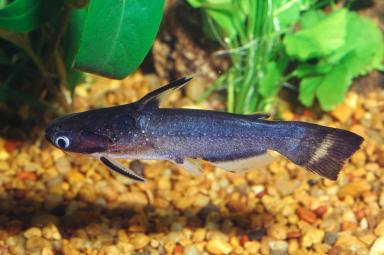
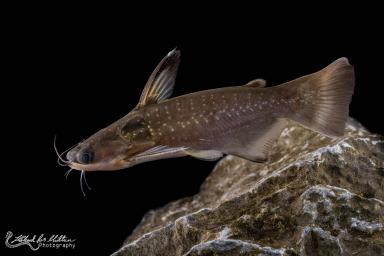


 Pair - female below


 Video
 Ventral view, showing shape of pectoral girdle
 One week old
 One month old
 Two months old
 Three months old, 40mm SL
 Close-up of male
 Close-up of pectoral fin
 Close-up of dorsal fin
 Close-up of caudal fin
| ⇓ Zebra Pleco (Hypancistrus zebra) Data Sheet | |
|---|---|
| Scientific Name | Auchenipterichthys coracoideus (Eigenmann & Allen, 1942) |
| Common Names | Zamora Woodcat Midnight Catfish, Zamorawels (German, Germany) |
| Type Locality | Iquitos, Upper Amazon, Peru. |
| Synonym(s) | Trachycorystes coracoideus |
| Pronunciation | awk en NIP terr ICK thiss - core ah koy dee uss |
| Etymology | Auchenipterichthys: From the Greek, auchenos, meaning neck, pteron, meaning fin and ichthys, meaning fish; in reference to the long cranial shield, which gives the appearance that the dorsal fin originates at the neck region. There is 1 other speciesBunocephalus coracoideus with this name. |
| ⇓ Species Information | |
| Size | 110mm or 4.3" SL. Find near, nearer or same sized spp. |
| Identification | Commonly referred to as A. thoracatus, a study in 2005 corrected the long standing misidentification of this species which is the most commonly available in the hobby. When undisturbed they sport a beautiful inky bluish black colour that, in combination with many pin-prick white spots, do give the impression of a clear tropical sky at midnight hence the common name. |
| Sexing | As with all woodcats, mature males exhibit a modified anal fin similar to the gonopodium found on many live-bearing toothcarps such as the guppy, platy, molly etc. |
| General Remarks | Reports from the upper Essequibo River would appear to indicate a sister species. |
| ⇓ Habitat Information | |
| Distribution | South America: Upper Amazon River basin. Amazon (click on these areas to find other species found there) Guyana Waters, Coastal Rivers of Guyanas, Essequibo (click on these areas to find other species found there) Amazon, Upper Amazon (click on these areas to find other species found there) Login to view the map. |
| IUCN Red List Category | Not Evaluated , a distribution map is available on the IUCN species page. Last assessed 2026. |
| pH | 6.0 - 7.2 |
| Temperature | 23.0-25.0°C or 73.4-77°F (Show species within this range) |
| ⇓ Husbandry Information | |
| Feeding | In the wild this fish is an insectivore, its diet probably stretches to small invertebrates and crustaceans. In captivity bloodworm appear favourite although it will readily accept flake food and sinking pellets. Food is often taken in mid-water as well as from the bottom. User data. |
| Furniture | Some plants can be used to provide shelter but this fish loves to cram itself into small spaces, preferably in wood, during the daylight hours. If you really want to go all out for this fish drill woodcat sized holes into a large lump of bogwood - but remember to check them for inhabitants if you ever need to remove the wood! |
| Compatibility | Certainly a peaceful, surprisingly robust, catfish suitable for most community aquaria. Not to be trusted with very small fish as this fish is an effective hunter. |
| Suggested Tankmates | Groups of tall-bodied smaller Characins (Hyphessobrycon etc) and Corydoras catfish perfectly compliment this catfish and their shoaling helps relax the midnight catfish in its surroundings, leading to better colouration and more frequent sightings. |
| Breeding | Bred by German hobbyists, details (in English at least) are presently unavailable. Egg fertilization is internal and the eggs can be laid by the female in isolation from the male. |
| Breeding Reports | There is no breeding report. |
| ⇓ Further Information | |
| Reference | Fishes of western South America, pp 120. |
| Wishlists | There is no wish to keep this species. |
| Spotters | There is no record of this fish being seen. |
| ⇓ More Resources | |
| Forum BBCode | |
| Find CLOG | 50 mentions on the forum, starting 18th Jan 06 |
 | Look up A. coracoideus on PlanetCatfish.com |
 | Look up A. coracoideus on Fishbase |
 | Look up A. coracoideus on Encyclopedia of Life |
 | Look up A. coracoideus on Global Biodiversity Information Facility |
 | LFS label creator ARN ref:1.22.120.352 |
| Last Update | Thu Jan 02, 2025 9:37 am (Species record created: Fri Apr 13, 2001 7:00 am) |
