
PAGE_HEADER
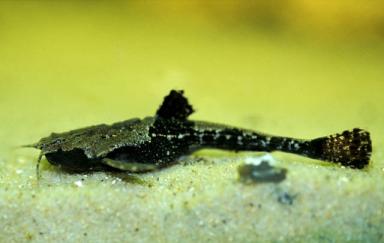
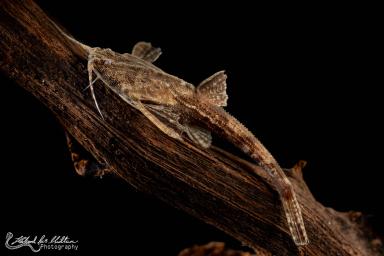
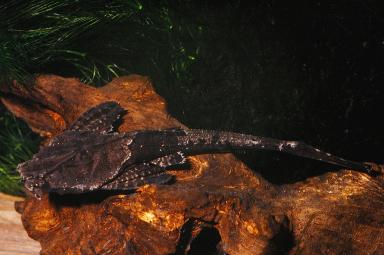
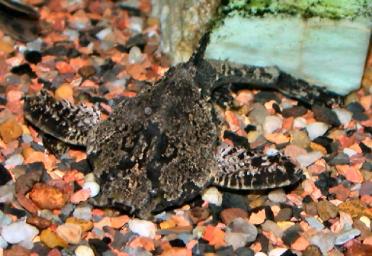
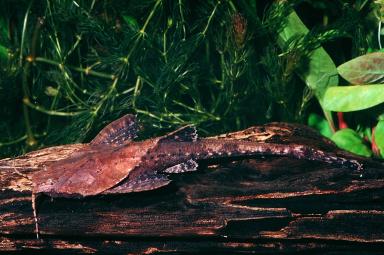
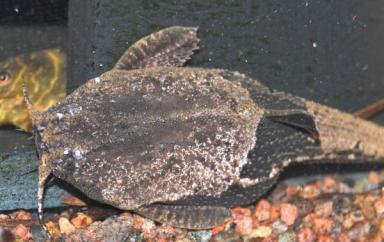
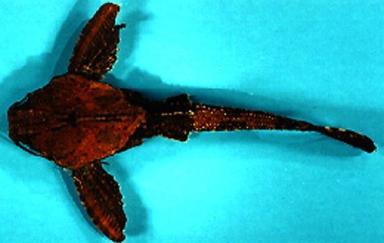 Dorsal view
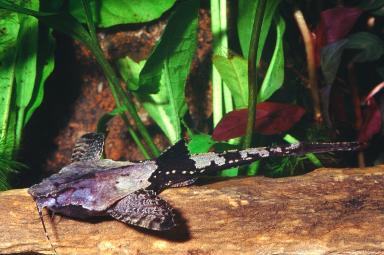
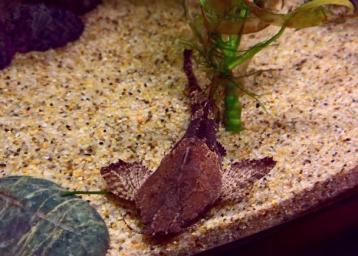 Male
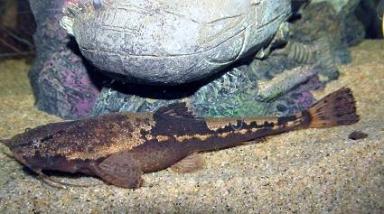 Female
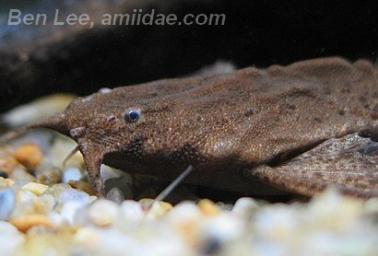
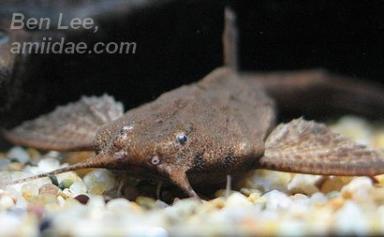
 Video: courtship behaviour
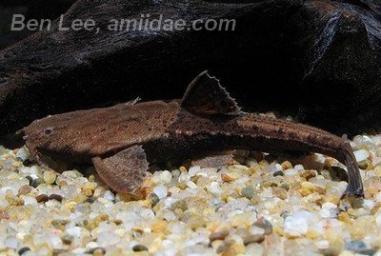
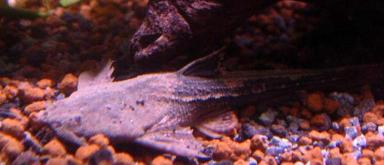 Male
 Video: Eggs hatching
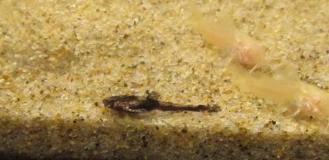 Juvenile almost 1 month old
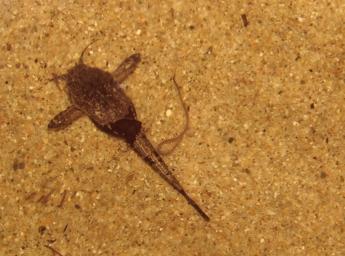 Juvenile
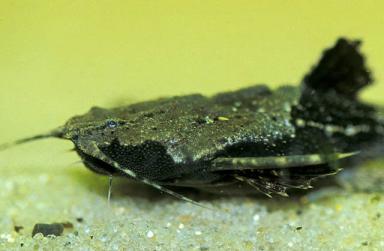 Close-up of head
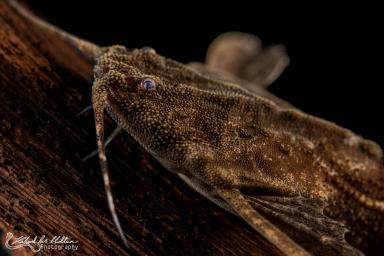 Close-up of head
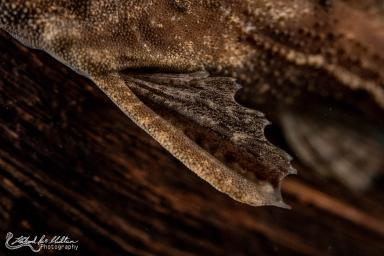 Close-up of pectoral fin
| ⇓ Zebra Pleco (Hypancistrus zebra) Data Sheet | |
|---|---|
| Scientific Name | Bunocephalus coracoideus (Cope, 1874) |
| Common Names | Banjo Catfish Banjo Cat, Guitarrita, Tofarvet Stegepandemalle (Danish, Denmark), Zweifarbiger Bratpfannenwels (German, Germany) |
| Type Locality | Nauta, Peru |
| Type Locality Notes | Type locality inferred from location of Nauta (referenced 2021). |
| Synonym(s) | Bunocephalus bicolor, Bunocephalus haggini, Dysichthys bicolor, Dysichthys coracoideus |
| Pronunciation | boon oh SEFF ah luss |
| Etymology | Bunocephalus: From the Greek bounos, meaning hill and kephale, meaning head; in reference to the bumps on the head of the fish, which is particularly marked in some species. There is 1 other speciesAuchenipterichthys coracoideus with this name. |
| ⇓ Species Information | |
| Size | 110mm or 4.3" SL. Find near, nearer or same sized spp. |
| Identification | The most commonly encountered Banjo Catfish for sale. |
| Sexing | Mature females are larger and deeper bodied than males. |
| ⇓ Habitat Information | |
| Distribution | South America: Amazon River basin. Amazon (click on these areas to find other species found there) Amazon, Lower Amazon, Tocantins, Lower Tocantins, Acará Imported (click on these areas to find other species found there) Login to view the map. |
| IUCN Red List Category | Least Concern , a distribution map is available on the IUCN species page. Last assessed 2020. |
| pH | 5.8 - 7.8 |
| Temperature | 20.0-27.0°C or 68-80.6°F (Show species within this range) |
| Other Parameters | Hardness between 2 and 20°dGH. |
| ⇓ Husbandry Information | |
| Feeding | Most prepared food that finds its way to the substrate, bloodworm and sinking catfish pellets are best. User data. |
| Furniture | Preferably river sand although the fish is equally happy under a flat rock elevated about ½ an inch above the substrate. In nature the fish can be found buried, sometimes several inches deep, in the leaf litter commonly found at the bottom of forest streams. |
| Compatibility | Peaceful. Can be kept singly or in groups given adequate refuge for each individual. Young fish like to hide vertically in bushy plants. Older fish will burrow in sand or fine, rounded gravel as well as under stones or bogwood. |
| Suggested Tankmates | Any community fish. |
| Breeding | Adult fish are mature at 4½'', a deep tank is not necessary. Spawning occurs at night. Several batches of eggs are serially deposited in an egg-scattering fashion and should be removed to a secure net or container. These hatch within 3 days. Another report suggests that over 4000-5000 eggs are laid in several spawnings of a night and that the fish spawn in groups, although the ratio of males to females required is not clear. The fry should be fed small live foods, and then as they grow tubifex worms and eventually catfish tablets. |
| Breeding Reports | There is no breeding report. |
| ⇓ Further Information | |
| Reference | Proceedings of the Academy of Natural Sciences of Philadelphia v. 26, pp 133 |
| Wishlists | There is no wish to keep this species. |
| Spotters | There is no record of this fish being seen. |
| ⇓ More Resources | |
| Forum BBCode | |
| Find CLOG | 71 mentions on the forum, starting 25th Feb 04 |
 | Look up B. coracoideus on PlanetCatfish.com |
 | Look up B. coracoideus on Fishbase |
 | Look up B. coracoideus on Encyclopedia of Life |
 | Look up B. coracoideus on Global Biodiversity Information Facility |
 | LFS label creator ARN ref:1.10.16.25 |
| Last Update | Thu Jan 02, 2025 9:36 am (Species record created: Fri Apr 13, 2001 7:00 am) |
