
PAGE_HEADER
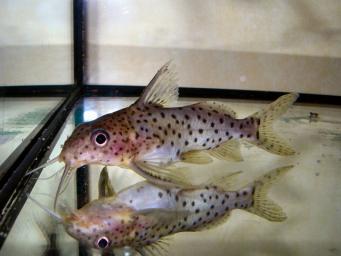
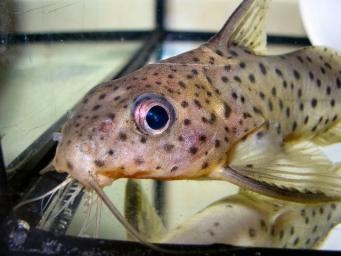
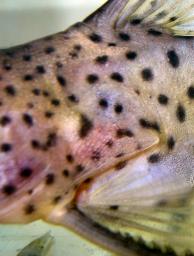
| ⇓ Zebra Pleco (Hypancistrus zebra) Data Sheet | |
|---|---|
| Scientific Name | Synodontis sp. (1) |
| Common Name | |
| Synonym(s) | |
| Pronunciation | sin oh don tiss |
| Etymology | According to Cuvier, Synodontis is an "ancient name for an undetermined fish from the Nile". It is not derived, as often reported, from syn-, together and odous, tooth, presumed etymology of the lizardfish genus Synodus and refers to the closely-spaced lower jaw teeth of both genera. There are 62 other speciesAcanthodoras sp(1) Acestridium sp(1) Amphilius sp(1) Ancistomus sp(1) Ancistrini sp(1) Ancistrus sp(1) Aspidoras sp(1) Astroblepus sp(1) Atopochilus sp(1) Auchenipterichthys sp(1) Batrochoglanis sp(1) Belonoglanis sp(1) Brachyglanis sp(1) Brachyrhamdia sp(1) Cetopsis sp(1) Cetopsorhamdia sp(1) Chaetostoma sp(1) Channallabes sp(1) Chiloglanis sp(1) Chrysichthys sp(1) Corydoras sp(1) Delturus sp(1) Euchilichthys sp(1) Farlowella sp(1) Guyanancistrus sp(1) Hemiancistrus sp(1) Hemipsilichthys sp(1) Hisonotus sp(1) Hypancistrus sp(1) Hypoptopoma sp(1) Hypostomus sp(1) Imparfinis sp(1) Lasiancistrus sp(1) Leporacanthicus sp(1) Leptorhamdia sp(1) Lophiobagrus sp(1) Microsynodontis sp(1) Myoglanis sp(1) Nemuroglanis sp(1) Otocinclus sp(1) Oxyropsis sp(1) Panaqolus sp(1) Panaque sp(1) Parotocinclus sp(1) Phreatobius sp(1) Pimelodella sp(1) Pseudancistrus sp(1) Pseudecheneis sp(1) Pseudolithoxus sp(1) Pterygoplichthys sp(1) Rhamdia sp(1) Rhamdiopsis sp(1) Rineloricaria sp(1) Spatuloricaria sp(1) Sturisomatichthys sp(1) Tatia sp(1) Taunayia sp(1) Trachelyopterus sp(1) Trachyglanis sp(1) Transancistrus sp(1) Trichomycterus sp(1) Xiurenbagrus sp(1) with this name. |
| ⇓ Species Information | |
| Identification | All species in the genus Synodontis have a hardened head cap that has attached a process (humeral process) which is situated behind the gill opening and pointed towards the posterior. The dorsal fin and pectoral fins have a hardened first ray which is serrated. Caudal fin is always forked. There is one pair of maxillary barbels, sometimes having membranes and occasionally branched. The two pairs of mandibular barbels are often branched and can have nodes attached. The cone-shaped teeth in the upper jaw are short. S-shaped and movable in the lower jaw. These fish produce audible sounds when disturbed rubbing the base of the pectoral spine against the pectoral girdle. |
| Sexing | First lay the fish in your hand with its head toward your palm and the tail toward your fingers. Hold the dorsal spine between your middle and ring finger so the fish is belly up and you won't get punctured by the sharp fin spines (which hurts - be careful). The genital pore is in a small furrow of tissue (in healthy fish) and will be obstructed by the pelvic fins. Pull down on the tail gently to arch the fish's spine and the pelvic fins will stand and the furrow open to display the genital pore and the anus of the fish. The male has a somewhat ridged genital papillae on which the spermatoduct is on the back side, facing the tail fin. A gravid female will also show an extended papillae but the oviduct is on the ventral side of the papillae. It may also show a little redness if gravid. A thin or emaciated female will have just two pink pores, the oviduct and the anus. |
| ⇓ Habitat Information | |
| ⇓ Husbandry Information | |
| Breeding | Unreported in the aquarium. |
| Breeding Reports | There is no breeding report. |
| ⇓ Further Information | |
| Wishlists | There is no wish to keep this species. |
| Spotters | There is no record of this fish being seen. |
| ⇓ More Resources | |
| Forum BBCode | |
| Find CLOG | 3 mentions on the forum, starting 3rd Sep 04 |
 | Look up S. sp. (1) on PlanetCatfish.com |
 | LFS label creator ARN ref:1.13.29.1460 |
| Last Update | Mon Dec 03, 2007 10:44 pm (Species record created: Sun Jan 30, 2005 8:00 am) |
