PAGE_HEADER
Synodontis multipunctatus Boulenger, 1898
Image Showcase
Photographs, diagnostic angles and morphological variants
Community & Keeper Tally
Member interactions, breeding records and forum mentions
Aquarium Care & Husbandry
Dietary requirements, tank setup, compatibility and breeding
Feeding & Diet
Feeds on snails, crustaceans and insect larvae in the wild. Not a fussy eater in the aquarium, but prefers meat based over vegetable based food. Generally considered to be a specialised predator of Neothauma tanganyicense(a snail). [View Member Food Stats]
Aquarium Furniture & Decor
Natural habitat is littoral to benthic zones over shell, sand and mud bottoms, to a maximum depth of 170m (Coulter1991a). In aquaria caves formed by piling up calciferous rocks and Vallisneria. Porous rock also has the advantage of providing the fry with interstices in which to hide.
Compatibility & Suggested Tankmates
A schooling fish that prefers the company of its own kind. We recommend keeping at least three and ideally five or more S. multipunctatus together. Prefers crepuscular lighting. Generally peaceful, but may eat very small tank mates. Can hold its own with most Rift Lake catfish and cichlids seen in the hobby.
Tankmates: Often kept with Tanganyika, Malawi and Victoria cichlids, but dedicated siluriphiles may wish to consider keeping Tanganyikan Synodontis in all Synodontis tanks.
Breeding Notes
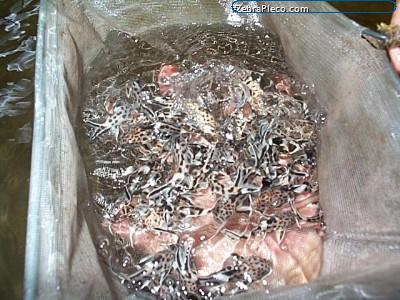
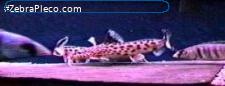
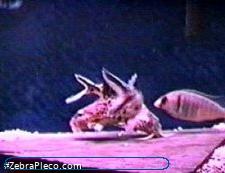
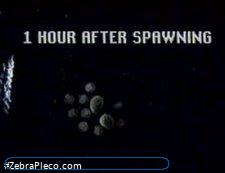
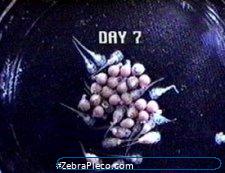
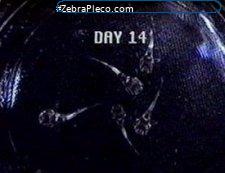
The only known parasitic brood spawner that is a vertebrate but not a bird. Spawns in cichlid spawning sites. See Catfish of the Month article for more detail. Research (Zimmermann, H., Blažek, R., Polačik, M. et al. Individual experience as a key to success for the cuckoo catfish brood parasitism. Nat Commun 13, 1723 (2022)) shows that individual pairs of these catfish learn and become more effective "cuckoo spawners" with practice.
Habitat & Water Parameters
Natural distribution, biotope water conditions and temperature ranges
Geographic Distribution
Africa: Lake Tanganyika.
African Waters, Western Rift Valley Lakes, Tanganyika (click on these areas to find other species found there)
Login to view the map.
Species Description & Identification
Morphology, diagnostic traits and sexual dimorphism
Identification
All species in the genus Synodontis have a hardened head cap that has attached a process (humeral process) which is situated behind the gill opening and pointed towards the posterior. The dorsal fin and pectoral fins have a hardened first ray which is serrated. Caudal fin is always forked. There is one pair of maxillary barbels, sometimes having membranes and occasionally branched. The two pairs of mandibular barbels are often branched and can have nodes attached. The cone-shaped teeth in the upper jaw are short. S-shaped and movable in the lower jaw. These fish produce audible sounds when disturbed rubbing the base of the pectoral spine against the pectoral girdle.
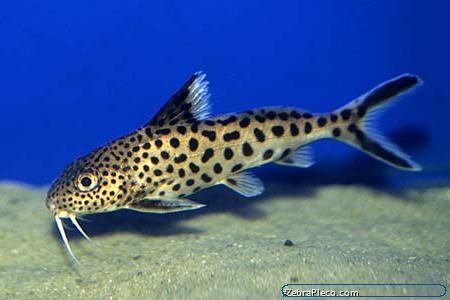
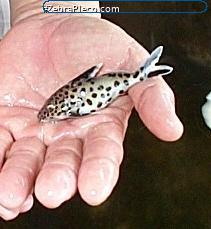
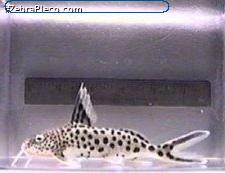
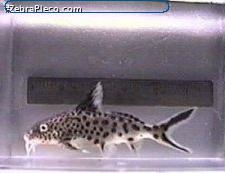
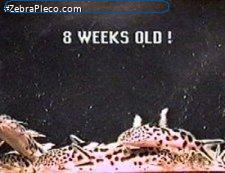
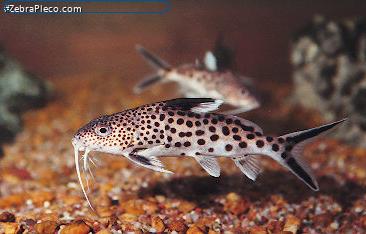
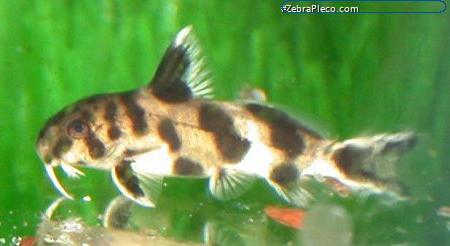
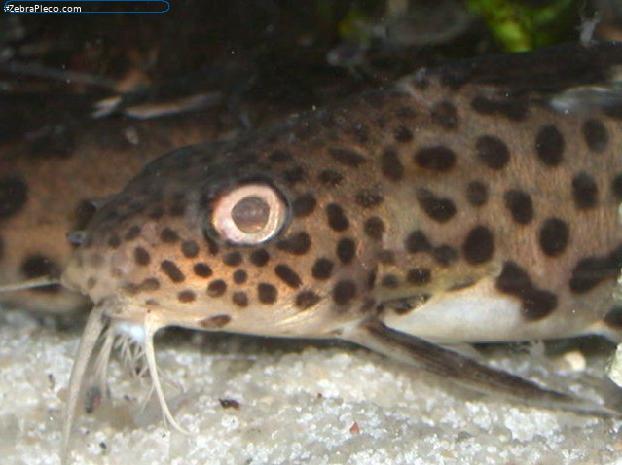
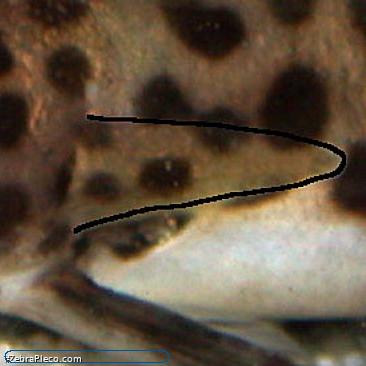
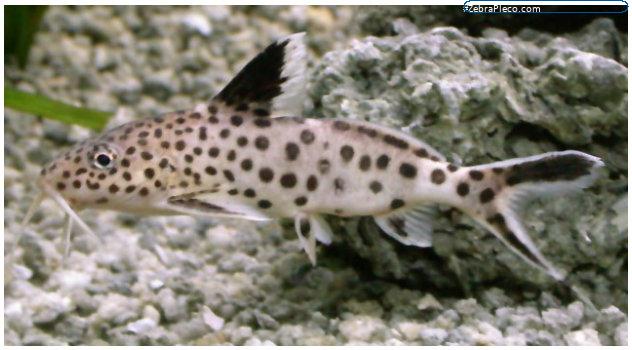
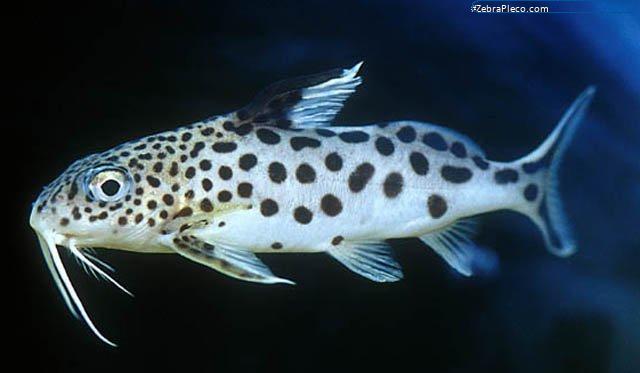
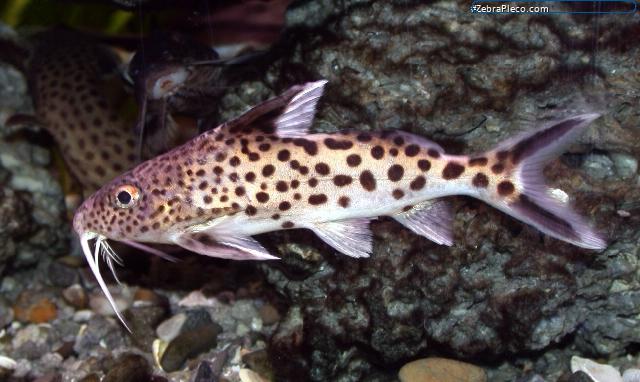
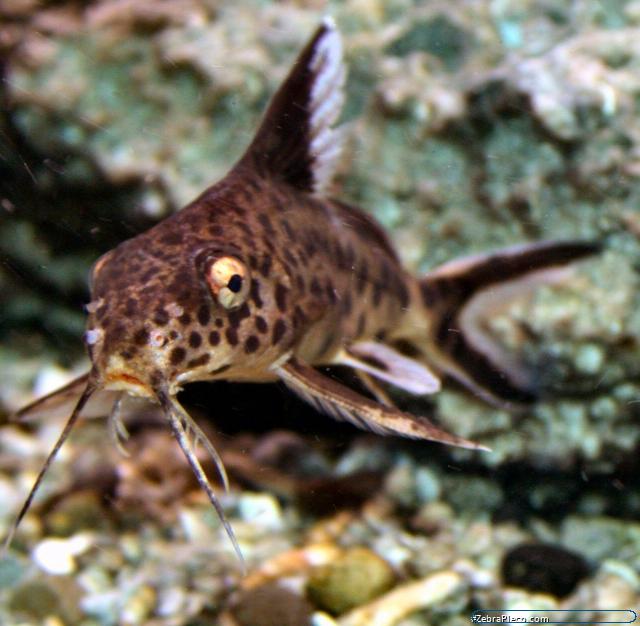
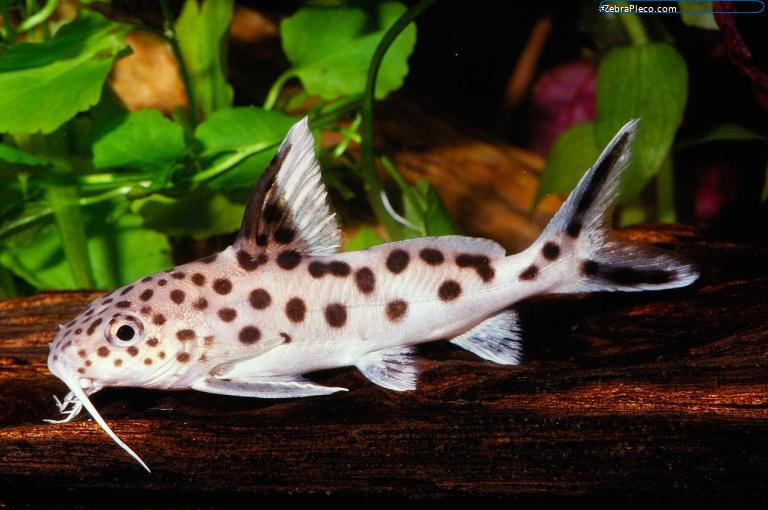
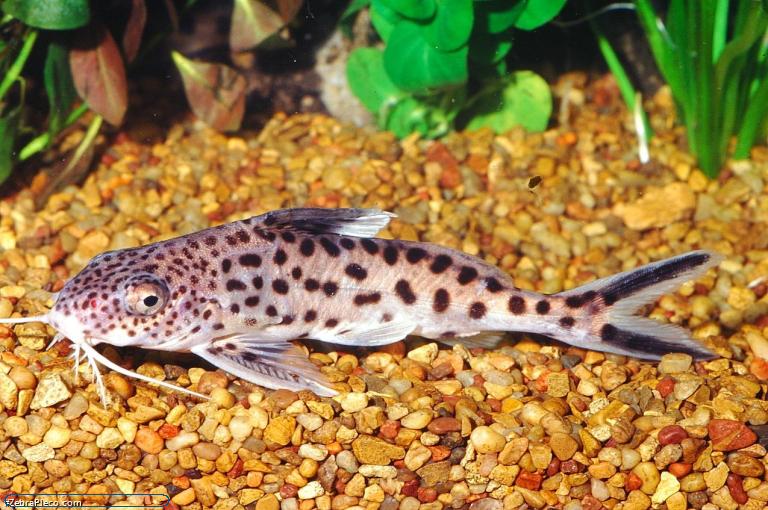
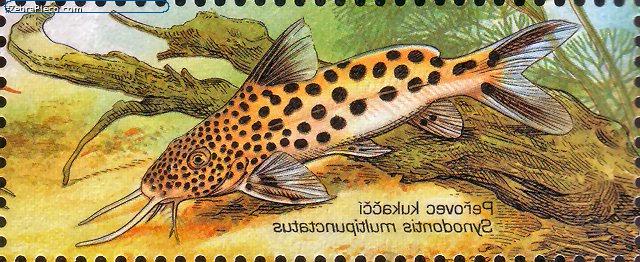
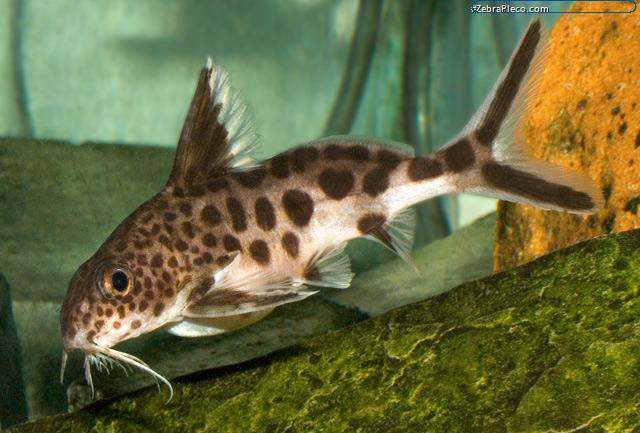
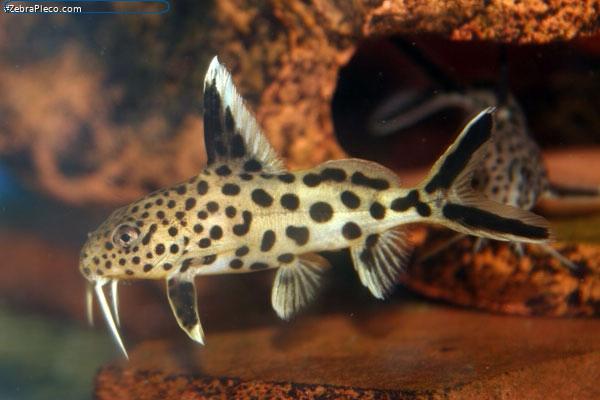
The base colouration is whitish grey, becoming a stronger brownish, often a very attractive golden bronze, on the head and upper body. The belly is whitish with or without spots. On the base colour, there are roundish dark spots of variable size, at most eye diameter and smaller on the head. In juvenile specimens spots are larger, irregular and sometimes confluent. Maxillary and mandibular barbels white. Iris is yellowish to copper coloured. Dorsal and pectoral-fin spines are brown to black, and filaments white. Pectoral spine with a thin, light stripe along the anterior margin. Dorsal and pectoral fins with black triangles at the base, posterior margins white in colour. Triangles in this species may be completely solid or composed of closely spaced dots. Black triangles at the base of pelvic and anal fins are absent or poorly developed. A single black spot may be present at the base of these fins. Adipose fin with a white dorsal edge. Both lobes of the caudal fin with dark bar from base to tip, posterior margin of fin white. Axillary pore present, mandibular teeth 13-29, 8 pectoral fin rays, eye 44.9-62 % of snout length, premaxillary tooth pad uninterrupted, secondary branches on medial mandibular barbel absent, papillae on the skin of body absent. Adipose fin short, poorly developed, margin convex. The humeral process is narrow in juveniles becoming wider in adults, elongated and granulous, possessing a distinct ridge on its ventral margin in young specimens, the ridge becomes indistinct in adults, dorsal margin is concave, terminating in a sharp point.
Sexual Dimorphism (Sexing)
Males have a higher dorsal fin. Females are generally plumper and more rounded in profile. As with other Synodontis, in male fish it is possible to distinguish a 3-4 mm genital papilla near the anus.
General Remarks
S. multipunctatus and S. grandiops are most reliably separated by pectoral-fin ray counts with S. mutipunctatus having 1 pectoral fin spine with 8 soft rays and S. grandiops having a count of 1, 7 . The soft pectoral-fin elements (i.e. the rays) are almost always branched (the only exception being the last one or two rays, which are sometimes unbranched) a ray is counted as one at its base before it branches out. Also keep in mind the larger adult size of S. multipunctatus. It appears a southern and northern (at least) tribe exist, with the northern being the ''regular'' form and the southern being generally paler with more spacing between the spots.
Taxonomy, Synonyms & Etymology
Classification history, linguistic derivations and variant forms
Synonyms
Synodontis multipunctata
Pronunciation
sin oh don tiss - mull tee punk TATT uss
Etymology
According to Cuvier, Synodontis is an "ancient name for an undetermined fish from the Nile". It is not derived, as often reported, from syn-, together and odous, tooth, presumed etymology of the lizardfish genus Synodus and refers to the closely-spaced lower jaw teeth of both genera. multi- meaning many and punctatus meaning spotted.
Literature & Resources
Scientific publications, external links and citation tools
Description Reference
Proceedings of the Zoological Society of London 1898 (pt 3), pp 497.
External Databases
Related Searches