PAGE_HEADER
Microglanis iheringi Gomes, 1946
Image Showcase
Photographs, diagnostic angles and morphological variants

Community & Keeper Tally
Member interactions, breeding records and forum mentions
Aquarium Care & Husbandry
Dietary requirements, tank setup, compatibility and breeding
Feeding & Diet
Omnivorous. [View Member Food Stats]
Aquarium Furniture & Decor
Dense leafy vegetation such as provided by large clumps of Java fern or Amazon swords. Narrow cracks or holes in between rocks or wood are also used.
Compatibility & Suggested Tankmates
Non aggressive and sociable with its own and other species.
Tankmates: Virtually all good community fish, although any young fry present in the aquarium will be in extreme jeopardy - especially after dark.
Breeding Notes
Unreported for true M. iheringi, but reports exist for M. aff. iheringi.
Habitat & Water Parameters
Natural distribution, biotope water conditions and temperature ranges
Geographic Distribution
South America: Turmero River basin, Venezuela.
Valencia, Turmero (click on these areas to find other species found there)
Login to view the map.
Species Description & Identification
Morphology, diagnostic traits and sexual dimorphism
Identification
The genus Microglanis was described by Eigenmann
(1912) to include small pimelodids with the head as wide as long, the skull covered by skin only; the occipital crest small; frontal fontanel not extending much if any behind the eye, and a minute occipital fontanel sometimes present; eye without a free orbital margin; dorsal and pectoral spines well developed; and premaxillary patches of teeth without backward projecting angles.
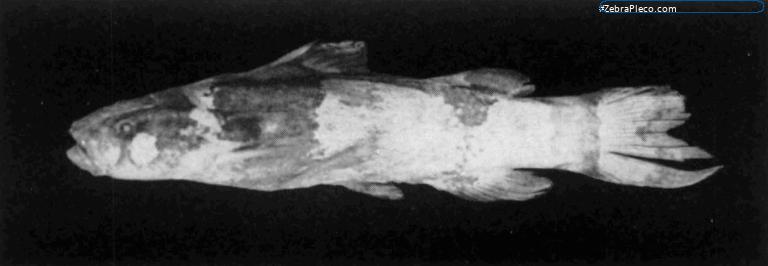
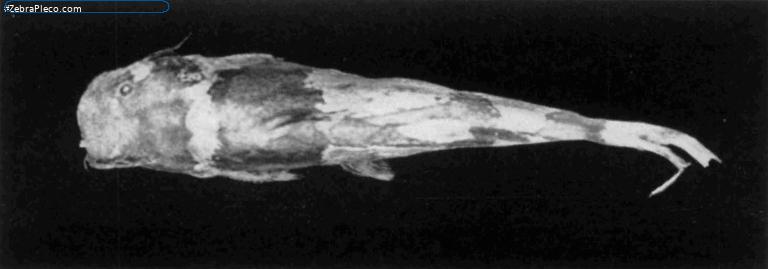
M. iheringi is identified by having a pale yellowish base colour with a dark black or brown saddle beneath the dorsal fin and with a small pale spot inside the saddle. The lower lobe of the caudal fin is slightly larger (with more soft rays) than the upper lobe. Because so few examples exist of this species collected from its type locality, there is little more reliable information on this species.
Sexual Dimorphism (Sexing)
Well-conditioned females are conspicuously wider in the abdomen than similarly sized males.
General Remarks
Real Microglanis iheringi from the Turmero basin in Venezuela are essentially non-existent in the aquarium hobby. To our knowledge, all fish sold as M. iheringi in the hobby are M. aff. iheringi, collected along the Orinoco basin, mostly in Eastern Colombia, rather than from Northern Venezuela. The Orinoco fish represent at least three different species of Microglanis, all similar to M. iheringi in colour pattern but each distinct in its own way. These species vary in size from 5cm to over 7cm maximum SL.
Taxonomy, Synonyms & Etymology
Classification history, linguistic derivations and variant forms
Etymology
Micro - small, glanis - catfish - in reference to the rather small forms of catfish that this genus contains.
There are 2 other speciesCambeva iheringi
Cetopsorhamdia iheringi with this specific name.
Literature & Resources
Scientific publications, external links and citation tools
Literature & References
External Databases
Related Searches