PAGE_HEADER
Hoplisoma osteocarus (Böhlke, 1951)
Image Showcase
Photographs, diagnostic angles and morphological variants
Community & Keeper Tally
Member interactions, breeding records and forum mentions
Aquarium Care & Husbandry
Dietary requirements, tank setup, compatibility and breeding
Feeding & Diet
Blood and glass worms (red and white mosquito larvae) as well as sinking pellets. [View Member Food Stats]
Aquarium Furniture & Decor
Shade provided by overhanging rock work, arching bogwood, tall or floating plants are all that is required. Ideally substrate should be sand, but rounded gravel will suffice.
Compatibility & Suggested Tankmates
A perfect citizen.
Breeding Notes
Reportedly easy with well conditioned adults and a drop in water temperature. Spawning activity is typically frenzied. No information at present on rearing fry, but it should follow the pattern for similarly sized species.
Habitat & Water Parameters
Natural distribution, biotope water conditions and temperature ranges
Geographic Distribution
South America: Orinoco River basin and coastal rivers in Suriname.
Orinoco (click on these areas to find other species found there)
Guyana Waters, Coastal Rivers of Guyanas, Suriname Coastal Rivers (click on these areas to find other species found there)
Login to view the map.
Species Description & Identification
Morphology, diagnostic traits and sexual dimorphism
Identification
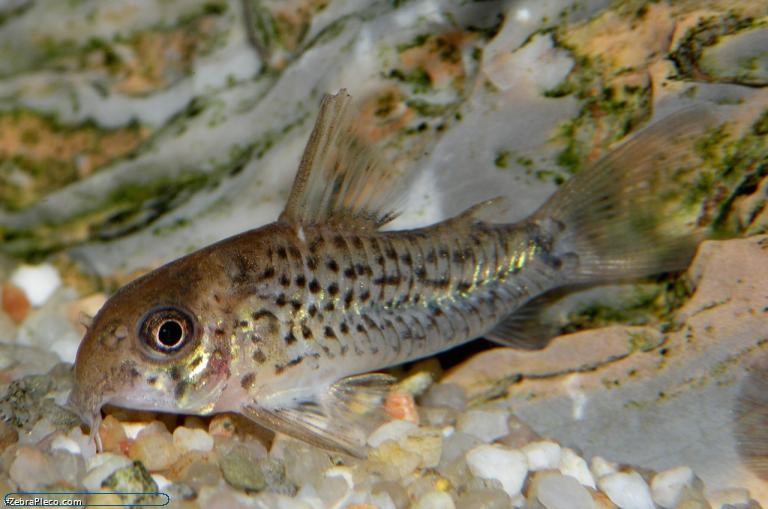
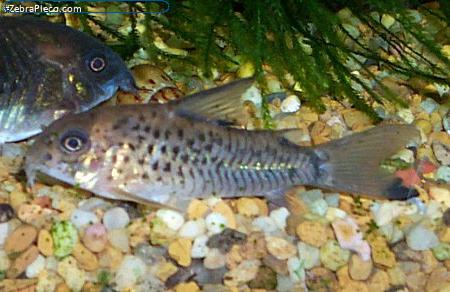
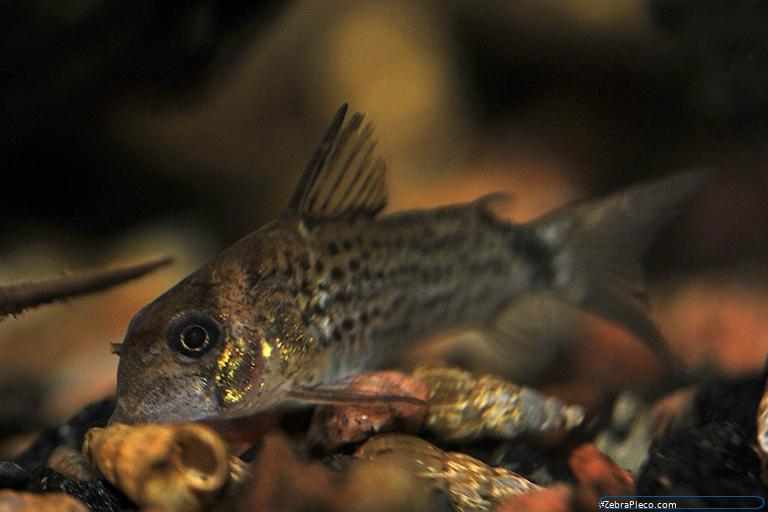
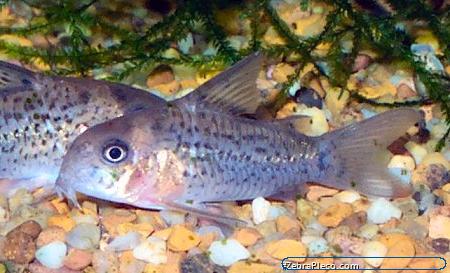
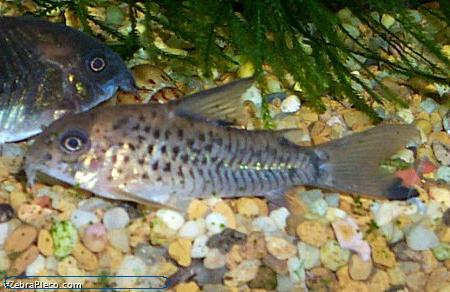
A slender are slightly elongated, round head Corydoras; the fish shows more spots on the front half of the body behind the gills and these diminish past the posterior edge of the dorsal fin. A black band runs vertically down through the caudal peduncle.
Sexual Dimorphism (Sexing)
Females are larger and fuller especially when viewed from above. Males are more slender and have more pointed ends to the paired fins than the females.
General Remarks
The first three pictures of fish above were taken in Venezeula and are of fishes collected very close to the type locality.
Taxonomy, Synonyms & Etymology
Classification history, linguistic derivations and variant forms
Synonyms
Corydoras osteocarus
Pronunciation
hop lee so mah - oss tee oh CARR uss
Etymology
The genus name is latin for wavy, referring to “dark purplish spots tending to run together, forming undulating longitudinal bands” - a common if not uniform colouration pattern found in this genus. Although all Corydoras have a 'helmet', the species name comes from the Greek for bone and head. Literally the bonehead Cory!
Literature & Resources
Scientific publications, external links and citation tools
Description Reference
Annals and Magazine of Natural History (Series 12) v. 4 (no. 44), pp 824.
External Databases
Related Searches