PAGE_HEADER
Silurichthys exortivus Ng & Kottelat, 2022
Image Showcase
Photographs, diagnostic angles and morphological variants
Community & Keeper Tally
Member interactions, breeding records and forum mentions
Aquarium Care & Husbandry
Dietary requirements, tank setup, compatibility and breeding
No specialised aquarium care or husbandry notes recorded yet.
Habitat & Water Parameters
Natural distribution, biotope water conditions and temperature ranges
Geographic Distribution
Mahakam River drainage in eastern Borneo.
Pacific, Greater Sunda Island Rivers, Borneo Waters, East Borneo Waters, Mahakam (click on these areas to find other species found there)
Login to view the map.
Species Description & Identification
Morphology, diagnostic traits and sexual dimorphism
Identification
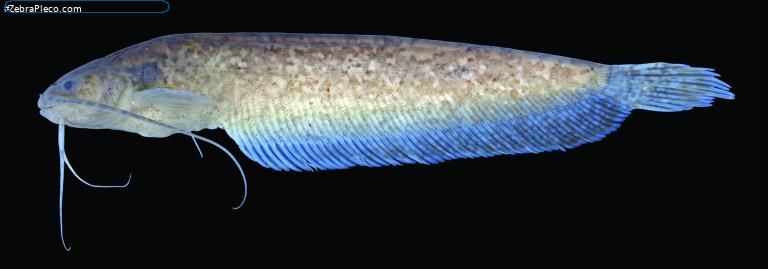
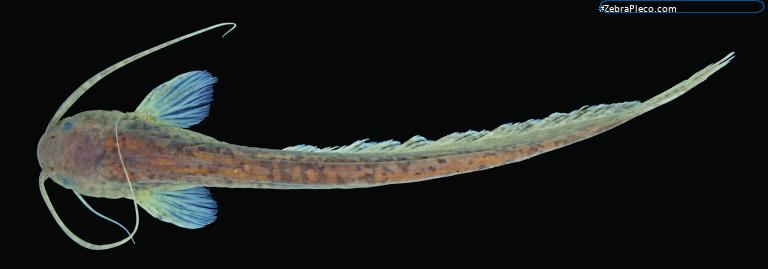
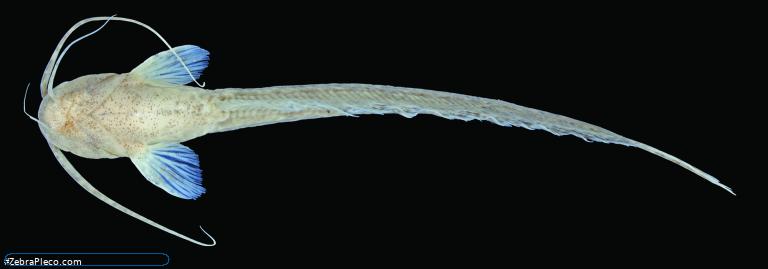
Silurichthys exortivus can be distinguished from all congeners in having 4 (vs. 6–7) principal rays on the upper caudal-fin lobe, lacking (vs. having) a dorsal fin, and, except for S. sanguineus, in lacking (vs. having) pelvic fins. It further differs from S. ligneolus and S. sanguineus in having a caudal fin with distinct, asymmetrical lobes (vs. obliquely truncate and without distinct lobes), and in the number of anal-fin rays (54 vs. 44–45 in S. ligneolus and 60 in S. sanguineus). The following combination of characters additionally distinguishes it from congeners: body depth at anus 14.0% SL, caudal peduncle depth 5.1% SL, upper lobe of caudal fin 1.1 times longer than lower lobe, 1 raker on first gill arch, 48 vertebrae and brown mottled body.
Taxonomy, Synonyms & Etymology
Classification history, linguistic derivations and variant forms
Pronunciation
Seel loo reek thees
Etymology
From Silurus and the Greek ichthyos, meaning fish; in reference to the general resemblance to members of the genus Silurus. The species name comes from the Latin adjective exortivus, meaning “towards the sunrise”. This name is used in allusion to distribution of this species (eastern Borneo), which represents the easternmost limit of its distribution.
Literature & Resources
Scientific publications, external links and citation tools
Description Reference
Zootaxa 5138 (no. 2), pp 186, Fig. 1.
External Databases
Related Searches