PAGE_HEADER
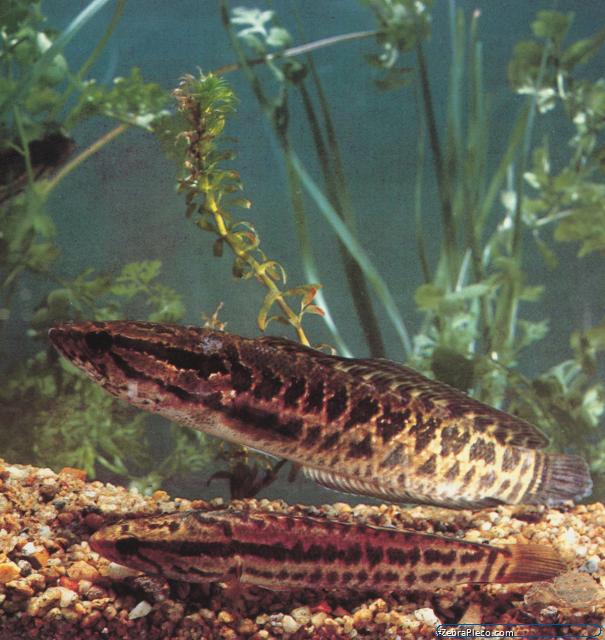
Channa maculata (Lacepède, 1801)
Image Showcase
Photographs, diagnostic angles and morphological variants
Community & Keeper Tally
Member interactions, breeding records and forum mentions
Aquarium Care & Husbandry
Dietary requirements, tank setup, compatibility and breeding
Breeding Notes
No member of this genus has been bred in the aquarium.
Habitat & Water Parameters
Natural distribution, biotope water conditions and temperature ranges
Geographic Distribution
Asia: Japan, southern China, Viet Nam, Taiwan and the Philippines.
Taxonomy, Synonyms & Etymology
Classification history, linguistic derivations and variant forms
Synonyms
Bostrychus maculatus, Ophicephalus aspilotus, Ophicephalus guntheri, Ophicephalus jovis, Ophicephalus tadianus, Ophiocephalus maculatus
Pronunciation
Cha na
Etymology (source: ETYFish.org)
Name dates to Gronow (1763), made available by Scopoli, etymology unknown, perhaps derived from channe or channos, a Greek name for a wide-mouthed fish of the sea; Sudasinghe et al. (2020) suggest that Channa is a Dutch transliteration of kanaya, local name for C. orientalis and other small snakeheads in Sri Lanka (type locality and under Dutch rule at the time; also Gronow was Dutch), but the Dutch pronunciation of Channa is “ganna,” not “kanna” (Richard van der Laan, pers. comm.) (source: https://etyfish.org/anabantiformes) Spotted, referring to “very small green spots” (translation) over entire body (no types known, possibly described from a drawing; in reality, the “very small green spots” are actually large dark blotches) [possibly based an eleotrid, in which case C. aspilotus Sauvage 1874 would be the next available name]
There are 5 other speciesAllotoca maculata
Boulengerella maculata
Cteniloricaria maculata
Jenynsia maculata
Wertheimeria maculata with this specific name.
Literature & Resources
Scientific publications, external links and citation tools
Literature & References
External Databases
Related Searches