PAGE_HEADER
Rhinobagrus ussuriensis (Dybowski, 1872)
Image Showcase
Photographs, diagnostic angles and morphological variants
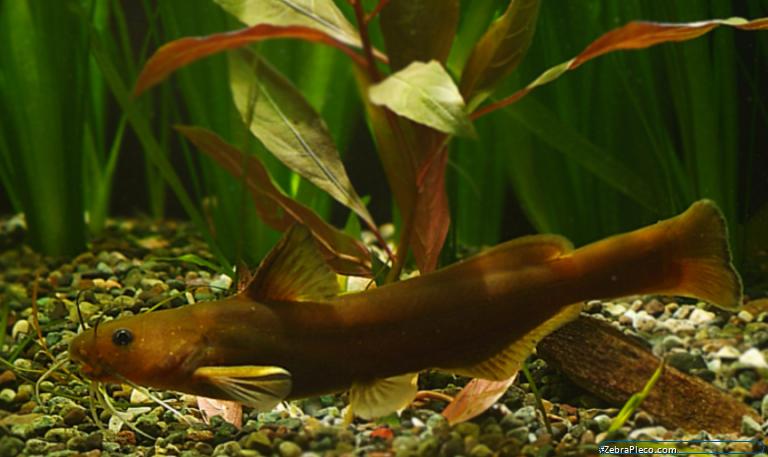
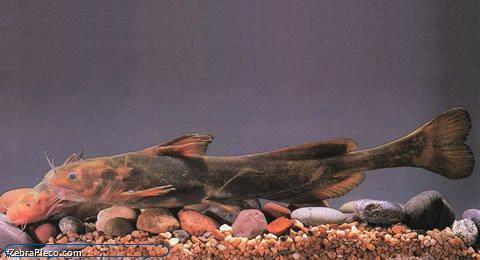
Community & Keeper Tally
Member interactions, breeding records and forum mentions
Aquarium Care & Husbandry
Dietary requirements, tank setup, compatibility and breeding
Feeding & Diet
Feeds on aquactic invertebrates, molluscs and fish. Will also eat frozen and prepared foods in the aquarium. [View Member Food Stats]
Aquarium Furniture & Decor
Found in slow moving rivers with sand or mud bottoms. In the aquarium provide plant, log and/or leaf litter for cover.
Compatibility & Suggested Tankmates
Peaceful when kept in groups.
Tankmates: Young specimens can be kept with any fish that is too large to swallow. Larger specimens should be kept with large, slow-moving tankmates such as goldfish or koi.
Breeding Notes
Spawning occurs in May and June. Eggs and young are guarded by the male. The fry stay with the male until they reach about 3cm in length. After one year, the fry are already 8-10cm and 14-16cm after two years. The fish are sexually mature at 3 years/20cm.
Habitat & Water Parameters
Natural distribution, biotope water conditions and temperature ranges
Geographic Distribution
Asia: Ussuri and Sungari rivers, Amur River basin, and Khanka Lake, Russia.
Northern China, North Korea. Rivers flowing into the China Sea on the west coast of South Korea. Especially common in the Han and Geum Rivers.
Russian Waters, Amur (click on these areas to find other species found there)
Russian Waters, Amur, Ussuri, Khanka (click on these areas to find other species found there)
Russian Waters, Amur, Sungari (click on these areas to find other species found there)
Russian Waters, Amur, Ussuri (click on these areas to find other species found there)
Login to view the map.
Species Description & Identification
Morphology, diagnostic traits and sexual dimorphism
Taxonomy, Synonyms & Etymology
Classification history, linguistic derivations and variant forms
Synonyms
Bagrus ussuriensis, Leiocassis ussuriensis, Macrones ussuriensis, Pseudobagrus ussuriensis
Etymology (source: ETYFish.org)
In honour of Bleeker’s friend August Duméril (1812–1870), French herpetologist and ichthyologist, Muséum national d’Histoire naturelle (Paris), who kindly allowed Bleeker to describe it
Literature & Resources
Scientific publications, external links and citation tools
Literature & References
External Databases
Related Searches