PAGE_HEADER
Microglanis lundbergi Jarduli & Shibatta, 2013
Image Showcase
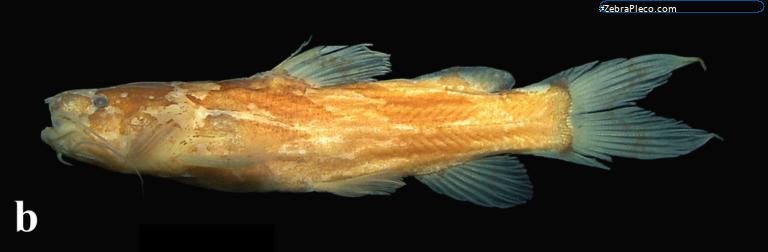
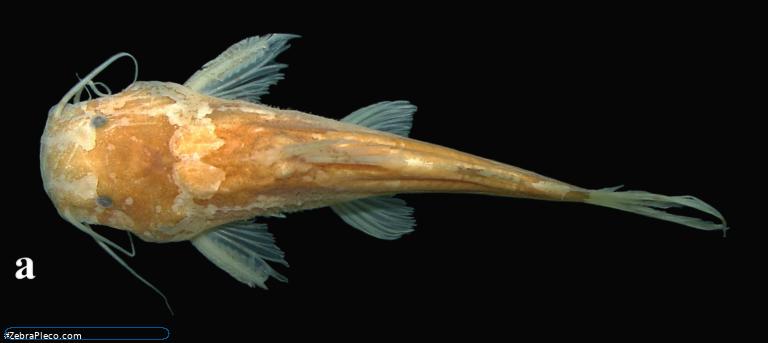
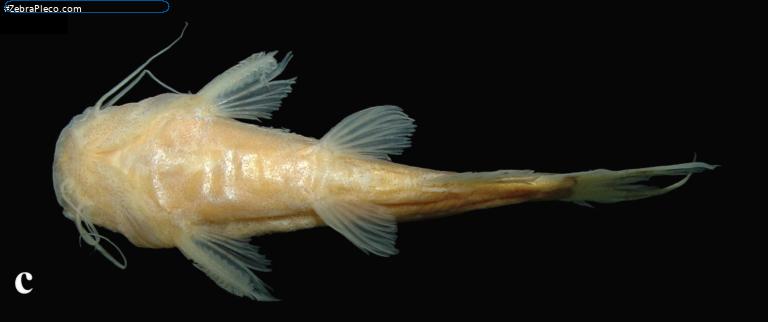
Photographs, diagnostic angles and morphological variants

Community & Keeper Tally
Member interactions, breeding records and forum mentions
Aquarium Care & Husbandry
Dietary requirements, tank setup, compatibility and breeding
Compatibility & Suggested Tankmates
Non aggressive and sociable with its own and other species.
Tankmates: Virtually all good community fish, although any young fry present in the aquarium will be in extreme jeopardy - especially after dark.
Habitat & Water Parameters
Natural distribution, biotope water conditions and temperature ranges
Geographic Distribution
Rio Amazonas, near the Madeira and Itacoatiara tributaries, and from rio Solimões, in Tefé, Amazonas, Brazil.
Amazon, Middle Amazon (Solimoes) (click on these areas to find other species found there)
Login to view the map.
Species Description & Identification
Morphology, diagnostic traits and sexual dimorphism
Identification
The genus Microglanis was described by Eigenmann
(1912) to include small pimelodids with the head as wide as long, the skull covered by skin only; the occipital crest small; frontal fontanel not extending much if any behind the eye, and a minute occipital fontanel sometimes present; eye without a free orbital margin; dorsal and pectoral spines well developed; and premaxillary patches of teeth without backward projecting angles.
Microglanis lundbergi is distinguished from all congeners by the presence of two pale elliptical spots juxtaposed in the supraoccipital region (vs. wide, or narrow, or absent supraoccipital pale band). It is further distinguished from all congeners except M. leniceae by the presence of a forked caudal fin with a deep notch between upper and lower lobes (vs. rounded, emarginated, or slightly forked). M. lundbergi is further distinguished from most other congeners by having a shorter length of the adipose-fin base (13.1-16.6% of SL; except for M. carlae 14.7-19.1%, M. secundus 12.2-18.2%, M. iheringi 14.7-19.0%, and M. leniceae 15.0-19.8%).
Sexual Dimorphism (Sexing)
Well-conditioned females are conspicuously wider in the abdomen than similarly sized males.
General Remarks
Colour in alcohol: Ground colour orange-brown. Head dark brown with two elliptical and juxtaposed pale spots in supraoccipital region, confluent or not with a pale band in post-opercular region, reaching pectoral-fin base. Two small, semilunar, pale stripes in anterior region of head in dorsal view, between edge of snout and anterior orbital margin. Barbels pale, scattered by dark-brown chromatophores. Ventral region light-brown. Trunk with large dark-brown blotch, saddle shaped, horizontally divided by pale lateral line. Caudal region with two dark-brown blotches of irregular shape; the first one at dorsolateral position, beginning below anterior portion of adipose fin, extending up to half of caudal length; the second one at caudal peduncle, as a dark brown spot approximately rectangular with irregular margins. Pectoral and pelvic fins with scattered dark chromatophores. Dorsal fin with dark band covering distal half, with hyaline margin on all rays. Adipose fin with dark spot on anterior portion, confluent to caudal dark-brown blotch. Anal fin with thin dark band approximately median. Caudal fin with thin vertical “3-shaped” dark band.
Taxonomy, Synonyms & Etymology
Classification history, linguistic derivations and variant forms
Etymology
Micro - small, glanis - catfish - in reference to the rather small forms of catfish that this genus contains. The specific name is homage to the North American
ichthyologist John G. Lundberg, coordinator of the
Calhamazon project, who kindly provided specimens of the new species, and for his great contribution to the Systematics of Neotropical catfishes.
There are 4 other speciesLoricaria lundbergi
Magdalenichthys lundbergi
Prietella lundbergi
Pseudobunocephalus lundbergi with this specific name.
Literature & Resources
Scientific publications, external links and citation tools
Literature & References
External Databases
Related Searches