PAGE_HEADER
Microglanis berbixae Tobes, Falconí-López, Valdiviezo-Rivera & Provenzano, 2020
Image Showcase
Photographs, diagnostic angles and morphological variants
Community & Keeper Tally
Member interactions, breeding records and forum mentions
Aquarium Care & Husbandry
Dietary requirements, tank setup, compatibility and breeding
Aquarium Furniture & Decor
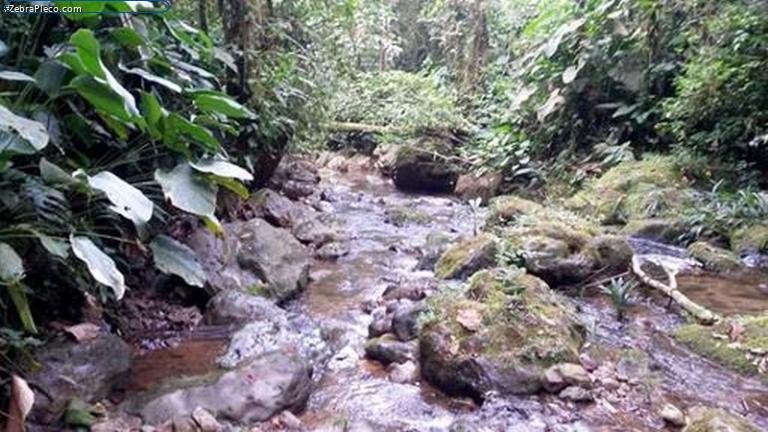
In the wild, specimens have these microhabitat preferences: central area of small streams, characterised by shallow rapids (< 20 cm; < 0.3 m s-1) with sand, gravel, pebbles and small scattered boulders. Riparian forest almost intact, shading 90% - 100% of the stream.
Compatibility & Suggested Tankmates
Non aggressive and sociable with its own and other species.
Tankmates: In wild, fish communities included these spp.: (mostly) Rhoadsia altipinna and Andinoacara blombergi, with fewer specimens of Bryconamericus dahli, Astroblepus cyclopus, Astroblepus sp., Trichomycterus sp., Pseudopoecilia festae, and Pimelodella modesta.
Habitat & Water Parameters
Natural distribution, biotope water conditions and temperature ranges
Geographic Distribution
Found in two small rivers of the Pachijal River system, the Sune and Mashpi Rivers, part of the Esmeraldas River Basin, Pacific Ocean versant, northwestern Ecuador, Pichincha province.
Ecuador Pacific Coast Rivers, Esmeraldas (click on these areas to find other species found there)
Login to view the map.
Species Description & Identification
Morphology, diagnostic traits and sexual dimorphism
Identification
The genus Microglanis was described by Eigenmann
(1912) to include small pimelodids with the head as wide as long, the skull covered by skin only; the occipital crest small; frontal fontanel not extending much if any behind the eye, and a minute occipital fontanel sometimes present; eye without a free orbital margin; dorsal and pectoral spines well developed; and premaxillary patches of teeth without backward projecting angles.
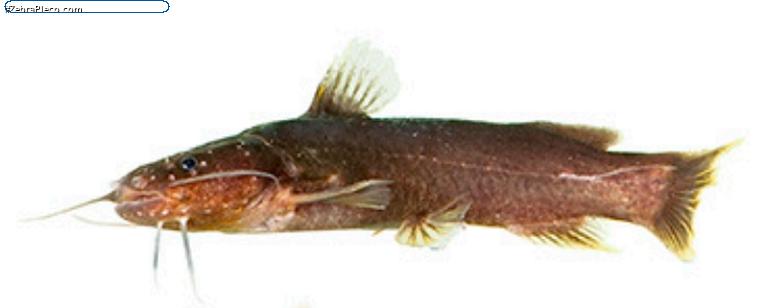
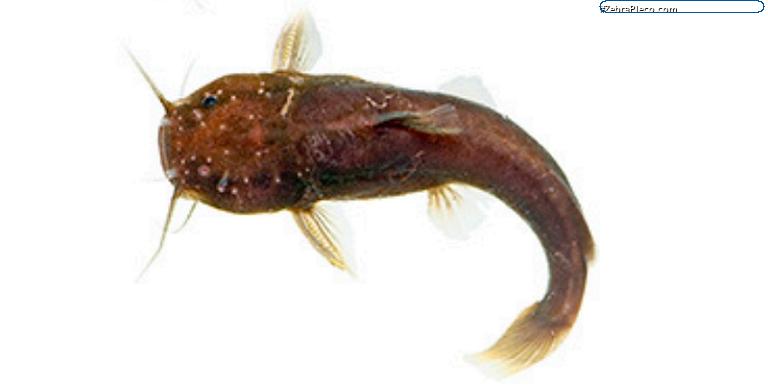
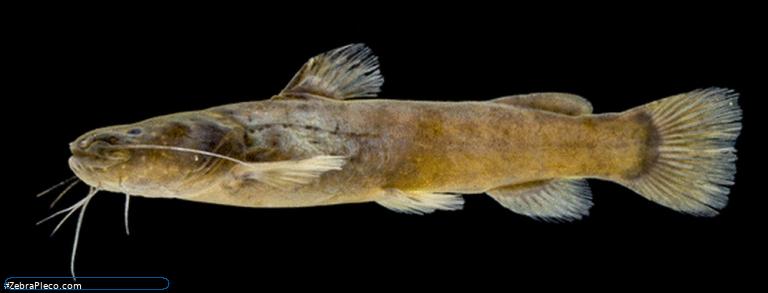
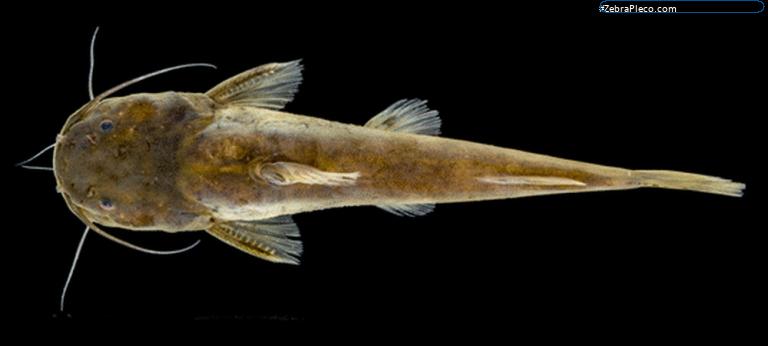
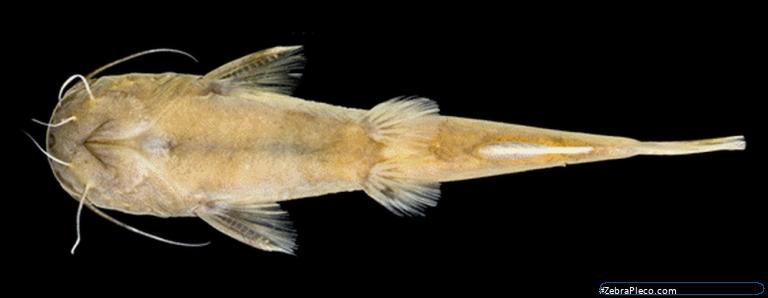
Microglanis berbixae is distinguished from congeners by its colour pattern. Head and body uniform, pale brown, yellowish or greyish, without any kind of blotches, bands, or dots, except a transverse lunate band, dark brown or black, at caudal-fin origin (vs. head and body mottled or marbled brown with whitish or cream blotches, bands, or dots in other species). M. berbixae is further distinguished from M. variegatus, its geographically closest species, by belly pigmentation; in M. berbixae the belly colour is uniform, yellowish or greyish brown, without aggregates of small black dots/melanophores (vs. usually possessing a whitish or creamy belly with randomly arranged aggregates of melanophores).
Sexual Dimorphism (Sexing)
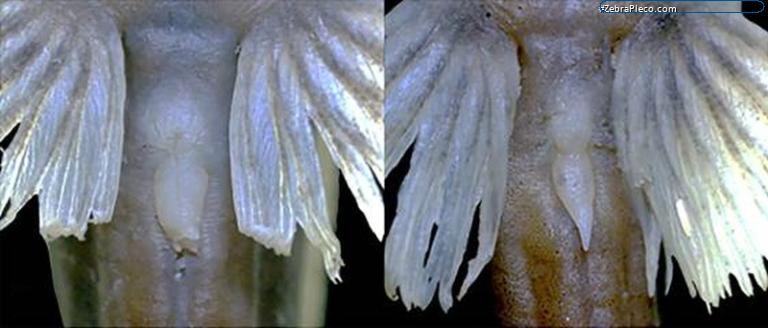
Females and males can be sexed by their genital papillae: Female: Cylindrical-shaped papilla with truncated ending and a small pointed flap. Male: Elongate and triangular papilla, pointed tip, no flap.
Taxonomy, Synonyms & Etymology
Classification history, linguistic derivations and variant forms
Etymology
Micro - small, glanis - catfish - in reference to the rather small forms of catfish that this genus contains. The specific name “berbixae”, honour María Resurección Sesma Lizari, “Berbixe”, mother of Ibon Tobes Sesma, for its unconditional support and infinite love. A genitive.
Literature & Resources
Scientific publications, external links and citation tools
Literature & References
External Databases
Related Searches