PAGE_HEADER
Bagroides melapterus Bleeker, 1851
Image Showcase
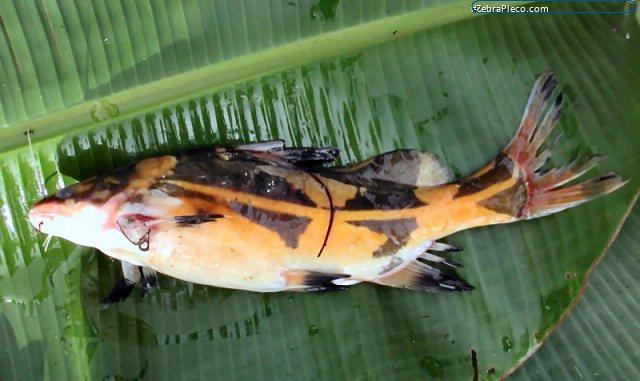
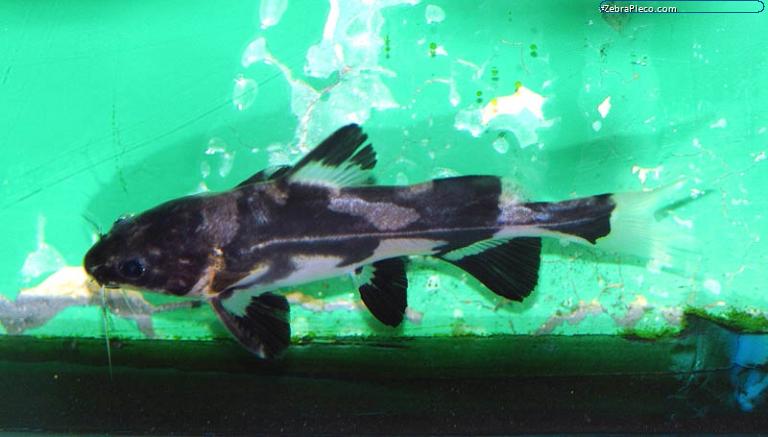
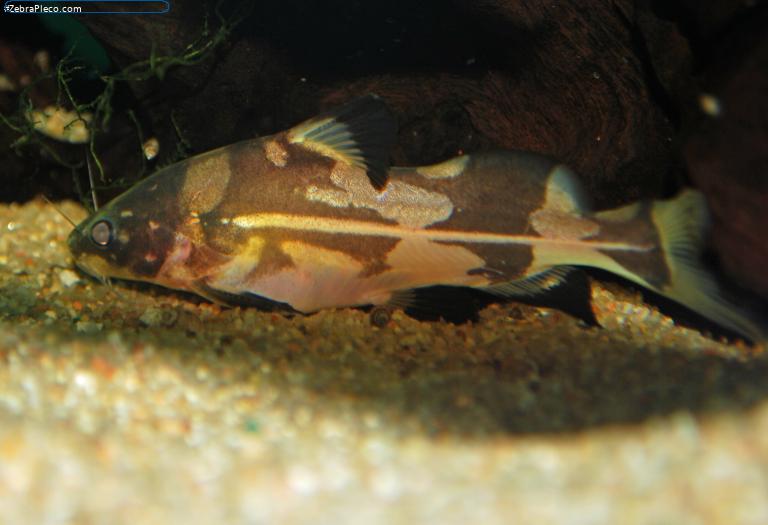
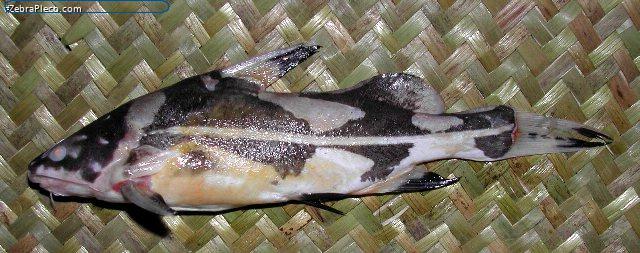
Photographs, diagnostic angles and morphological variants
Community & Keeper Tally
Member interactions, breeding records and forum mentions
Aquarium Care & Husbandry
Dietary requirements, tank setup, compatibility and breeding
Feeding & Diet
An unfussy omnivore. Most prepared foods are taken and the fish will happily eat live or frozen foods. [View Member Food Stats]
Aquarium Furniture & Decor
Any or a mix of sand, rounded stone or organic matter suits this fish.
Compatibility & Suggested Tankmates
A good complement to most larger aquariums, they are not aggressive to other species. Larger males may fight over territory if kept in too small a tank however smaller fishes can be kept in groups in larger aquaria.
Tankmates: Combine with most fishes that do not directly compete for cover. Avoid keeping with fishes less than 25% the size of the catfish. Larger anabantids and smaller barbs fit nicely with these fishes.
Breeding Notes
Unreported in the aquarium.
Habitat & Water Parameters
Natural distribution, biotope water conditions and temperature ranges
Geographic Distribution
Asia: Thailand, Malaysia, Brunei and Indonesia.
Pacific, Greater Sunda Island Rivers, Borneo Waters (click on these areas to find other species found there)
Pacific, Greater Sunda Island Rivers, Sumatra Waters (click on these areas to find other species found there)
Thailand Waters (click on these areas to find other species found there)
Login to view the map.
Species Description & Identification
Morphology, diagnostic traits and sexual dimorphism
Identification
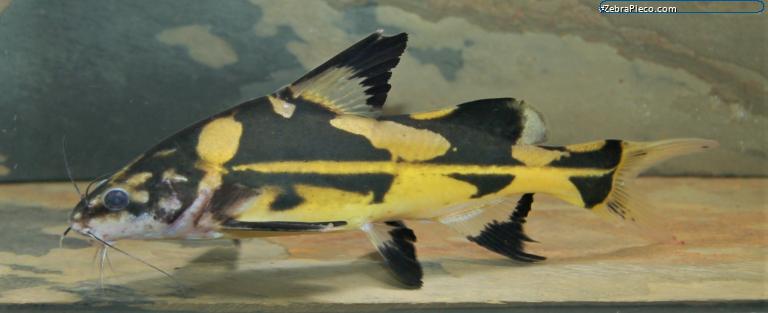
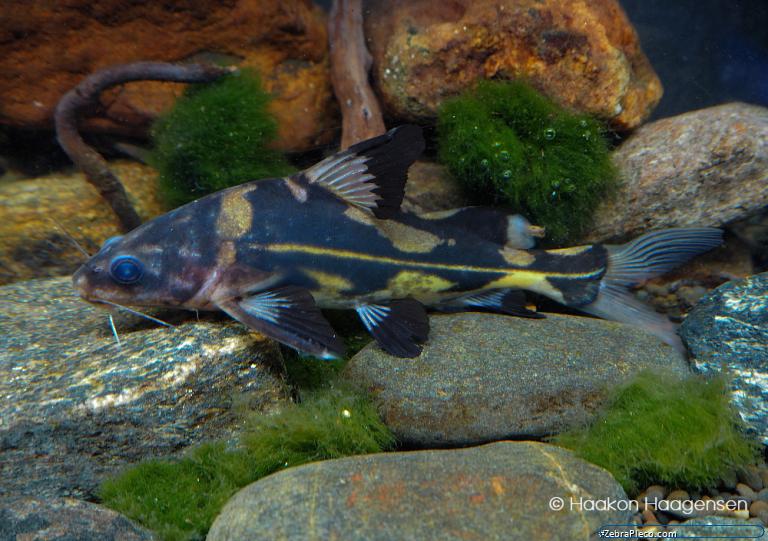
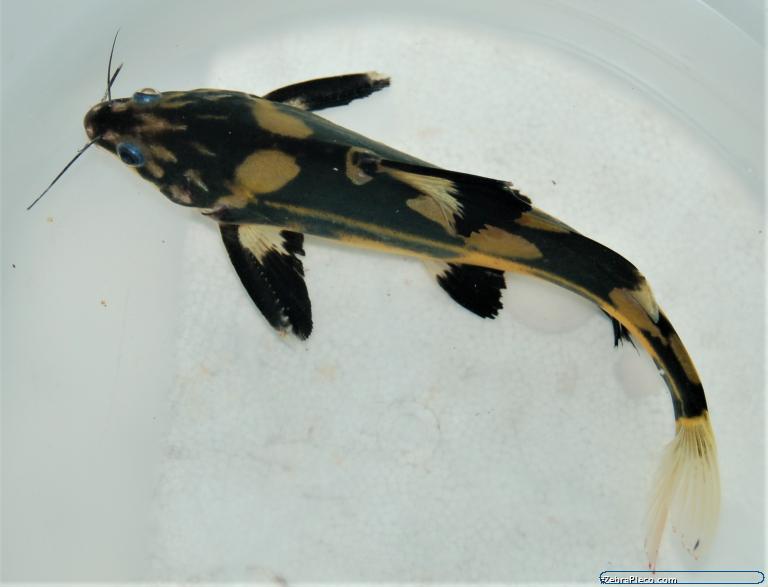
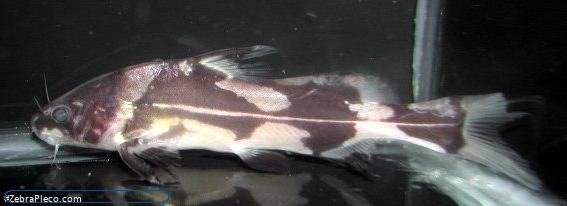
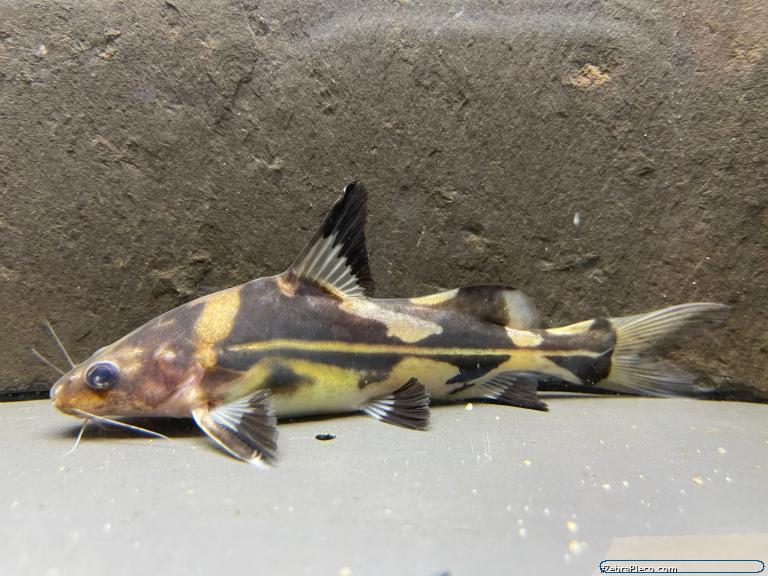
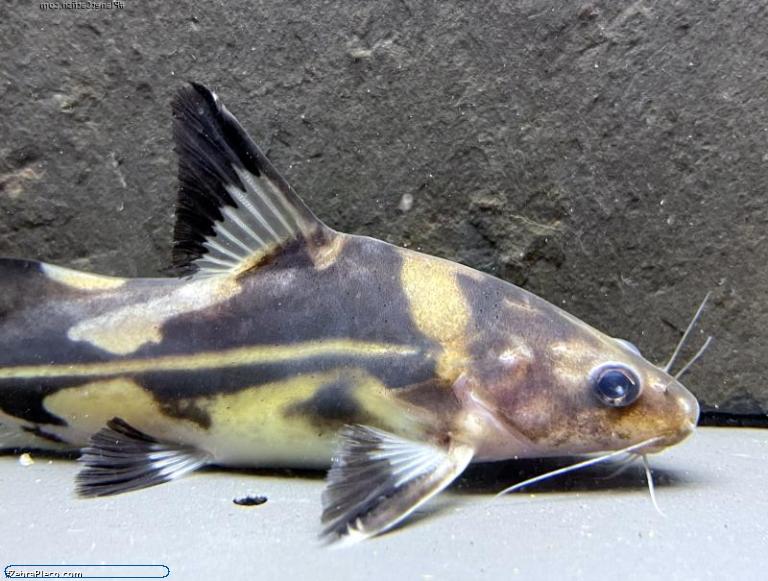
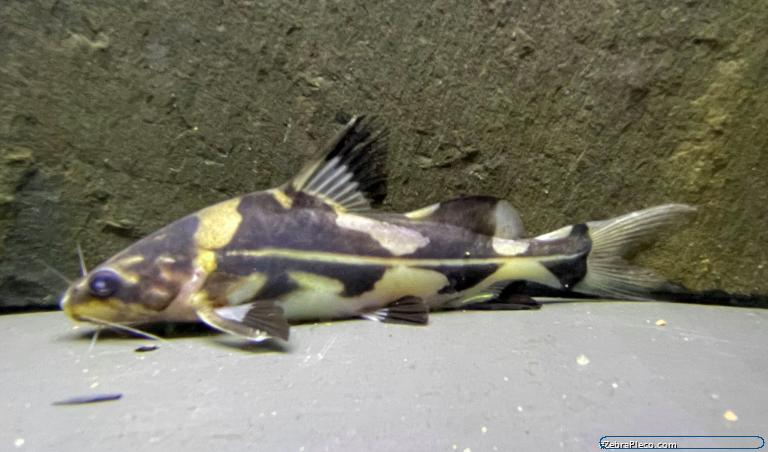
Oft misidentified in older hobbyist literature as either Leiocassis micropogon or L. poecilopterus. L. micropogon is a considerably slender fish, the distance from the base of the dorsal fin to the base of the ventral can be nearly half that of B. melapterus although this is not the best characteristic as it varies considerably amongst individuals. The best pointer is the very faint lateral stripe. L. poecilopterus is more similar but has near vertical barring and only a thin lateral chalk stripe. In B. melapterus this line is typically as wide as the fishes eye and much more noticeable.
Sexual Dimorphism (Sexing)
Males are slenderer and have a small, pointed, whitish genital papillae. Females will grow larger both in terms of TL and girth.
Taxonomy, Synonyms & Etymology
Classification history, linguistic derivations and variant forms
Synonyms
Bagroides melanopterus
Pronunciation
bag ROY dees - mel APP terr uss
Etymology
Bagroides: From bagrus, the name of a catfish genus frequently used to form generic names and the Greek suffix -oides, denoting likeness.
Literature & Resources
Scientific publications, external links and citation tools
Description Reference
Natuurkundig Tijdschrift voor Nederlandsch Indië v. 2 (no. 2), pp 204.
External Databases
Related Searches