PAGE_HEADER
Batrochoglanis raninus (Valenciennes, 1840)
Image Showcase
Photographs, diagnostic angles and morphological variants
Community & Keeper Tally
Member interactions, breeding records and forum mentions
Aquarium Care & Husbandry
Dietary requirements, tank setup, compatibility and breeding
Feeding & Diet
In nature goes stalk-hunting, swallowing prey within its range. Starts feeding on microcrustaceans and aquatic insect larvae, then shifts it diet to fishes of notable size. In the aquarium all foods are accepted greedily. An opportunistic feeder that seems pleased to eat anything that it can fit in its wide mouth. One study of specimens from the wild showed their guts contained mainly seeds of plants growing the water's edge. [View Member Food Stats]
Aquarium Furniture & Decor
In nature, typically found over silty substrates or amongst concentrations of leaf litter. A variety of hiding places should be provided.
Compatibility & Suggested Tankmates
This fish will even try to consume larger tankmates that are thin bodied. Lee Finley reported a four inch specimen that ate a seven inch Farlowella even though it could only swallow the first three inches of its prey.
Best kept with tankmates too large and fast to be eaten. Otherwise not an aggressive fish.
Tankmates: Medium size and larger tetras, cichlids, and other catfishes.
Breeding Notes
Unreported in the aquarium.
Habitat & Water Parameters
Natural distribution, biotope water conditions and temperature ranges
Geographic Distribution
South America: Amazon River basin, Guyana and French Guiana.
Amazon (click on these areas to find other species found there)
Guyana Waters, Coastal Rivers of Guyanas, Essequibo (click on these areas to find other species found there)
Amazon, Middle Amazon (Solimoes), Madeira, Madre de Dios (click on these areas to find other species found there)
Amazon, Upper Amazon, Marañón (click on these areas to find other species found there)
Amazon, Upper Amazon, Nanay (click on these areas to find other species found there)
Orinoco (click on these areas to find other species found there)
Amazon, Upper Amazon, Marañón, Ucayali (click on these areas to find other species found there)
Login to view the map.
Species Description & Identification
Morphology, diagnostic traits and sexual dimorphism
Identification
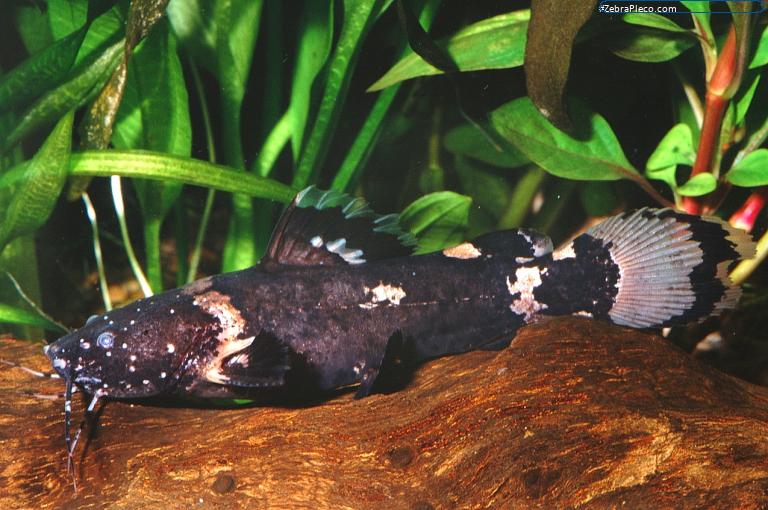
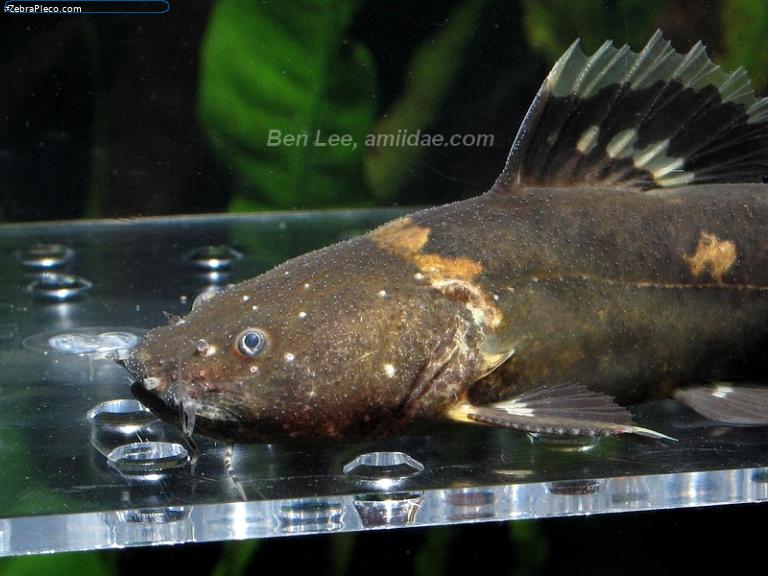
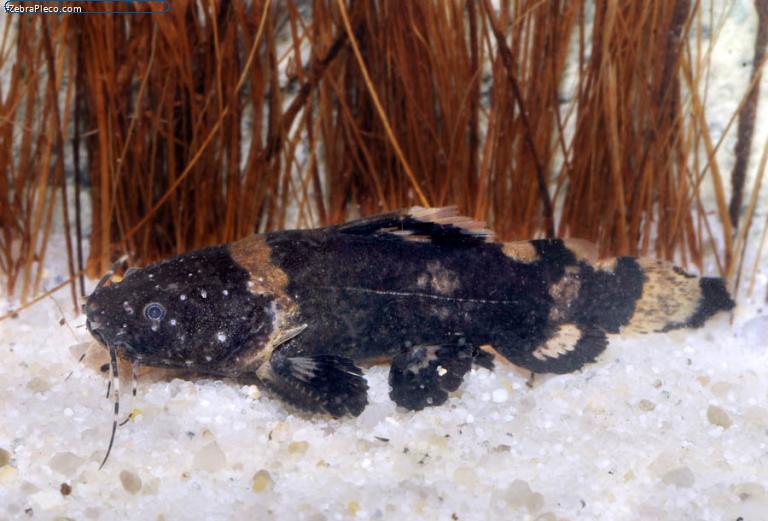
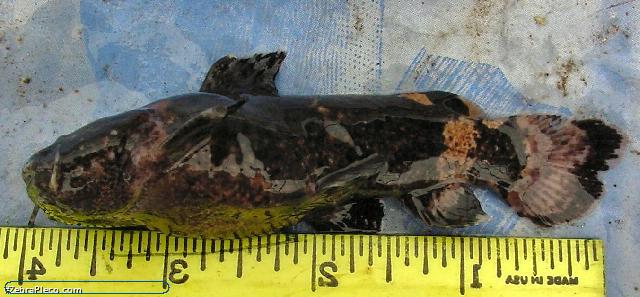
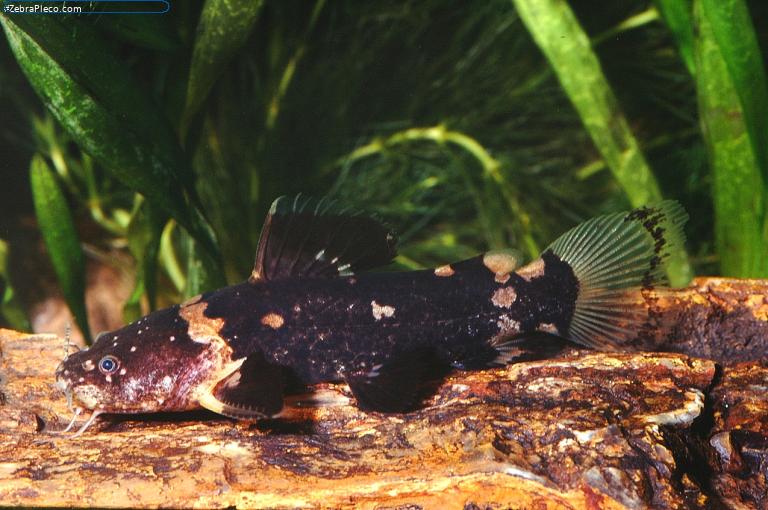
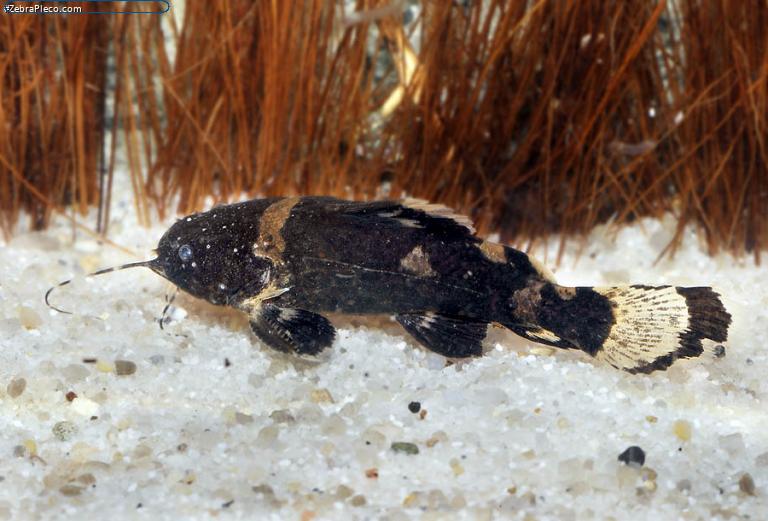
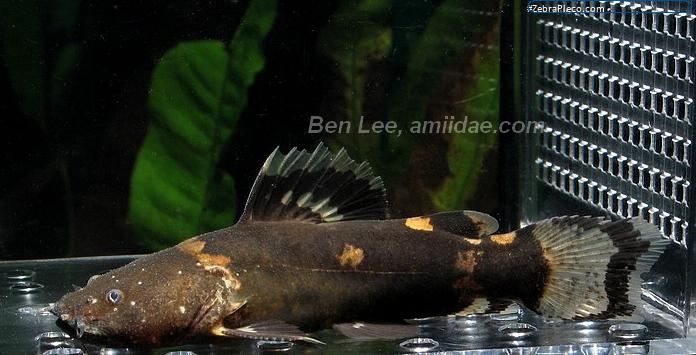
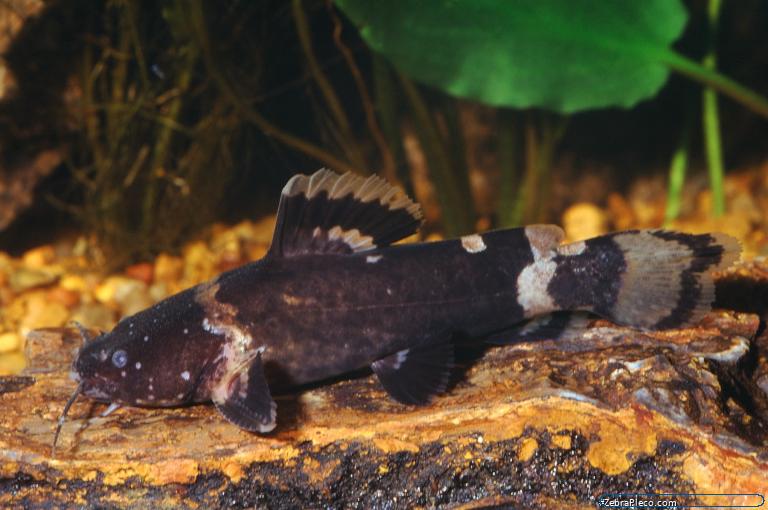
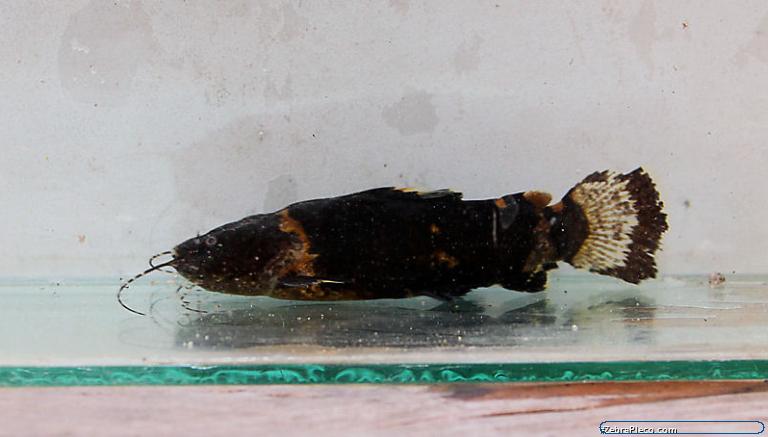
The colour pattern is basically a dark brown to black overall with a white to cream colour collar around the nape. A single white to cream coloured marking is also present on the body just above the lateral line and below the dorsal-fin. There is a a light coloured band (which may be incomplete) just fore of the caudal peduncle and a pair of light markings on the caudal peduncle. There is a light marking at the base of the adipose and the tip of the adipose is clear.
Young specimens can be confused with members of Microglanis. Microglanis typically have much more extended light areas and the overall body is not as robust.
General Remarks
The vast majority of specimens in the aquarium hobby are exported from the Brazilian Amazon and these specimens rarely grow beyond 120 mm. According to Shibatta (an ichthyologist working on Pseudopimelodidae), ''Pseudopimelodidae can be considered the least known family of the naked Neotropical freshwater catfishes.'' Much more work is needed on this family. Given the great amount of size and coloration differences recorded for this ''species,'' and the wide distribution range reported, it is likely that this is either a very variable species or a collection of closely related species with similar cryptic colour patterns.
Taxonomy, Synonyms & Etymology
Classification history, linguistic derivations and variant forms
Synonyms
Batrachoglanis raninus, Pimelodus raninus, Pseudopimelodus acanthochirus, Pseudopimelodus raninus, Pseudopimelodus raninus raninus
Pronunciation
- ra nee nuss
Literature & Resources
Scientific publications, external links and citation tools
Description Reference
Histoire naturelle des poissons v. 15, pp 157, Pl. 434
External Databases
Related Searches