
PAGE_HEADER
Channallabes apus (Günther, 1873)
Image Showcase
Photographs, diagnostic angles and morphological variants



Community & Keeper Tally
Member interactions, breeding records and forum mentions
Aquarium Care & Husbandry
Dietary requirements, tank setup, compatibility and breeding
Feeding & Diet
Will take all manner of pelleted food, as well as frozen/live food (the latter being preferred). [View Member Food Stats]
Aquarium Furniture & Decor
Provide plenty of driftwood for the fish to hide. Ensure that the tank cover is tight-fitting/weighed down, they are capable of climbing out.
Compatibility & Suggested Tankmates
A peaceful fish that is best suited for the West African biotope tank. Ideal tankmates include mid-sized African barbs, tetras, and cichlids.
Breeding Notes
Unreported in the aquarium.
Habitat & Water Parameters
Natural distribution, biotope water conditions and temperature ranges
Geographic Distribution
Africa: Angola to Congo River Basin.
African Waters, Congo (click on these areas to find other species found there)
Login to view the map.
Species Description & Identification
Morphology, diagnostic traits and sexual dimorphism
Identification
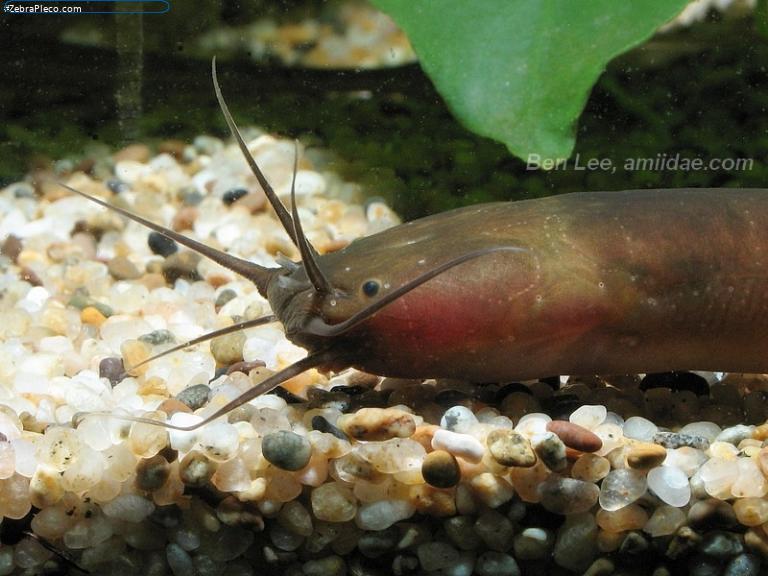
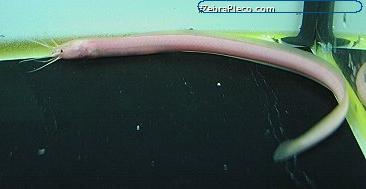
Distinguished by the extremely elongate body, reduced cranial shield, confluent median fins, small eyes and absence of pelvic fins.
Sexual Dimorphism (Sexing)
The genital papilla, which is to the right of the anus as you look at the fish with its head to the left, is elongated and pointed in males while it is round and relatively larger (and larger than the anus) in females. In ventral view especially, females are much broader in the body than males of equal age and rearing practices. It may be hard to see with the naked eye.
General Remarks
Recent research has documented this species' ability to feed terrestially (videos above). The catfish's neck is especially flexible, with specialised vertebrae that allow it to hold its head up out of the water without using fins. The fish's diet provided the scientists with the first clue to its remarkable behaviour - it mainly eats beetles which are found on land. The researchers speculate that a similar feeding strategy could have been used by the first vertebrates to emerge from the oceans.
The fish is known to burrow into the substrate and has been caught by hook and line in waterlogged areas adjacent to rivers and swamps simply by digging a hole and fishing in the resulting pool.
Taxonomy, Synonyms & Etymology
Classification history, linguistic derivations and variant forms
Synonyms
Clariallabes apus, Gymnallabes apus
Pronunciation
cha nal ah bez - ah pess
Etymology
Channallabes: From the Greek, channe, meaning anchovy and allabes, the name of a Nilotic fish (a kind of lamprey); in reference to the shape of the fish. From the Greek prefix a- meaning without and pous, meaning foot; in reference to the lack of pelvic fins.
Literature & Resources
Scientific publications, external links and citation tools
Literature & References
External Databases
Related Searches

