PAGE_HEADER
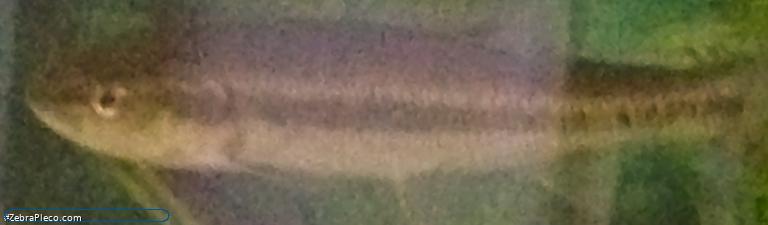
Semotilus atromaculatus (Mitchill, 1818)
Image Showcase
Photographs, diagnostic angles and morphological variants
Community & Keeper Tally
Member interactions, breeding records and forum mentions
Aquarium Care & Husbandry
Dietary requirements, tank setup, compatibility and breeding
Feeding & Diet
Flake, Pellets, Brine Shrimp, Bloodworms, Insect Larvae, and most of the commercially available fishfoods. [View Member Food Stats]
Compatibility & Suggested Tankmates
Tankmates: Other large but more docile North American native fish such as other Creek Chubs, larger Shiners and Dace, Darters, Madtoms, and the more peaceful Sunfish.
Breeding Notes
In nature, this species will spawn in early spring when water temperatures rise to at least 55F. Males will dig pits above or below riffles in smooth water with a gravel substrate. The male will then spawn with females and fill the pit with fertilised eggs. Once a pit is full the male will then cover it with gravel and move downstream to create another pit and repeat the process multiple times. Males will typically guard their pits but not always.
Habitat & Water Parameters
Natural distribution, biotope water conditions and temperature ranges
Geographic Distribution
North America: most of eastern USA and southeastern Canada in Atlantic, Great Lakes, Hudson Bay, Mississippi and Gulf basins as far as Manitoba, Montana, Wyoming, Colorado, Oklahoma, and Texas, but absent from southern Georgia and peninsular Florida; upper Pecos and Canadian River systems, New Mexico.
Taxonomy, Synonyms & Etymology
Classification history, linguistic derivations and variant forms
Synonyms
Cyprinus atromaculatus, Leuciscus evermanni, Leuciscus iris, Leuciscus pulchelloides, Leucosomus incrassatus, Leucosomus pallidus, Semotilus atromaculatus atromaculatus, Semotilus cephalus, Semotilus dorsalis, Semotilus hammondii, Semotilus macrocephalus, Semotilus speciosus
Pronunciation
seh moe till uss - at roe mak you lat uss
Etymology
The generic name is from the Greek word, sema meaning banner (in reference to the dorsal fin) and tilos meaning spotted. From the Latin words ater, meaning dull black and maculatus, meaning stained or spotted.
There is 1 other speciesSqualidus atromaculatus with this specific name.
Literature & Resources
Scientific publications, external links and citation tools
Literature & References
External Databases
Related Searches