PAGE_HEADER
Astyanax jordani (Hubbs & Innes, 1936)
Image Showcase
Photographs, diagnostic angles and morphological variants
Community & Keeper Tally
Member interactions, breeding records and forum mentions
Aquarium Care & Husbandry
Dietary requirements, tank setup, compatibility and breeding
Breeding Notes
An easy to breed egg scatterer.
Habitat & Water Parameters
Natural distribution, biotope water conditions and temperature ranges
Geographic Distribution
North America: Mexico.
Species Description & Identification
Morphology, diagnostic traits and sexual dimorphism
Identification
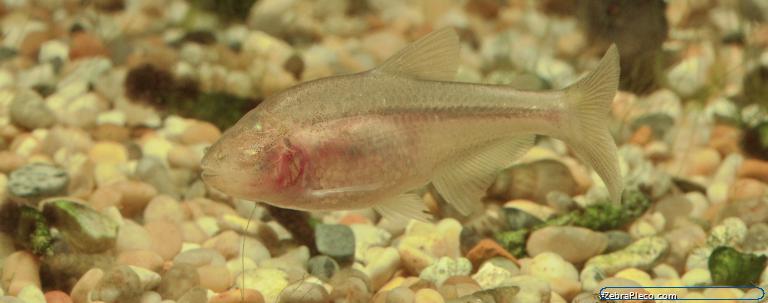
Today we know that the blind cave tetra can be crossed over generations with the "normal looking" tetra Astyanax mexicanus that can be found all over Mexico. This fact was the reason why many scientists proposed that the blind cave tetra did not represent a species on its own. Nowadays things look different again. Most recent works acknowledge evolutionary aspects and so the blind cave tetra is most often named Astyanax jordani.
General Remarks
Discovered in a cave in the state of San Louis Potosí in Mexico by the aforementioned fish collector, C. Basil Jordan. Jordan was able to collect 100 specimens of the new fish and managed to transport them to the USA without losing a single specimen. His discovery was a sensation. The blind cave tetra was the first cave species belonging to the tetra family! The species was initially described in a new genus under the name of Anoptichthys jordani, which is translated "Jordan´s eyeless fish". Interestingly the line never died out in aquaria from the first import in 1936 and the ancestors of all specimens kept today are fish from the original 100. Especially impressive given the blind cave tetra is no beauty!.
Taxonomy, Synonyms & Etymology
Classification history, linguistic derivations and variant forms
Synonyms
Anoptichthys antrobius, Anoptichthys hubbsi, Anoptichthys jordani, Astyanax mexicanus jordani
Etymology
Astyanax: The name of Astyanax, Hector´s son in the Greek mythology Named for a collector of ornamental fish - his name was C. Basil Jordan - who discovered this blind species of tetra.
There is 1 other speciesPtychidio jordani with this specific name.
Literature & Resources
Scientific publications, external links and citation tools
Literature & References
External Databases
Related Searches