PAGE_HEADER
Peckoltia otali Fisch-Muller & Covain, 2012
Image Showcase
Photographs, diagnostic angles and morphological variants
Community & Keeper Tally
Member interactions, breeding records and forum mentions
Aquarium Care & Husbandry
Dietary requirements, tank setup, compatibility and breeding
Aquarium Furniture & Decor
Peckoltia otali was collected from several localities in the upper Maroni River basin. It lives in same biotopes as Guyanancistrus brevispinis, Hemiancistrus medians, Lithoxus planquettei, Panaqolus koko, Pseudancistrus barbatus, Hypostomus gymnorhynchus, and Cteniloricaria platystoma. In rapids, it is mostly found in sunny and shallow clear water, swiftly flowing currents, with medium-sized rocks substrate. It is a discreet species.
Compatibility & Suggested Tankmates
Tankmates: A medium sized pleco that can be combined with a very wide array of tankmates due to its unfussy nature. Perfectly safe with small fishes and shrimp or robust enough to withstand the attention of all but the largest cichlids.
Habitat & Water Parameters
Natural distribution, biotope water conditions and temperature ranges
Geographic Distribution
South America: upper Maroni River basin in French Guiana and Suriname.
Guyana Waters, Coastal Rivers of Guyanas, Suriname Coastal Rivers, Marowijne, Upper Marowijne, Tampok (click on these areas to find other species found there)
Login to view the map.
Species Description & Identification
Morphology, diagnostic traits and sexual dimorphism
Identification
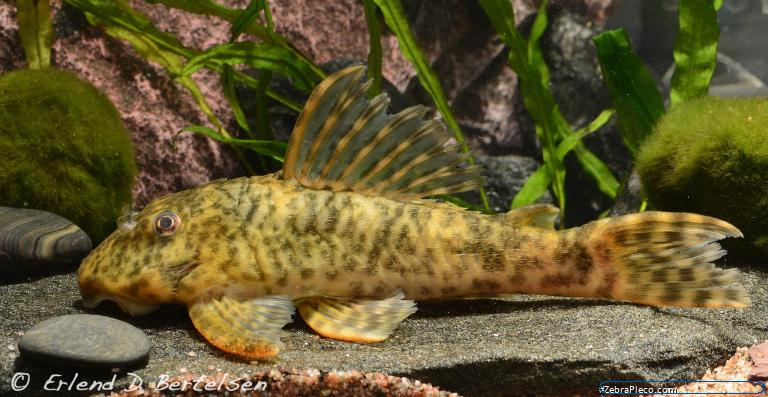
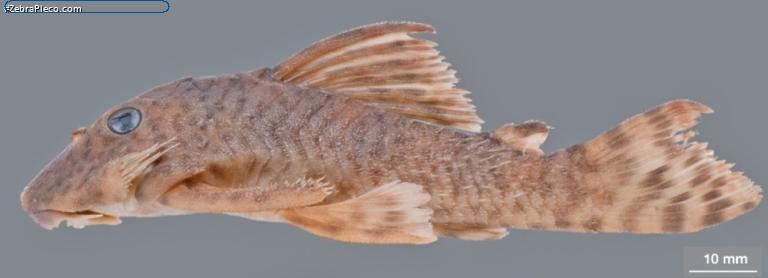
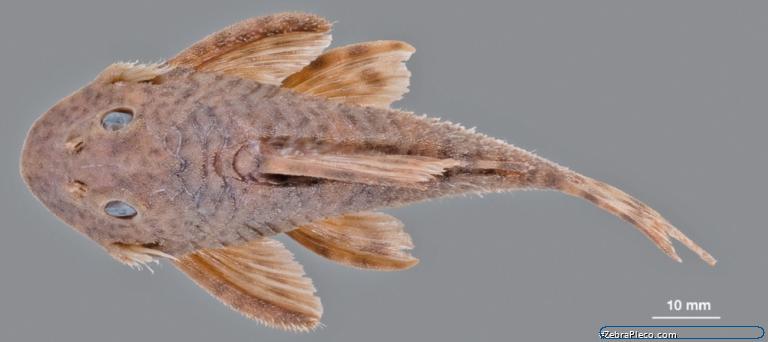
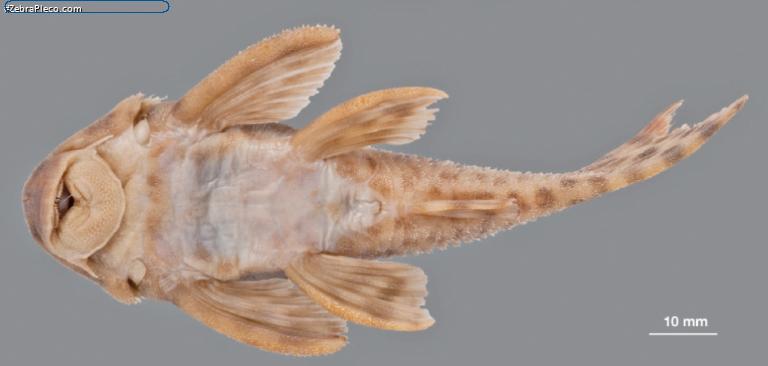
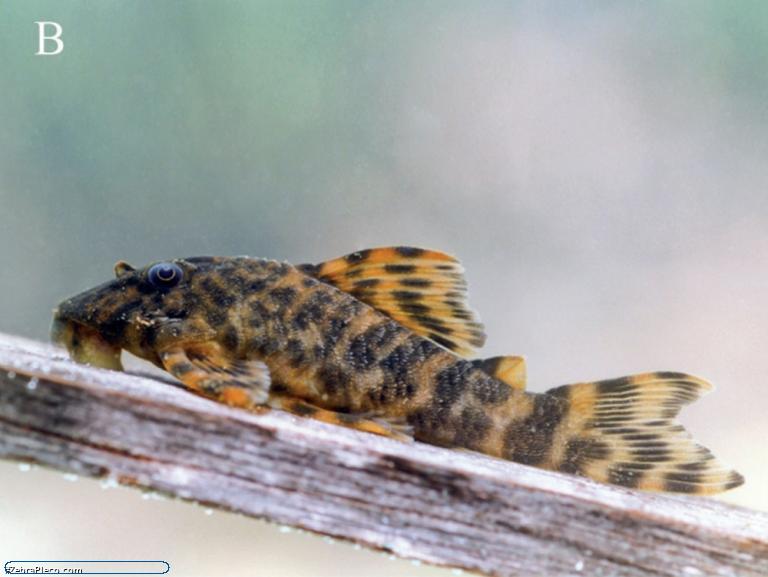
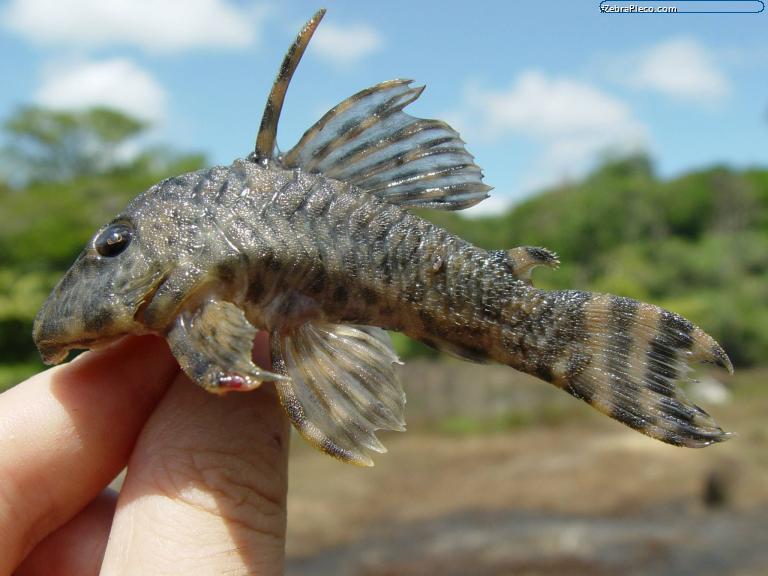
Upper body base colour, yellow-orange; abdominal surface, white. Body covered with blackish-brown spots, and may show faint dorsal saddles. The original description states that compared to other Peckoltia species, adult P. otali have a unique colour pattern: "Numerous blackish-brown spots of irregular size and shape, distributed on head and on entire body except naked ventral areas, resulting in a mottled aspect of dorsum, while spots are aligned to form transverse bands on fins, at least on caudal fin. Juvenile specimens present large transversal blackish bands, or dorsal saddles, on the body that are similar to those characteristic of several Peckoltia including the type species P. vittata." Other Peckoltia species with brown spots on posterior part of the body include P. oligospila, P. sabaji, P. capitulata & P. simulata. Their spots are rounded, comparatively larger and regularly spaced, and they usually do not form bands on fins. P. otali is further distinguished from other spotted Peckoltia by having a deeper and wider body.
Sexual Dimorphism (Sexing)
Males develop small teeth-like odontodes which adorn the leading pectoral fin rays and the back half of the fishes body. Females remain unadorned and have a wider girth across the body most evident when the area just behind the pectoral fins is viewed from above.
General Remarks
Peckoltia otali was collected from several localities in the upper Maroni River basin. It lives in same biotopes as Guyanancistrus brevispinis, Hemiancistrus medians, Lithoxus planquettei, Panaqolus koko, Pseudancistrus barbatus, Hypostomus gymnorhynchus, and Cteniloricaria platystoma. In rapids, it is mostly found in sunny and shallow clear water, swiftly flowing currents, with medium-sized rocks substrate. It is a discreet species.
Taxonomy, Synonyms & Etymology
Classification history, linguistic derivations and variant forms
Pronunciation
peck OLE tea ah
Etymology
Peckoltia: named after Gustavo Peckolt, member of the Natural History Commission of Rondon. The specific name otali is a Wayana Amerindian name meaning secret, in reference to the coloration of the species, similar to its biotope, making it difficult to observe. Wayana Amerindians live on the sides of the Upper Maroni River basin where the new species was found.
Literature & Resources
Scientific publications, external links and citation tools
Description Reference
Cybium v. 36 (no. 1), pp 177, Figs. 5B, 7, 9
External Databases
Related Searches