PAGE_HEADER
Tachysurus koreanus (Uchida, 1990)
Image Showcase
Photographs, diagnostic angles and morphological variants
Community & Keeper Tally
Member interactions, breeding records and forum mentions
Aquarium Care & Husbandry
Dietary requirements, tank setup, compatibility and breeding
Feeding & Diet
Prefers live food but will adapt to frozen food. It is especially fond of shrimp. It will also eat small fish, bloodworms and most aquatic invertebrates. Slow at finding food, it is best to feed this nocturnal fish after turning off the lights, especially if housed with other, faster species. [View Member Food Stats]
Aquarium Furniture & Decor
Needs numerous hiding places. Large stones should be placed in the tank arranged in a way to make crevices and caves. The fish will spend much of the day hiding among these, coming out at night to feed. The substrate should be sand or gravel. Plants do not often occur in the fast flowing water where this fish is found
Compatibility & Suggested Tankmates
Peaceful
Tankmates: Peaceful, although it will eat any tankmate that will fit into its mouth. The fish it is housed with should be able to withstand strong currents. They also should not be fish that eat too quickly as this fish is slow at finding food. In nature, it is found with Zacco koreanus and Zacco platypus and may share a cave with Liobagrus species.
Breeding Notes
Occurs from May to June in nature. Little is known of its breeding habits.
Habitat & Water Parameters
Natural distribution, biotope water conditions and temperature ranges
Geographic Distribution
Asia: Endemic to Korea. Found in rapids in the mid- to large-sized waterways along the west coast of Korea.
Species Description & Identification
Morphology, diagnostic traits and sexual dimorphism
Identification
Tachysurus can be identified by an extrascapular without a laterosensory canal, and a pterotic with a broad lateral laminar expansion. It is among the most speciose catfish groups in East Asia and its members inhabit habitats ranging from fast-flowing hillstreams to large rivers.
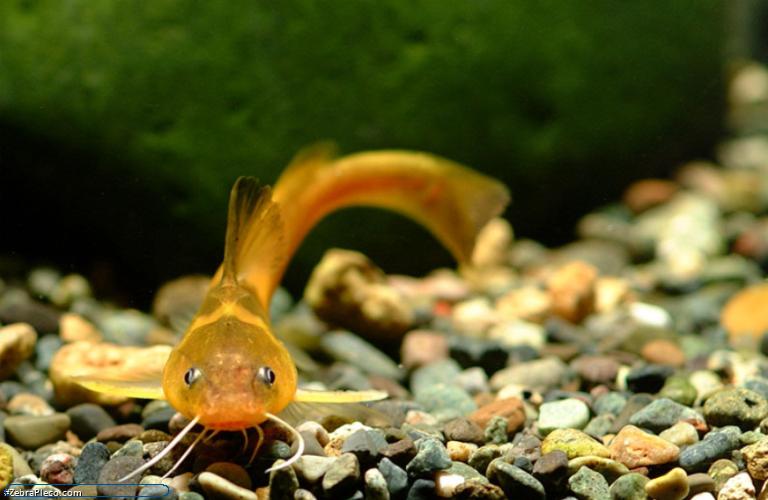
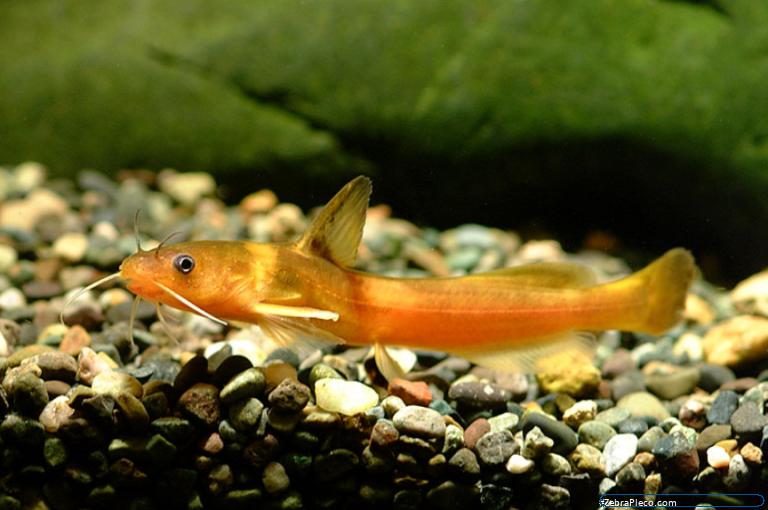
Variable colour, from yellowish brown to dark brown, sometimes mottled. Behind the head there is always a single, light-coloured band.
Sexual Dimorphism (Sexing)
Same as for genus
Taxonomy, Synonyms & Etymology
Classification history, linguistic derivations and variant forms
Synonyms
Pseudobagrus koreanus
Pronunciation
tah key sue russ.
Etymology (source: ETYFish.org)
Ensis, Latin suffix denoting place: Ussuri River, Russia, one of two Amur basin rivers where it was first collected
Literature & Resources
Scientific publications, external links and citation tools
Literature & References
External Databases
Related Searches