PAGE_HEADER
Synodontis ocellifer Boulenger, 1900
Image Showcase
Photographs, diagnostic angles and morphological variants
Community & Keeper Tally
Member interactions, breeding records and forum mentions
Aquarium Care & Husbandry
Dietary requirements, tank setup, compatibility and breeding
Feeding & Diet
Omnivore. As with other Synodontis, but with a little more meat. [View Member Food Stats]
Aquarium Furniture & Decor
Rocks, driftwood, plants.
Compatibility & Suggested Tankmates
Juvenile fish are suited to a community tank, but adult fish grow fairly large, and may eat smaller fish.
Breeding Notes
By hormone injection in Eastern Europe.
Habitat & Water Parameters
Natural distribution, biotope water conditions and temperature ranges
Geographic Distribution
Africa: various river basins from Senegal to Chad (Senegal, Gambia, Volta, Chad, Niger basins); including the Bénoué.
African Waters, Nigeria Waters, Agulu (click on these areas to find other species found there)
African Waters, Chad (click on these areas to find other species found there)
African Waters, Gambia (click on these areas to find other species found there)
African Waters, Nigeria Waters, Niger (click on these areas to find other species found there)
African Waters, Sénégal (click on these areas to find other species found there)
African Waters, Volta (click on these areas to find other species found there)
Login to view the map.
Species Description & Identification
Morphology, diagnostic traits and sexual dimorphism
Identification
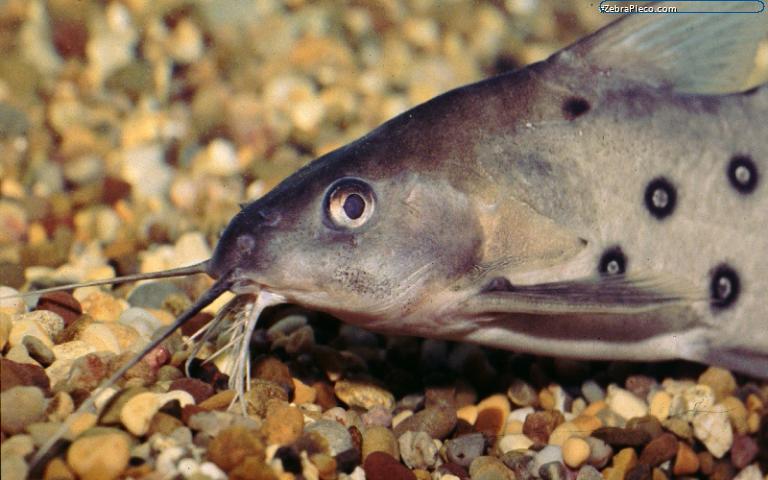
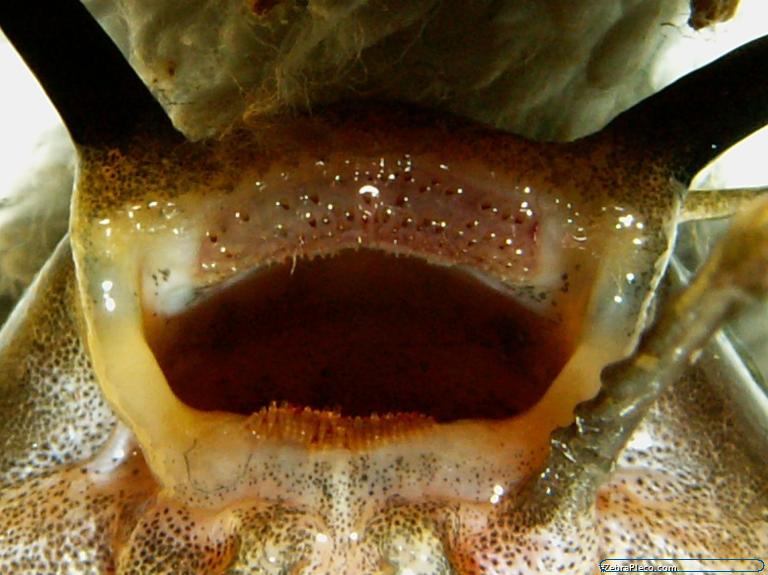
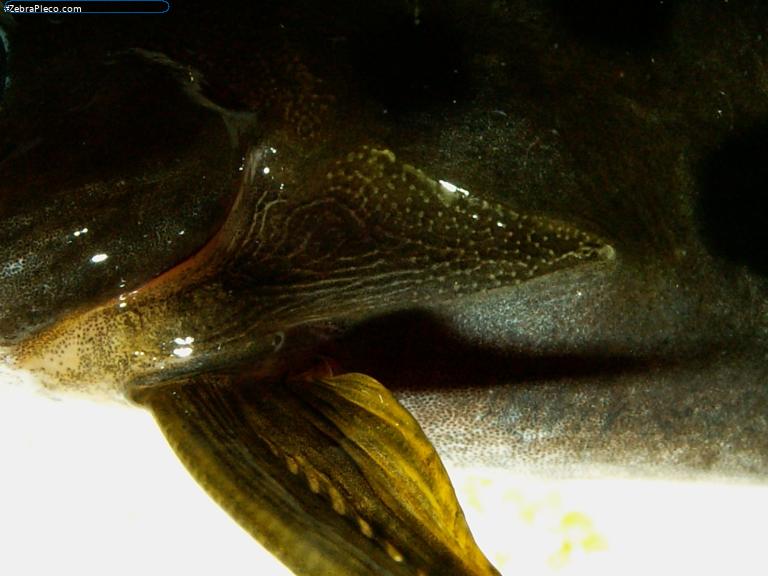
All species in the genus Synodontis have a hardened head cap that has attached a process (humeral process) which is situated behind the gill opening and pointed towards the posterior. The dorsal fin and pectoral fins have a hardened first ray which is serrated. Caudal fin is always forked. There is one pair of maxillary barbels, sometimes having membranes and occasionally branched. The two pairs of mandibular barbels are often branched and can have nodes attached. The cone-shaped teeth in the upper jaw are short. S-shaped and movable in the lower jaw. These fish produce audible sounds when disturbed rubbing the base of the pectoral spine against the pectoral girdle.
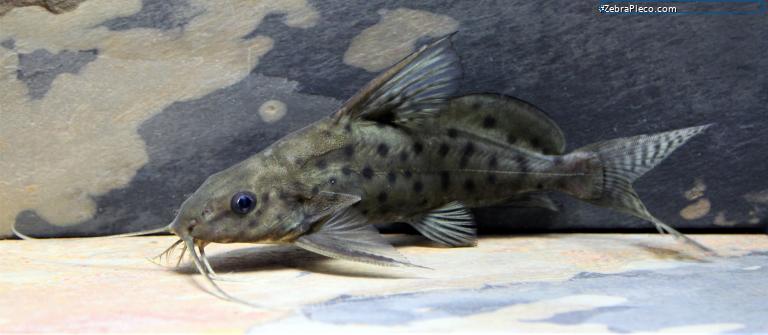
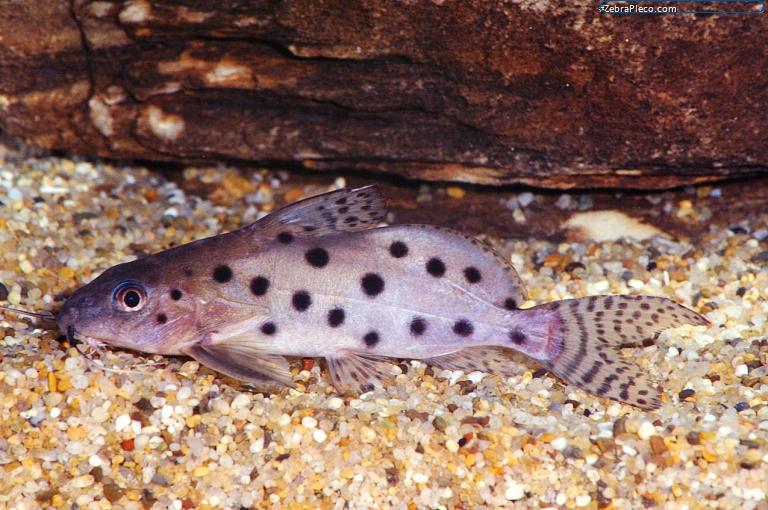
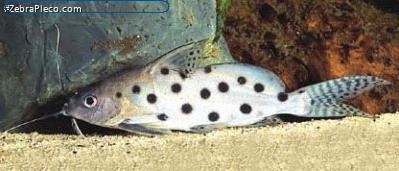
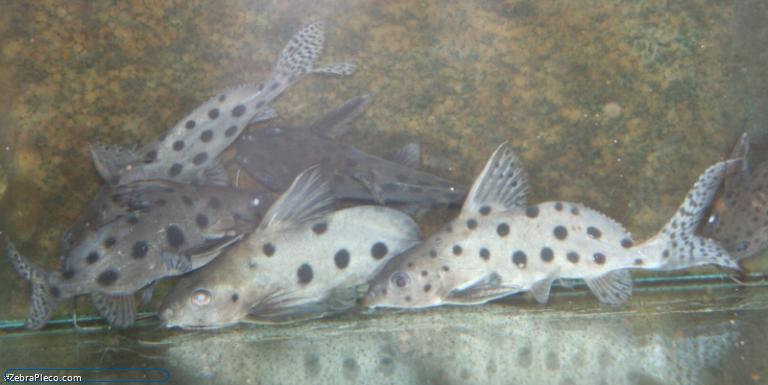
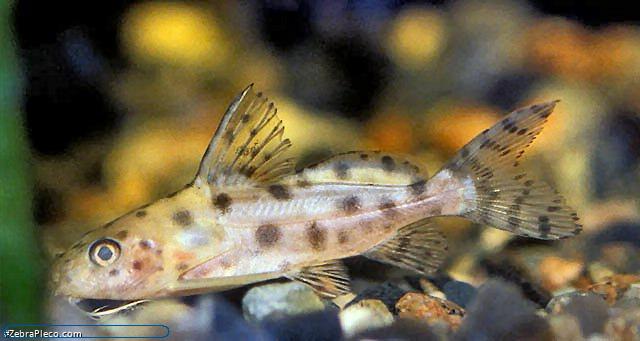
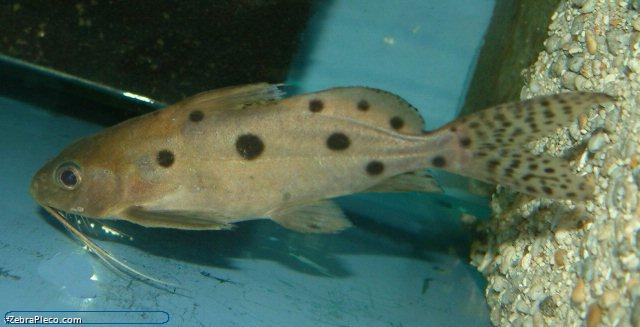
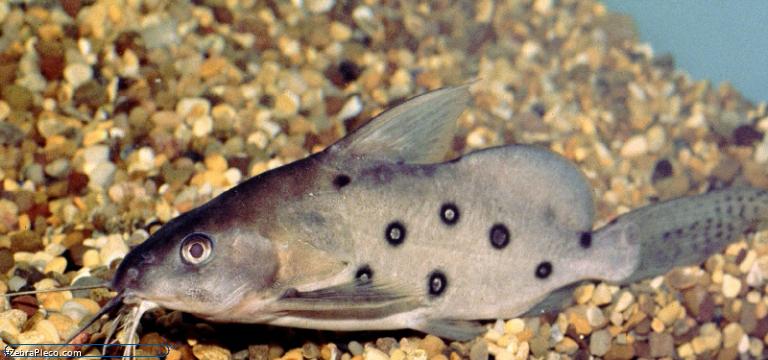
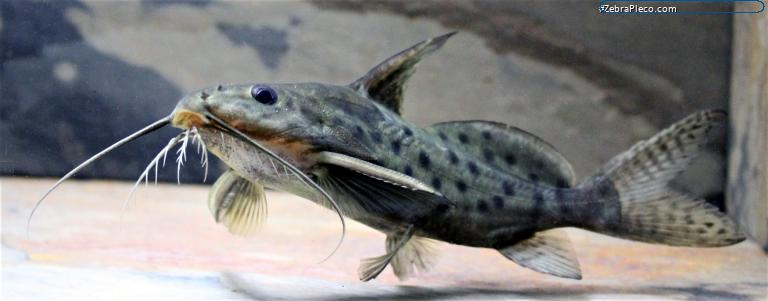
Pale yellowish-brown body with black spots. Some specimens have lighter background coloration or minimal spotting. The characteristic to look for when comparing with other similar spotted species is the adipose fin. In S. ocellifer is very long running almost from caudal to dorsal fin.
Sexual Dimorphism (Sexing)
First lay the fish in your hand with its head toward your palm and the tail toward your fingers. Hold the dorsal spine between your middle and ring finger so the fish is belly up and you won't get punctured by the sharp fin spines (which hurts - be careful). The genital pore is in a small furrow of tissue (in healthy fish) and will be obstructed by the pelvic fins. Pull down on the tail gently to arch the fish's spine and the pelvic fins will stand and the furrow open to display the genital pore and the anus of the fish. The male has a somewhat ridged genital papillae on which the spermatoduct is on the back side, facing the tail fin. A gravid female will also show an extended papillae but the oviduct is on the ventral side of the papillae. It may also show a little redness if gravid. A thin or emaciated female will have just two pink pores, the oviduct and the anus.
Taxonomy, Synonyms & Etymology
Classification history, linguistic derivations and variant forms
Pronunciation
sin oh don tiss - awe CELL if err
Etymology
According to Cuvier, Synodontis is an "ancient name for an undetermined fish from the Nile". It is not derived, as often reported, from syn-, together and odous, tooth, presumed etymology of the lizardfish genus Synodus and refers to the closely-spaced lower jaw teeth of both genera. ''ocellifer'', having little eyes, from ''ocellus'', diminutive of ''oculus'', eye and "ifer" meaning "to carry". In reference to the black spots (possibly with white centres) found on the flanks of this species.
There is 1 other speciesPelmatochromis ocellifer with this specific name.
Literature & Resources
Scientific publications, external links and citation tools
Description Reference
Proceedings of the Zoological Society of London 1900 (pt 3) (art. 4), pp 514.
External Databases
Related Searches