PAGE_HEADER
Mastacembelus plagiostomus Matthes, 1962
Image Showcase
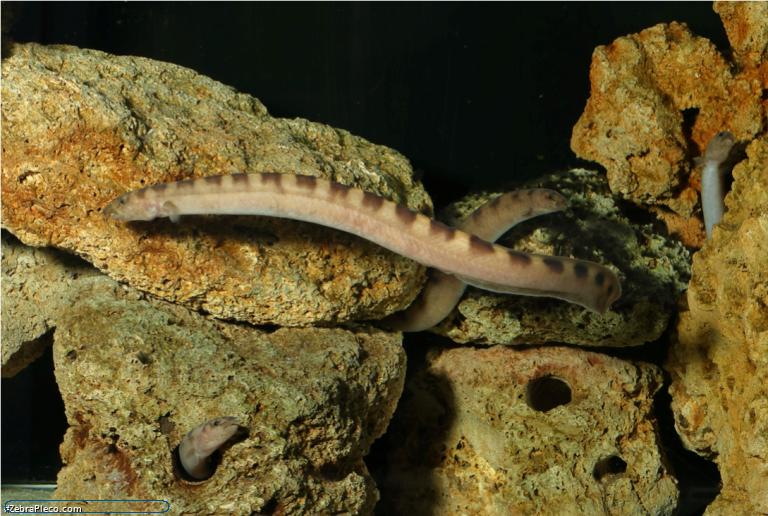
Photographs, diagnostic angles and morphological variants
Community & Keeper Tally
Member interactions, breeding records and forum mentions
Aquarium Care & Husbandry
Dietary requirements, tank setup, compatibility and breeding
Feeding & Diet
Feeds on a variety of carnivore items, such as fry, eggs from spawning fish, insect larvae and other small aquatic creatures. Can be difficult to wean off live or frozen food. Home made "shrimp-mix" is often accepted. Typically a nocturnal feeder, but can often learn to feed when lights are on. [View Member Food Stats]
Aquarium Furniture & Decor
Occurs in shallow waters with a rocky bottom.
Breeding Notes
No member of this genus has been bred in the aquarium.
Habitat & Water Parameters
Natural distribution, biotope water conditions and temperature ranges
Geographic Distribution
Africa: endemic to Lake Tanganyika.
Taxonomy, Synonyms & Etymology
Classification history, linguistic derivations and variant forms
Synonyms
Afromastacembelus plagiostomus, Caecomastacembelus plagiostomus
Etymology (source: ETYFish.org)
Etymology unknown, perhaps mastax, mouth or jaw and embolus, peg or wedge or belos, arrow or spear, possibly referring to sharp or pointed jaws of equal length (“maxillis subacutis aequalibus”) [non-Linnaean name coined by Gronow in 1763 and made available as a genus with no included species by Scopoli; name treated as a specific epithet by Banks & Solandar in 1794 (see M. mastacembelus), which later created a seemingly unintentional tautonym when their species was placed in Mastacembelus] (source: https://etyfish.org/synbranchiformes) Plagio, oblique; stoma, mouth, presumably referring to its inferior mouth
Literature & Resources
Scientific publications, external links and citation tools
Description Reference
Annales, Musée Royal de l'Afrique Centrale, Tervuren, Série in 8o, Sciences Zoologiques No. 111, pp 66, Pl. 4 (fig. c).
External Databases
Related Searches