PAGE_HEADER
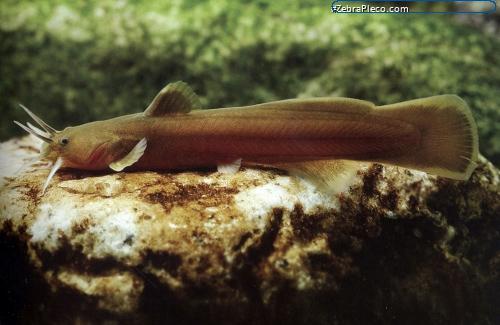
Liobagrus obesus Son, Kim & Choo, 1987
Image Showcase
Photographs, diagnostic angles and morphological variants
Community & Keeper Tally
Member interactions, breeding records and forum mentions
Aquarium Care & Husbandry
Dietary requirements, tank setup, compatibility and breeding
Feeding & Diet
Nocturnal hunter feeding on small invertebrates and fish in the wild. [View Member Food Stats]
Aquarium Furniture & Decor
In the wild, it is found in fast moving water among stones.
Compatibility & Suggested Tankmates
Tankmates: In the wild, it is found with many cold water loach species and Bitterlings.
Breeding Notes
Unreported in captivity. Observation of wild specimens show the eggs to be more orange than yellow in appearance.
Habitat & Water Parameters
Natural distribution, biotope water conditions and temperature ranges
Geographic Distribution
Asia: Korea.
Korea Waters, Geum (click on these areas to find other species found there)
Login to view the map.
Species Description & Identification
Morphology, diagnostic traits and sexual dimorphism
Identification
The adipose fin begins closer to the dorsal and an overall stockier appearance than the other Liobagrus species occurring in Korea.
Sexual Dimorphism (Sexing)
Presumably the same as other Liobagrus species. Males have broader head and females have a heavier body, especially during the breeding season (May to early June).
General Remarks
Listed as endangered in Korea and requires a permit to collect.
Taxonomy, Synonyms & Etymology
Classification history, linguistic derivations and variant forms
Pronunciation
lie oh BAG russ
Etymology
From the Greek, leios, meaning smooth, and bagrus, a name usually used for catfishes; in reference to the smooth head.
There are 2 other speciesEnneacanthus obesus
Synodontis obesus with this specific name.
Literature & Resources
Scientific publications, external links and citation tools
Description Reference
Korean Journal of Limnology v. 20 (no. 1), pp 22, Figs. 1, 5b.
External Databases
Related Searches