PAGE_HEADER
Liobagrus andersoni Regan, 1908
Image Showcase
Photographs, diagnostic angles and morphological variants
Community & Keeper Tally
Member interactions, breeding records and forum mentions
Aquarium Care & Husbandry
Dietary requirements, tank setup, compatibility and breeding
Feeding & Diet
Feeds on small fish and invertebrates in the wild. Adapts readily to prepared food. Nocturnal in nature, in captivity they soon learn to come out anytime food hits the water. [View Member Food Stats]
Aquarium Furniture & Decor
Provide plenty of large stones and gravel. Make sure that the stones are well set in the substrate as the fish will excavate caves beneath them. They prefer to hide under larger stones at least 30cm in diameter. Smaller stones will likely be ignored as will artificial caves. Plants are not necessary but floating plants are useful as they dim the lighting.
Compatibility & Suggested Tankmates
May be kept in groups in a species tank. Pushing and head butting will occur but are harmless. If kept in a group, be sure to provide a large stone for each fish. They do not share burrows in nature with others of their kind.
Tankmates: May be mixed with any cold water species except for the smallest fish which it may see as food. Fish that occur naturally in it range and that make ideal tankmates include Bitterlings (Rhodeus spp.), Zacco platypus, Phoxinus phoxinus and many coldwater loach species.
Breeding Notes
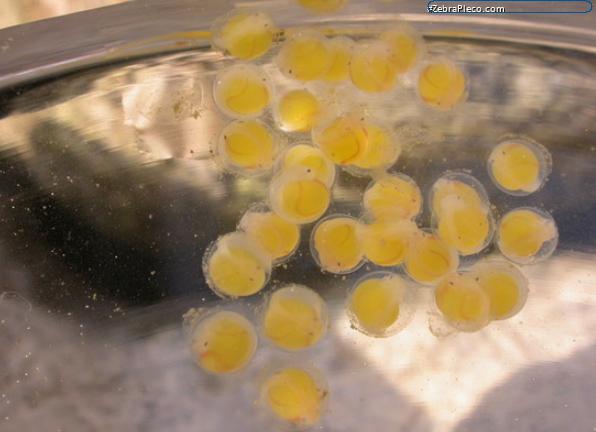
Same as for genus. Not difficult if provided with seasonal temperature changes, moving water and a choice of breeding spots.
Habitat & Water Parameters
Natural distribution, biotope water conditions and temperature ranges
Geographic Distribution
Asia: South Korea.
Korea Waters, Anseong (click on these areas to find other species found there)
Korea Waters, Han (click on these areas to find other species found there)
Korea Waters, Imjin (click on these areas to find other species found there)
Korea Waters, Moohan (click on these areas to find other species found there)
Korea Waters, Samgyo (click on these areas to find other species found there)
Korea Waters, Yeok (click on these areas to find other species found there)
Login to view the map.
Species Description & Identification
Morphology, diagnostic traits and sexual dimorphism
Identification
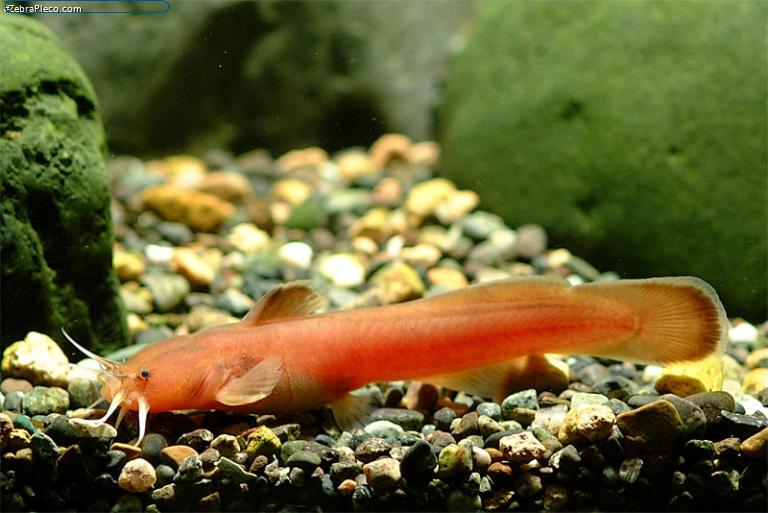
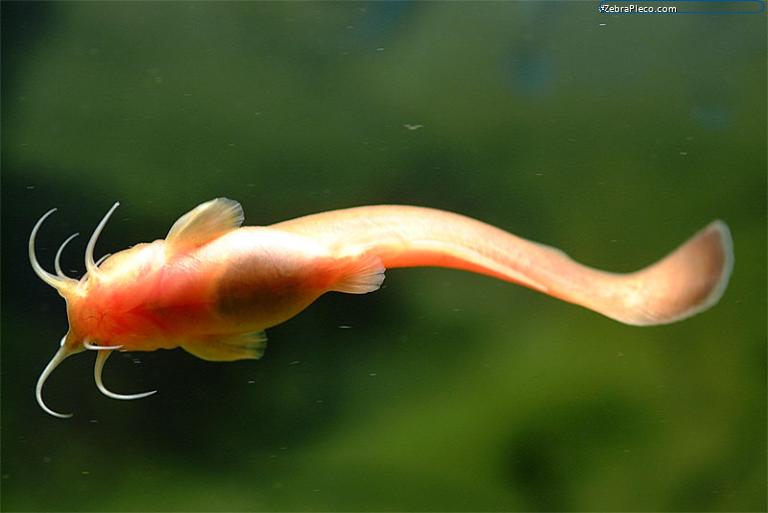
Differs from the two other Liobagrus species endemic to Korea in the following ways: L. andersoni has upper and lower jaws of equal length, generally lighter colour and occurs in waters further north than L. mediadiposalis whose range is restricted to the Nakdong River and its tributaries. L. andersoni differs from L. obesus by generally appearing longer and thinner. More importantly, the number of spines on the pectoral fins increase in number with age to 3-5 while the spines on L. andersoni decrease as the fish ages to 1 or 2.
Sexual Dimorphism (Sexing)
Males have broader heads. Females are plumper during the breeding season which in the wild is May to June.
General Remarks
Use caution when handling any Liobagrus species. Their spines inflict painful gashes.
Taxonomy, Synonyms & Etymology
Classification history, linguistic derivations and variant forms
Pronunciation
lie oh BAG russ
Etymology
From the Greek, leios, meaning smooth, and bagrus, a name usually used for catfishes; in reference to the smooth head.
There is 1 other speciesCorymbophanes andersoni with this specific name.
Literature & Resources
Scientific publications, external links and citation tools
Description Reference
Proceedings of the Zoological Society of London 1908 (pt 1) (art. 3) (for 4 Feb. 1908), pp 61, Pl. 3 (fig. 4).
External Databases
Related Searches