PAGE_HEADER
Image Showcase
Photographs, diagnostic angles and morphological variants
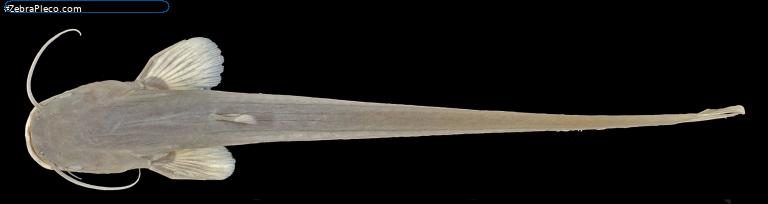
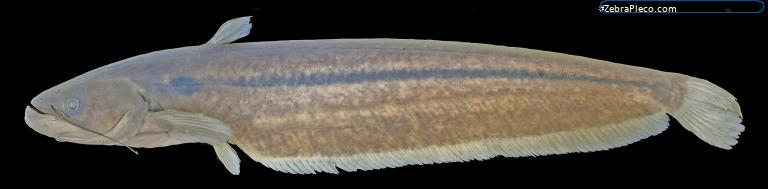
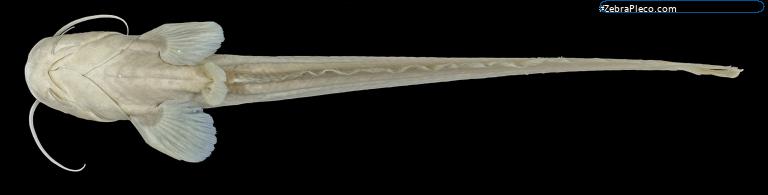
Community & Keeper Tally
Member interactions, breeding records and forum mentions
Aquarium Care & Husbandry
Dietary requirements, tank setup, compatibility and breeding
Breeding Notes
No member of this genus has been bred in the aquarium.
Habitat & Water Parameters
Natural distribution, biotope water conditions and temperature ranges
Geographic Distribution
Known from the Amaravathi River (a right-hand tributary of the Kaveri River) in southern India.
Indian waters, Kaveri (click on these areas to find other species found there)
Login to view the map.
Species Description & Identification
Morphology, diagnostic traits and sexual dimorphism
Identification
The catfish genus Ompok La Cepède, 1803, consists of medium-sized silurid fishes found in inland waters throughout South and Southeast Asia. The genus is traditionally diagnosed by the presence of a short dorsal fin with 4 rays, strongly forked caudal fin, subcutaneous eye that is set immediately posterior to the mouth rictus and two patches of palatal teeth (Weber & de Beaufort, 1913). Bornbusch (1995) showed that Ompok, as currently understood, is probably paraphyletic.
Ompok karunkodu can be distinguished from all congeners in the Indian subcontinent in having a markedly convex predorsal profile (vs. with a slight or distinct concavity in the supraethmoidal or supraoccipital region), and a unique combination of the following characters: prognathous lower jaw causing anterior profile of head to appear rounded when viewed laterally, maxillary barbel reaching to base of pectoral-fin spine,eye diameter 13.7% HL, head width 13.0% SL, body depth at anus 14.2% SL, 65 anal-fin rays, caudal peduncle depth 5.0% SL, caudal-fin length 12.6% SL, caudal fin with rounded lobes, 54 vertebrae, and dark midlateral stripe running
along sides of body.
Sexual Dimorphism (Sexing)
Males have strong serrations on the posterior edge of the pectoral spine (females lack these serrations.
Taxonomy, Synonyms & Etymology
Classification history, linguistic derivations and variant forms
Pronunciation
Awm pok - ka ron ko du
Etymology
The etymology of Ompok is unclear. It is believed to be a corruption of the Indonesian name for mid-sized silurid catfishes, limpok. The specific epithet comes from the Tamil karun, a contraction of karuppu, meaning black and kodu, meaning line. This refers to the dark midlateral stripe running along the side of the body in this species. Used as a noun in apposition.
Literature & Resources
Scientific publications, external links and citation tools
Description Reference
Zootaxa 3694 (no. 2), pp 162, Fig. 1.
External Databases
Related Searches