PAGE_HEADER
Osteogaster zygata (Eigenmann & Allen, 1942)
Image Showcase
Photographs, diagnostic angles and morphological variants
Community & Keeper Tally
Member interactions, breeding records and forum mentions
Aquarium Care & Husbandry
Dietary requirements, tank setup, compatibility and breeding
Feeding & Diet
The usual range of food (frozen, live or commercially prepared). Not a picky eater but no scavenger either. [View Member Food Stats]
Aquarium Furniture & Decor
fine sand, driftwood aquatic plants leaving an open area for them to search for food and swim.
Compatibility & Suggested Tankmates
Peaceful.
Breeding Notes
Typical Corydoradinae T-position manner. They spawn after a good water change. The temperature at spawning time is around 16°C Female would lay around six hundred eggs. With two males the fecundity rate is between 95-100%. The small eggs have been known to be laid singly, scattered all over the tank.
Habitat & Water Parameters
Natural distribution, biotope water conditions and temperature ranges
Geographic Distribution
South America: western Amazon River basin.
Amazon, Upper Amazon, Marañón, Pastaza, Bobonaza (click on these areas to find other species found there)
Amazon, Upper Amazon, Marañón, Huallaga (click on these areas to find other species found there)
Login to view the map.
Species Description & Identification
Morphology, diagnostic traits and sexual dimorphism
Identification
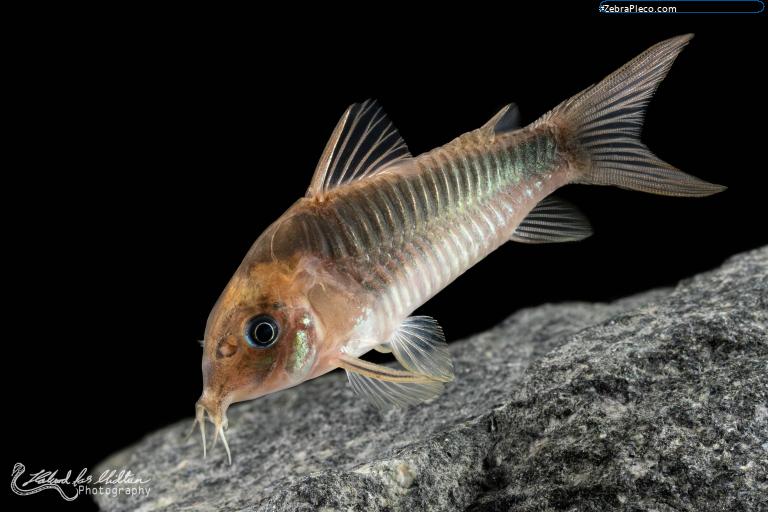
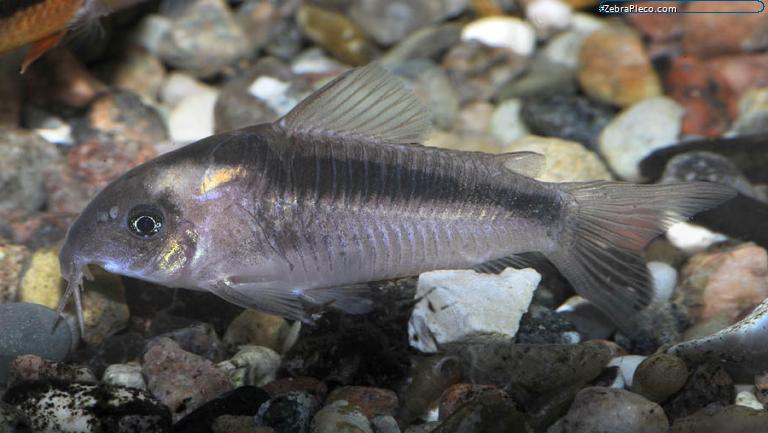
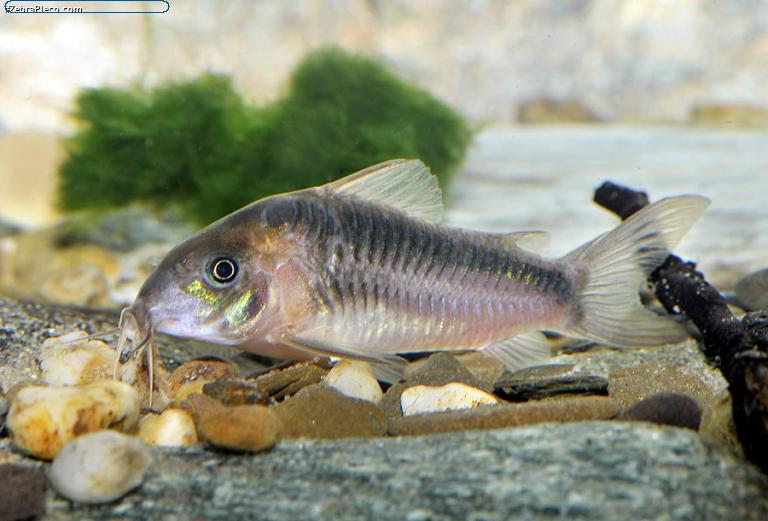
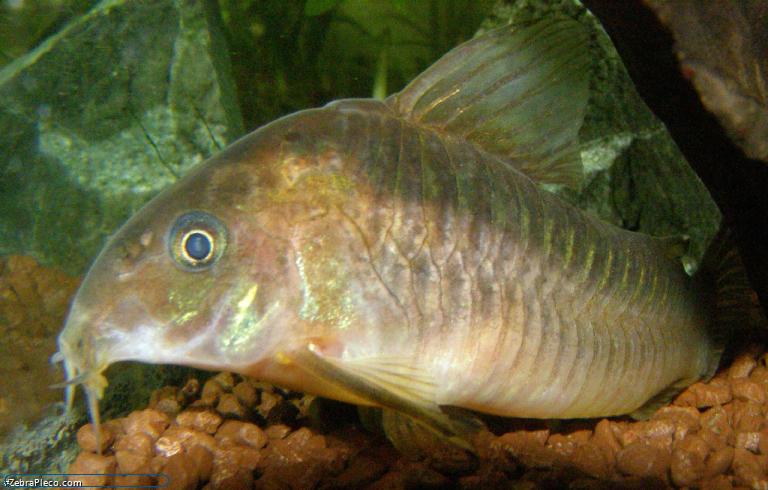
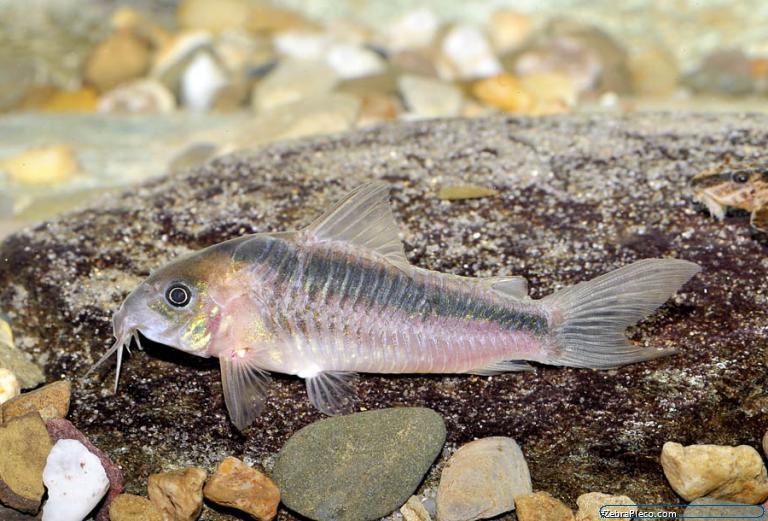
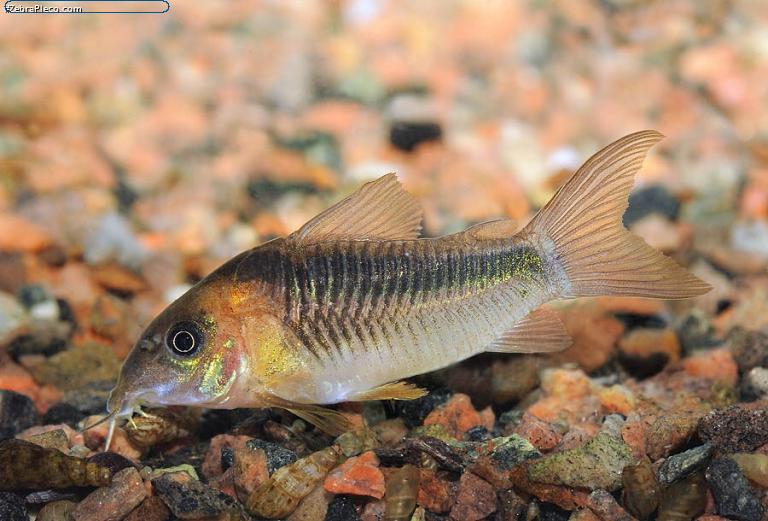
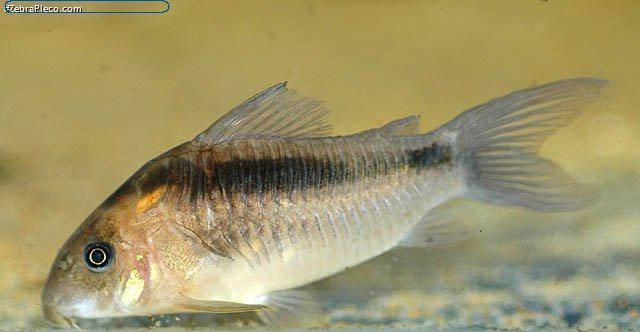
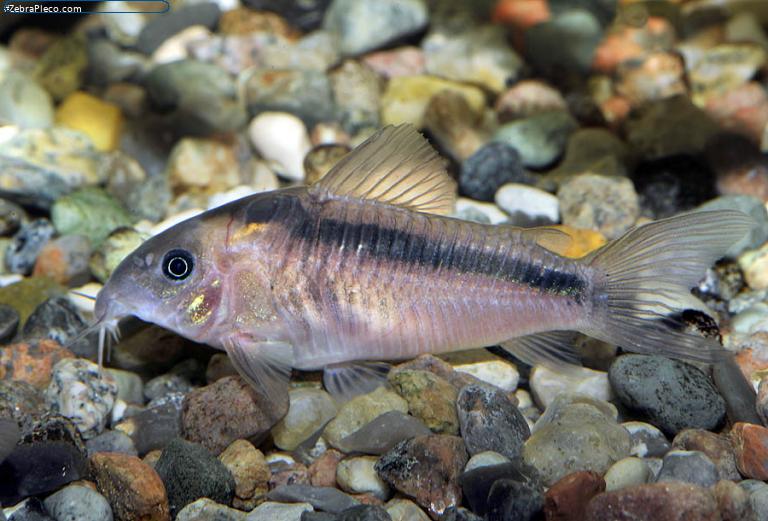
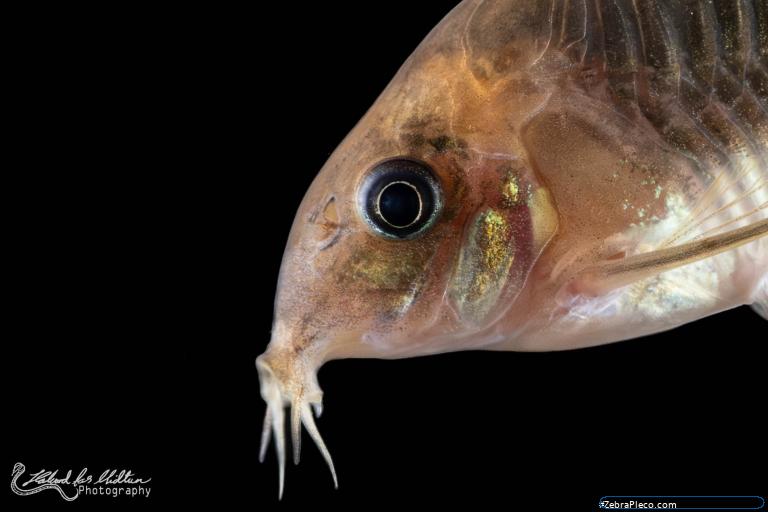
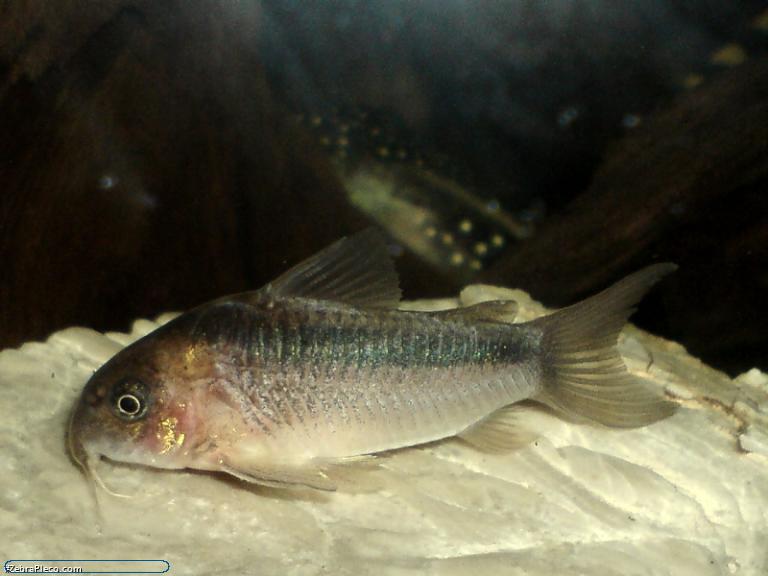
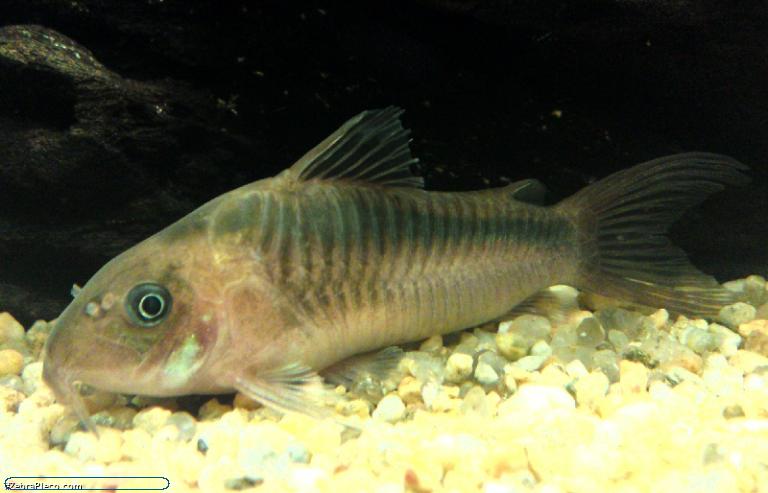
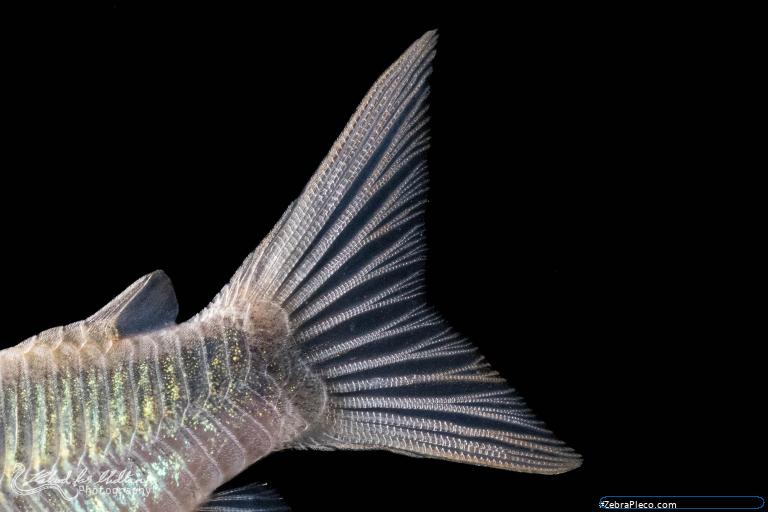
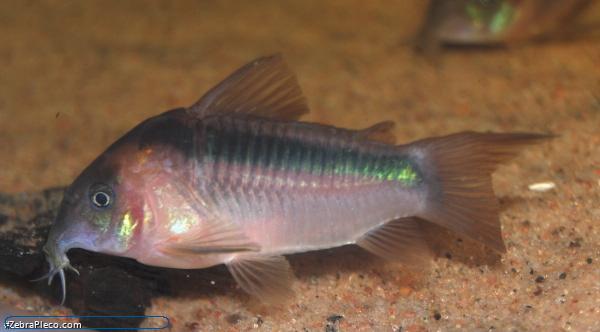
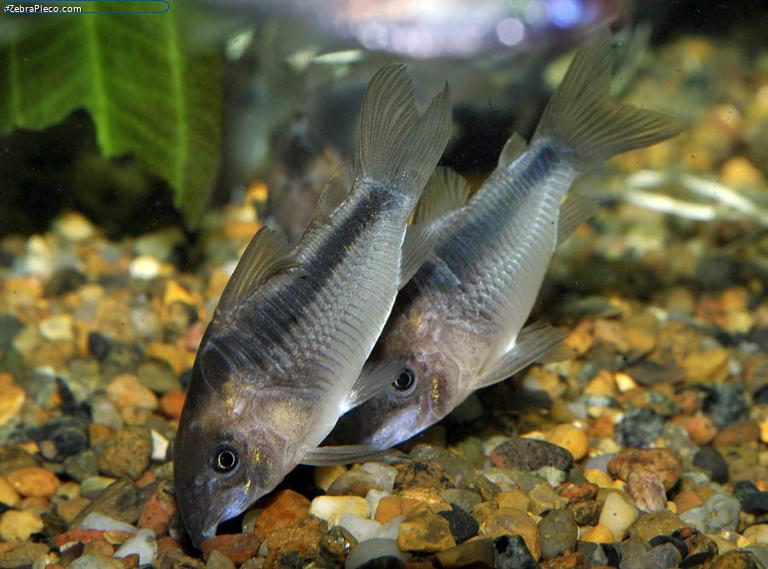
C. zygatus background colour is pinky-grey, fins are colourless or slightly sooty. Adults have a copper "eyebrow". There is a dark line which always has a green shine to it, this line ends on the caudal peduncle never extending onto the caudal fin and without the downward twist that C.rabautihas and with which it is often confused. There often is a vertical line through the dark stripe just at the base of the dorsal spine, this manifests itself as a break in the stripe. C.zygatus show a number of vertical grey bars on the forward most ventral scutes, rabauti can have this as well but it "usually" shows as a dark smudge without the distinct bars.Adult zygatuscan become scruffy looking. Differences are clearly visible when looking at the fry of the two species.
Sexual Dimorphism (Sexing)
Females are rounder, bigger.
General Remarks
Rarely active during the day and is very shy.
Taxonomy, Synonyms & Etymology
Classification history, linguistic derivations and variant forms
Synonyms
Corydoras zygatus
Pronunciation
os tee oh gas terr - z eye GAT uss
Etymology
Zygatus from the Greek zygados: team, pair. On the similarity with Corydoras rabauti
Literature & Resources
Scientific publications, external links and citation tools
Description Reference
Fishes of western South America, pp 175, Pl. 12 (fig. 1).
External Databases
Related Searches