PAGE_HEADER
Apistogramma bitaeniata Pellegrin, 1936
Image Showcase
Photographs, diagnostic angles and morphological variants
Community & Keeper Tally
Member interactions, breeding records and forum mentions
Aquarium Care & Husbandry
Dietary requirements, tank setup, compatibility and breeding
Feeding & Diet
Apistogramma should be fed mainly on foods that reach the bottom third of the aquarium. Prepared foods include flakes and granules that sink. Live or frozen live foods such as bloodworm or brineshrimp are recommended for bringing pairs into breeding condition. [View Member Food Stats]
Breeding Notes
If there is not a bonded pair, setting up a breeding tank with one male and several females should encourage breeding. Water in the breeding tank should be slightly acidic (6-6.5 pH) and soft, around 5 dh. A specific breeding surface is necessary, often an upturned, small, plant pot or similar will suffice.
Habitat & Water Parameters
Natural distribution, biotope water conditions and temperature ranges
Geographic Distribution
South America: Amazon River basin, restricted to Peruvian and adjacent Brazilian black-water river systems (collected in the lower Nanay, Mazán and Tigre in Peru, near Leticia in Colombia, and in Igarapé Preto and Lago Tefé in Brazil).
Amazon, Upper Amazon, Napo, Mazán (click on these areas to find other species found there)
Amazon, Upper Amazon, Nanay (click on these areas to find other species found there)
Amazon, Upper Amazon, Tigre (click on these areas to find other species found there)
Login to view the map.
Taxonomy, Synonyms & Etymology
Classification history, linguistic derivations and variant forms
Synonyms
Apistogramma klausewitzi, Apistogramma kleei, Apistogramma pertense bitaeniata, Apistogramma sweglesi
Pronunciation
ah-PISS-toe-grah-mah
Etymology (source: ETYFish.org)
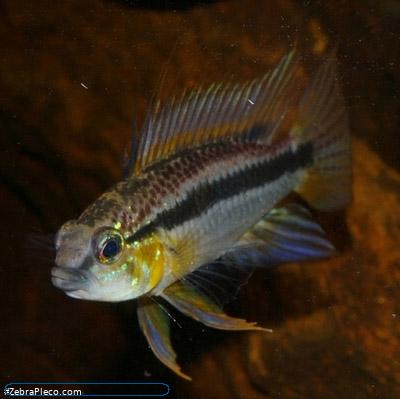
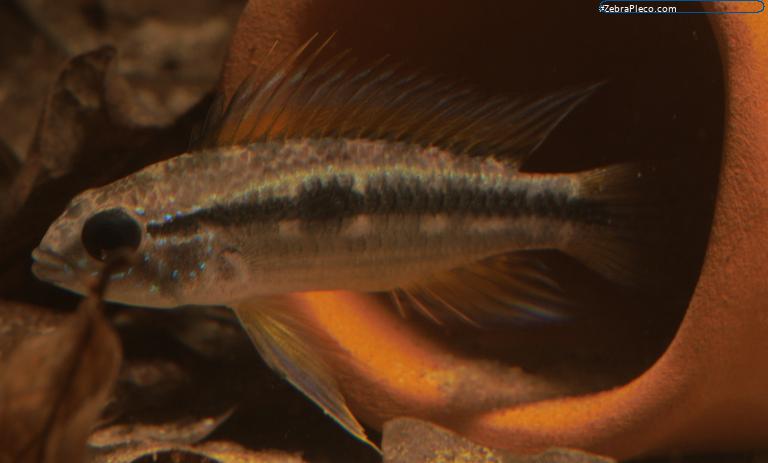
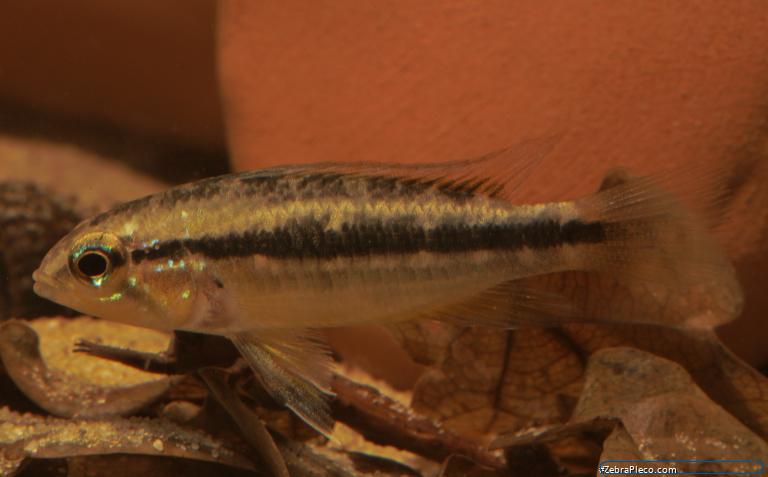
The genus name is a combination of the Greek apisto, meaning 'meaning uncertain, inconstant, unstable, faithless', and gramme, meaning 'line', in reference to the variably-developed lateral line of these species. Bi-, two; taeniata, striped or banded, referring to black longitudinal stripe from top of branchial cleft to end of caudal peduncle, and a second (less defined) parallel stripe running from axil of pectoral fin to lower edge of caudal peduncle
Literature & Resources
Scientific publications, external links and citation tools
Literature & References
External Databases
Related Searches