
PAGE_HEADER
Laetacara curviceps (Ahl, 1924)
Image Showcase
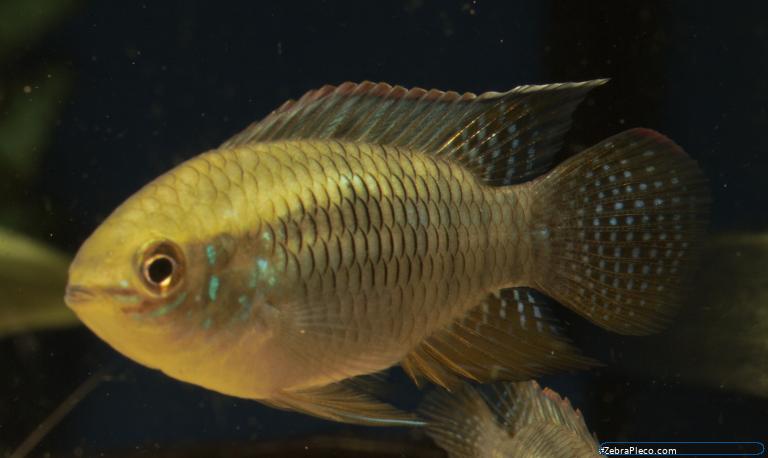
Photographs, diagnostic angles and morphological variants

Community & Keeper Tally
Member interactions, breeding records and forum mentions
Aquarium Care & Husbandry
Dietary requirements, tank setup, compatibility and breeding
No specialised aquarium care or husbandry notes recorded yet.
Habitat & Water Parameters
Natural distribution, biotope water conditions and temperature ranges
Geographic Distribution
South America: Amazon River basin, in lower portions of tributaries of the Amazon River in Brazil.
Amazon, Lower Amazon (click on these areas to find other species found there)
Amazon, Lower Amazon, Tocantins, Lower Tocantins, Pará, Anapu Imported (click on these areas to find other species found there)
Login to view the map.
Taxonomy, Synonyms & Etymology
Classification history, linguistic derivations and variant forms
Synonyms
Acara curviceps, Aequidens curviceps, Parvacara curviceps
Etymology (source: ETYFish.org)
Laetus, happy; acará, Tupí-Guaraní word for cichlids, inspired by the name “smiling acara” suggested by aquarist James K. Langhammer (1971) for L. flavilabris (then identified as Aequidens thayeri), referring to facial expression produced by its snout markings, shared by other members of the genus (source: https://etyfish.org/cichlidae7) Curvus, curve; ceps, head, referring to convex profile of upper head, “strongly bent over the forehead” (translation) of mature males
Literature & Resources
Scientific publications, external links and citation tools
Literature & References
External Databases
Related Searches

