PAGE_HEADER
Glyptothorax pantherinus Anganthoibi & Vishwanath, 2013
Image Showcase
Photographs, diagnostic angles and morphological variants
Community & Keeper Tally
Member interactions, breeding records and forum mentions
Aquarium Care & Husbandry
Dietary requirements, tank setup, compatibility and breeding
Breeding Notes
No member of this genus has been bred in the aquarium.
Habitat & Water Parameters
Natural distribution, biotope water conditions and temperature ranges
Geographic Distribution
Known only from the type locality, Noa Dehing River, Brahmaputra River basin, Deban-Namdapha,Changlang district, Arunachal Pradesh, India.
Login to view the map.
Species Description & Identification
Morphology, diagnostic traits and sexual dimorphism
Identification
Sisorid catfishes of the genus Glyptothorax Blyth are benthic inhabitants of torrential waters of rivers and streams in montane and submontane parts of tropical Asia. The members of the genus are adapted to attach themselves to rocks and boulders against strong currents by means of a thoracic adhesive apparatus comprising grooves and folded pleats of skin parallel or oblique to the longitudinal axis of the body. The genus has a wide distribution, ranging from Turkey and Syria in the west, to India and China in the east, and extending further southeastward to Indonesia. With 84 nominal species, Glyptothorax are the most speciose genus of catfishes in Asia (Eschmeyer et al., 1998, Ng, 2005); 67 species were treated as valid by Thomson & Page (2006).
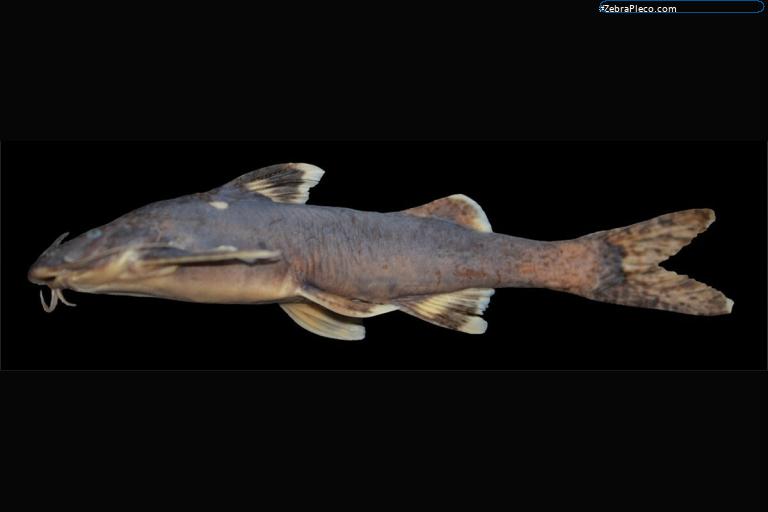
Glyptothorax pantherinus can be distinguished from its congeners by the following combination of characters: mottled skin; a well-developed obtuse leafshaped thoracic adhesive apparatus with no central depression, unculiferous ridges of the apparatus not
extending anteriorly onto the gular region, and the ridges uninterrupted except for the posterior-most region; one bean-shaped cream-coloured spot on either side of the dorsal-fin origin; ventral surface of the simple rays of the paired fins are plaited marginally and distally.
Taxonomy, Synonyms & Etymology
Classification history, linguistic derivations and variant forms
Pronunciation
Gleep toe thor axe - panther ee nus
Etymology
The generic name comes from the Greek glyptos, meaning carved, and thorax, meaning breastplate (or the part of the body covered by it), in reference to the folds of skin comprising the thoracic adhesive apparatus. The specific name pantherinus is derived from the Latin panthera, meaning leopard. The name is a
noun in apposition and refers to the presence of prominent mottled skin.
There are 6 other speciesEurycheilichthys pantherinus
Hisonotus pantherinus
Hypostomus pantherinus
Parauchenoglanis pantherinus
Rhamphichthys pantherinus
Trichomycterus pantherinus with this specific name.
Literature & Resources
Scientific publications, external links and citation tools
Literature & References
External Databases
Related Searches