PAGE_HEADER
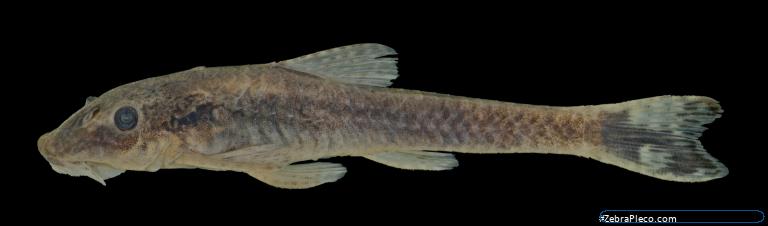
Otothyropsis biamnicus Calegari, Lehmann A. & Reis, 2013
Image Showcase
Photographs, diagnostic angles and morphological variants
Community & Keeper Tally
Member interactions, breeding records and forum mentions
Aquarium Care & Husbandry
Dietary requirements, tank setup, compatibility and breeding
No specialised aquarium care or husbandry notes recorded yet.
Habitat & Water Parameters
Natural distribution, biotope water conditions and temperature ranges
Geographic Distribution
Found in tributaries of Rio Iguaçu, in Santa Catarina and Paraná States, and rio Tibagi, Paraná State, both in rio Paraná basin, Brazil.
La Plata, Paraná, Iguazu (click on these areas to find other species found there)
La Plata, Paraná, Paranapanema, Tibagi (click on these areas to find other species found there)
La Plata, Paraná, Paranapanema, Upper Paranapanema (click on these areas to find other species found there)
Login to view the map.
Species Description & Identification
Morphology, diagnostic traits and sexual dimorphism
Identification
From original description "Otothyropsis biamnicus is distinguished from its congeners by having shorter pectoral-fin spine (18.6–21.3 vs. 21.4–30.4% SL in remaining species). It also has a lower caudal peduncle (7.6–9.0 vs. 9.3–11.0 in O. marapoama and 9.7–11.5% SL in O. piribebuy), deeper caudal peduncle (7.6–9.0 vs. 6.2–7.6% SL in O. polyodon); and dorsal-fin spinelet triangular in shape (vs. spinelet rectangular or quadrangular).
Sexual Dimorphism (Sexing)
Male hypoptopomins posses a urogenital papilla located immediately posterior to the anus. It is absent in females.
Taxonomy, Synonyms & Etymology
Classification history, linguistic derivations and variant forms
Etymology
Otothyropsis: The first part of the name is from Greek (otos = ear and thyris = window) and is in reference to the Hypoptopomatinae genus Otothyris, to which the new taxon is closely related. The second part is from the Greek (opsis = relating to sight and appearance); hence, resembling a hypoptopomatine fish. The species name biamnicus From the Latin bi, meaning two, and amnicus, meaning inhabitant of a river, in allusion to the fact that the species is distributed in both the Iguaçu and Tibagi basins.
Literature & Resources
Scientific publications, external links and citation tools
Literature & References
External Databases
Related Searches