PAGE_HEADER
Physopyxis ananas Sousa & Rapp Py-Daniel, 2005
Image Showcase
Photographs, diagnostic angles and morphological variants
Community & Keeper Tally
Member interactions, breeding records and forum mentions
Aquarium Care & Husbandry
Dietary requirements, tank setup, compatibility and breeding
Breeding Notes
No member of this genus has been bred in the aquarium.
Habitat & Water Parameters
Natural distribution, biotope water conditions and temperature ranges
Geographic Distribution
South America: throughout the lowlands in the entire Amazon (including rio Negro) and rio Essequibo basins.
Amazon (click on these areas to find other species found there)
Guyana Waters, Coastal Rivers of Guyanas, Essequibo (click on these areas to find other species found there)
Amazon, Upper Amazon, Jutai (click on these areas to find other species found there)
Amazon, Middle Amazon (Solimoes), Negro (click on these areas to find other species found there)
Amazon, Lower Amazon, Tocantins, Lower Tocantins, Pará, Anapu Imported (click on these areas to find other species found there)
Login to view the map.
Species Description & Identification
Morphology, diagnostic traits and sexual dimorphism
Identification
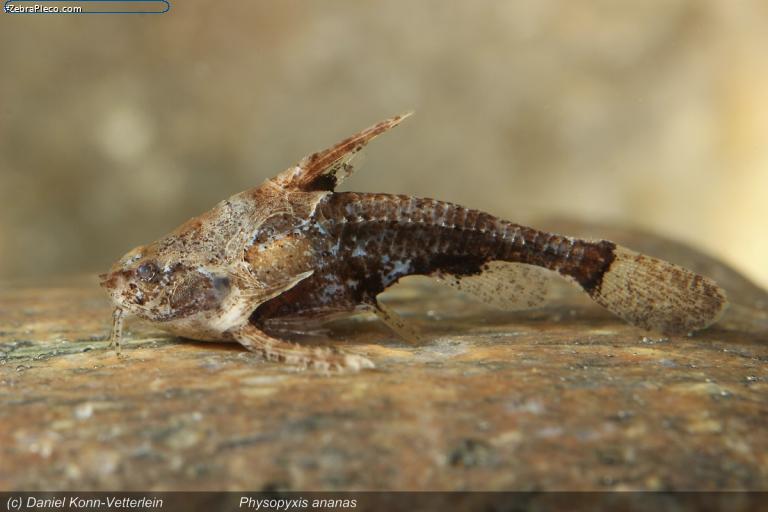
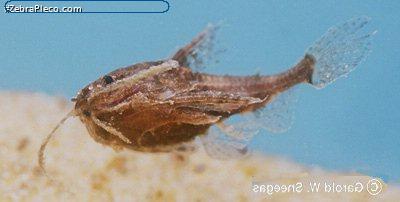
Physopyxis can be distinguished from the other Doradidae by the miniature size (adults generally less than 31 mm SL) and a unique combination of additional features: extreme development of the exposed pectoral girdle; well developed coracoid process longer than the postcleithral process; anterior plate of the nuchal shield absent; dorsal spine serrated only along the basal portion of its anterior margin; two infraorbital bones in young that become fused into a single plate in adult specimens; pectoral spine reaching to base of anal fin.
Taxonomy, Synonyms & Etymology
Classification history, linguistic derivations and variant forms
No recorded synonyms or etymology details.
Literature & Resources
Scientific publications, external links and citation tools
Literature & References
External Databases
Related Searches