PAGE_HEADER
Farlowella henriquei Miranda Ribeiro, 1918
Image Showcase
Photographs, diagnostic angles and morphological variants
Community & Keeper Tally
Member interactions, breeding records and forum mentions
Aquarium Care & Husbandry
Dietary requirements, tank setup, compatibility and breeding
Compatibility & Suggested Tankmates
Tankmates: Smaller Tetras or Rasboras are suitably mannered - perhaps hatchetfish are best. Avoid fast or "nippy" fishes such as Danios or Barbs. Will do well with Corydoras catfish, but larger catfish or cichlids are to be avoided.
Habitat & Water Parameters
Natural distribution, biotope water conditions and temperature ranges
Geographic Distribution
South America: Araguaia River basin.
Amazon, Lower Amazon, Tocantins, Lower Tocantins, Araguaia (click on these areas to find other species found there)
Login to view the map.
Species Description & Identification
Morphology, diagnostic traits and sexual dimorphism
Identification
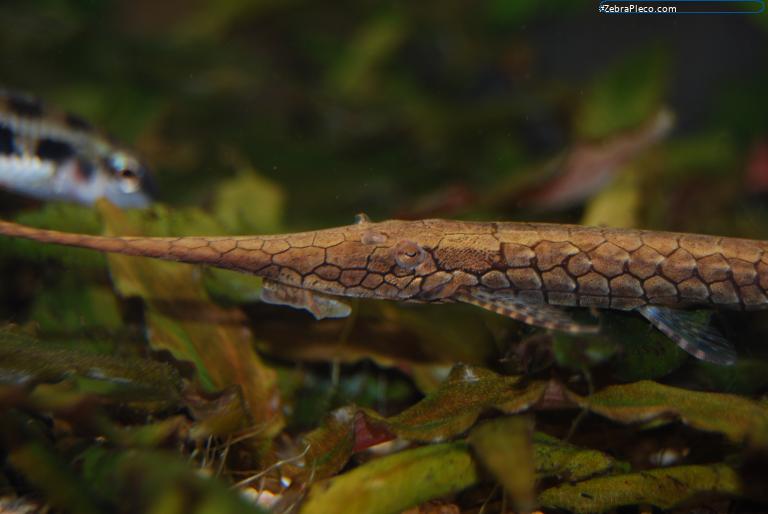
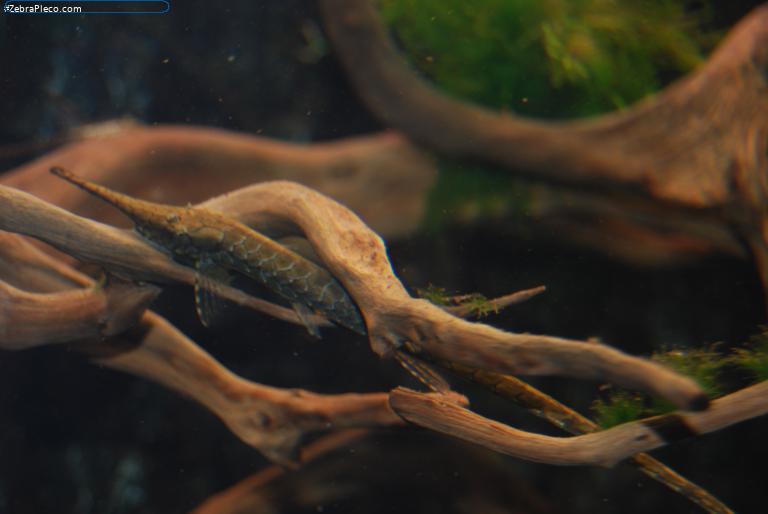
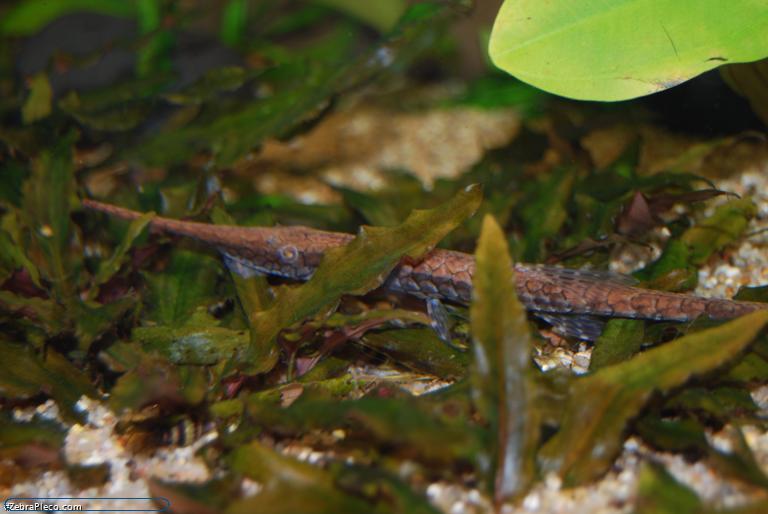
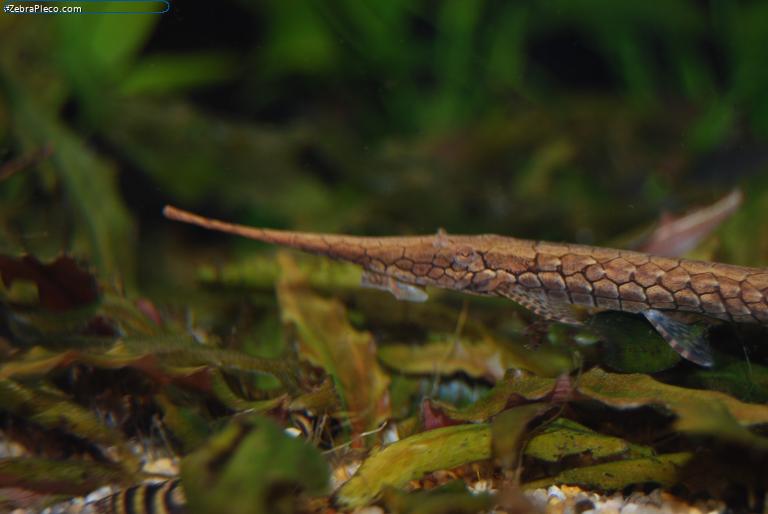
The genus Farlowella is distinguished by its elongate and slender body with a pronounced rostrum (of variable length), having the dorsal fin located near the middle of the body and only slightly anterior to the anal fin (vs. having the dorsal fin conspicuously closer to the head than the tail, and significantly further anterior than the anal fin), and having a brownish color with two lateral dark stripes beginning at the tip of the rostrum, passing through the eyes and ending at the tail. A key to the genus can be found here.
In comparison to the relatively indistinct network patterning on the dorsal side of the rostrum, the ventral side has a characteristic crosshair pattern.
Taxonomy, Synonyms & Etymology
Classification history, linguistic derivations and variant forms
Synonyms
Farlowella henrique
Pronunciation
far LOW ella
Etymology
This genus is named after W. G. Farlow, from Harvard University.
Literature & Resources
Scientific publications, external links and citation tools
Description Reference
Revista do Museu Paulista v. 10, pp 636 [8].
External Databases
Related Searches