PAGE_HEADER
Microglanis nigripinnis Bizerril & Perez-Neto, 1992
Image Showcase
Photographs, diagnostic angles and morphological variants
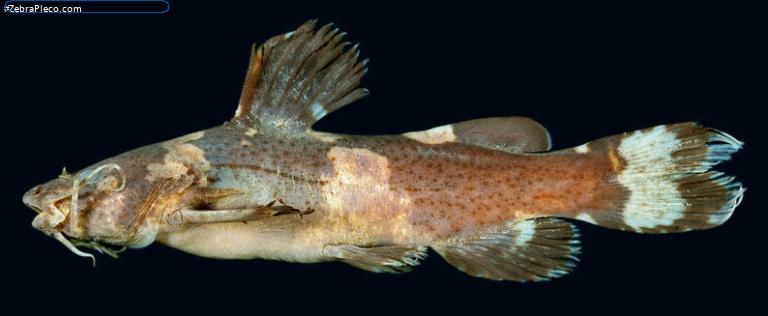
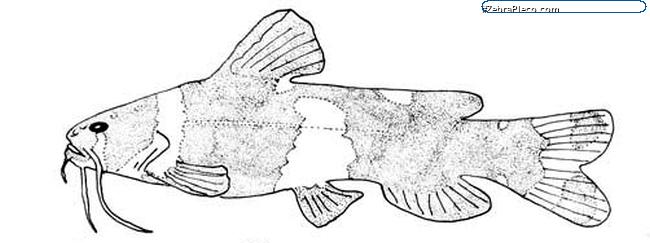
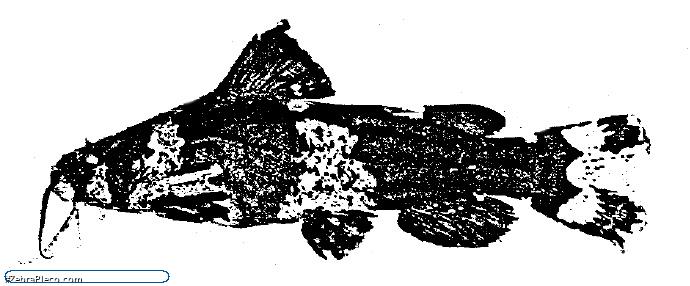
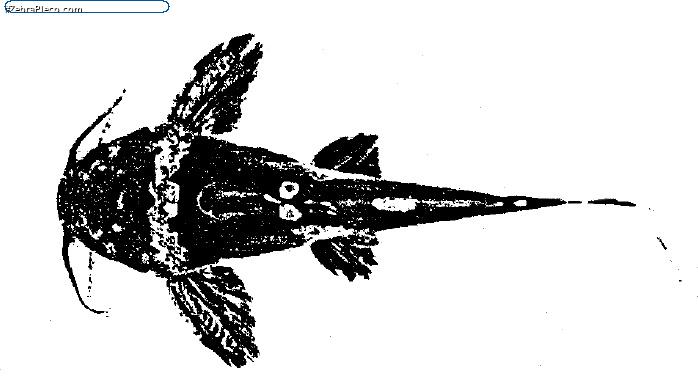
Community & Keeper Tally
Member interactions, breeding records and forum mentions
Aquarium Care & Husbandry
Dietary requirements, tank setup, compatibility and breeding
Feeding & Diet
The gut contents of two wild-caught specimens included exclusively Chironomidae larvae and pupa. [View Member Food Stats]
Aquarium Furniture & Decor
In nature, the fish hide under rocks or beneath dead wood during daylight.
Compatibility & Suggested Tankmates
In nature, M. nigripinnis was collected with Hypostomus cf. punctatus, Otocinclus notatus, Parotocinclus maculicauda, Schizolecis guntheri, Rineloricaria cf. nigricauda, Microglanis parahybae, Acentronichthys leptos, Astyanax cf. hastatus, Jobertina interrupta, and Geophagus brasiliensis.
Tankmates: Virtually all good community fish, although any young fry present in the aquarium will be in extreme jeopardy - especially after dark.
Habitat & Water Parameters
Natural distribution, biotope water conditions and temperature ranges
Geographic Distribution
South America: Macacu River basin in Rio de Janeiro, Brazil.
Rio de Janeiro State Rivers, Macacu (click on these areas to find other species found there)
Login to view the map.
Species Description & Identification
Morphology, diagnostic traits and sexual dimorphism
Identification
The genus Microglanis was described by Eigenmann
(1912) to include small pimelodids with the head as wide as long, the skull covered by skin only; the occipital crest small; frontal fontanel not extending much if any behind the eye, and a minute occipital fontanel sometimes present; eye without a free orbital margin; dorsal and pectoral spines well developed; and premaxillary patches of teeth without backward projecting angles.
Caudal fin forked with lobes of equal size. Colour: Body black with a light band running across the nape and another in the area between the end of the dorsal fin and the origin of anal fin [some specimens lack this second mark]. A small pale spot at the end of dorsal fin base. Head black with a ligth stripe on the cheeks. Ventral surface of the body white with some irregularly distributed melanophores. Caudal fin with black base and a dark bar in the middle. Pectoral fins completely black. Dorsal fin almost totally black, except for a small white patch at the base of the fifth and sixth branched rays. Adipose black with a pale dot at its origin. Anal and pelvice fins black with a light spot at. the base of the last four branched rays and with a white margin.
Sexual Dimorphism (Sexing)
Well-conditioned females are conspicuously wider in the abdomen than similarly sized males.
General Remarks
According to Bizerril & Perez-Neto (1992), Microglanis nigripinnis is very similar in appearance to M. ater, differing mainly in having fewer anal fin rays (12 vs 15) and a longer dorsal spine (1.52 to 1.75 vs 2.4 in predorsal length) than M. ater. M. nigripinnis is sympatric with M. parahybae. The two spp. are easily distinguished by colour pattern, but morphologically, the two spp. have the same number of anal fin rays and the shape of the tooth patch is very similar.
Taxonomy, Synonyms & Etymology
Classification history, linguistic derivations and variant forms
Etymology
Micro - small, glanis - catfish - in reference to the rather small forms of catfish that this genus contains. Specific epithet: niger (black) and pinna (fin), in reference to the dark pigmented fins.
There are 7 other speciesAuchenipterus nigripinnis
Markiana nigripinnis
Paracyprichromis nigripinnis
Pethia nigripinnis
Pollimyrus nigripinnis
Sarcocheilichthys nigripinnis
Sarotherodon nigripinnis with this specific name.
Literature & Resources
Scientific publications, external links and citation tools
Literature & References
External Databases
Related Searches