PAGE_HEADER
Scoloplax dolicholophia Schaefer, Weitzman & Britski, 1989
Image Showcase
Photographs, diagnostic angles and morphological variants
Community & Keeper Tally
Member interactions, breeding records and forum mentions
Aquarium Care & Husbandry
Dietary requirements, tank setup, compatibility and breeding
Feeding & Diet
The best way to feed these fish is with small live food such as Cyclops or Artemia. [View Member Food Stats]
Aquarium Furniture & Decor
In their wild habitat you can most often find these dwarfs between fallen leaves that accumulate on along the river banks. Sometimes, for example after rainfall, you can find these fishes in free water.
Compatibility & Suggested Tankmates
Their way of life is similar to that of the banjo catfishes, must be kept with timid small fishes. The smaller, blackwater pencilfishes and hatchetfishes would be ideal tankmates.
Breeding Notes
Unreported in the aquarium.
Habitat & Water Parameters
Natural distribution, biotope water conditions and temperature ranges
Geographic Distribution
South America: Negro River basin.
Amazon, Middle Amazon (Solimoes), Negro (click on these areas to find other species found there)
Login to view the map.
Species Description & Identification
Morphology, diagnostic traits and sexual dimorphism
Identification
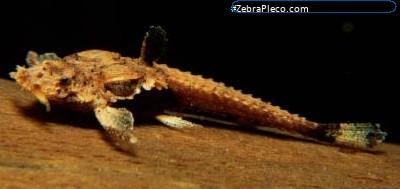
Species of the neotropical family Scoloplacidae are distinguished from other Siluriformes by the presence of a conspicuous shield-shaped rostral plate bearing numerous large and recurved odontodes. Scoloplacidae is a monogeneric family endemic to South America and known from the Amazon, Paraguay, and Parana basins. The worlds smallest known catfish are from this genus, the smallest is most likely S. dolicholophia.
Body colour dark brown. Head and cheek region uniformly dark brown. Minute to moderately sized dark brown chromatophores diffusely scattered over dorsal surfaces of trunk.Trunk with four dark brown
pigment saddles. Sides of trunk with red midlateral pigments from middle of pectoral fin in specimens from Rio Unini.
Sexual Dimorphism (Sexing)
The males only grow up to 15 mm TL, the females can grow a little bit bigger and become clearly thicker.
General Remarks
Within the aquarium trade, this group of fishes has been almost totally unknown. Perhaps single specimens are sometimes imported together with other fishes (for example cardinal tetras). The tiny adult size and secretive nature of these fishes are to blame for their relative obscurity.
Taxonomy, Synonyms & Etymology
Classification history, linguistic derivations and variant forms
Pronunciation
SKOW low plax
Etymology
Scoloplax: From the Greek skolos, meaning thorn and plax, meaning plate; in reference to the moveable dermal bone on top of snout (rostral plate) that is studded with large integumentary teeth. From the Greek dolicho for long, and lophia for crest or ridge, here used in reference to the long pterotic-supracleithral crest or ridge in this species. (gender feminine).
Literature & Resources
Scientific publications, external links and citation tools
Literature & References
External Databases
Related Searches