
PAGE_HEADER
Gastrodermus pygmaeus (Knaack, 1966)
Image Showcase
Photographs, diagnostic angles and morphological variants





Community & Keeper Tally
Member interactions, breeding records and forum mentions
Aquarium Care & Husbandry
Dietary requirements, tank setup, compatibility and breeding
Feeding & Diet
Sinking wafers, flakes, brine shrimp and live black worms if available. [View Member Food Stats]
Aquarium Furniture & Decor
Substrate of fine sand or gravel. Open areas of substrate surrounded by plants, rocks and/or bogwood.
Compatibility & Suggested Tankmates
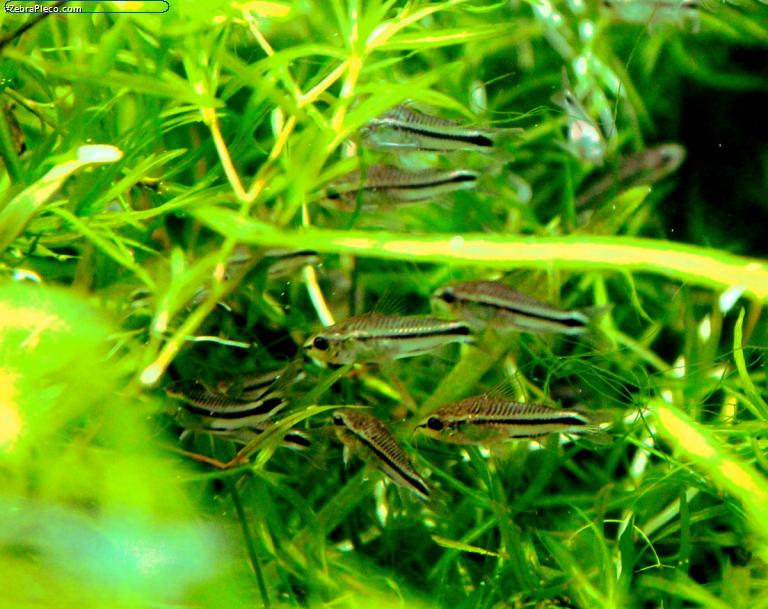
A peaceful fish exhibiting typical Corydoras behaviour. A mid-water swimming Cory.
Tankmates: Non-aggressive fish such as small South American Characins.
Breeding Notes
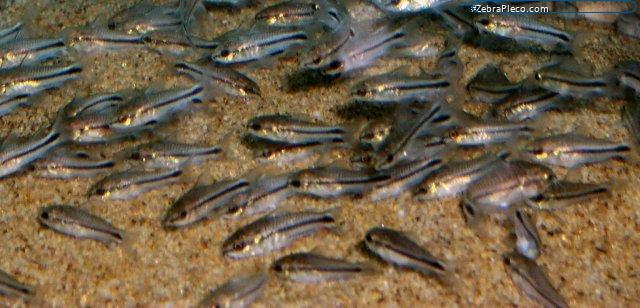
Spawned by Eric Bodrock in June 2003 who provided these notes. Spawning group of 12 fish, sex ratio unknown. Small tanks are suitable for this species. A pH of 6.6 with a TDS of 278 ppm and temperature at 76°–82°F (24.5°–28°C) produces good results. Eggs are deposited singly everywhere, and they may spawn over a period of a few days. These are easy fish to spawn, and often fry can be found with the adults. Fry grow extremely quickly. Wider experience confirms the species spawns in pairs or groups, having more than one trio (two females and one male) increases chances of spawning. Eggs deposited around the tank, on glass and plants. Perhaps prefers plants. Eggs are 1mm in size, female carries only one egg at a time in ventral pouch. One female can lay up to 100 eggs per spawning cycle. C. pygmaeus rarely eat their eggs. Fry will feed on micro organisms in the tank and on an open sponge filter if present. If hatched out of spawning tank microworms, vinegar eels, rotifers and small daphnia such as Cerio daphnia will be accepted.
Habitat & Water Parameters
Natural distribution, biotope water conditions and temperature ranges
Geographic Distribution
South America: Madeira River basin.
Amazon, Middle Amazon (Solimoes), Madeira (click on these areas to find other species found there)
Login to view the map.
Species Description & Identification
Morphology, diagnostic traits and sexual dimorphism
Identification
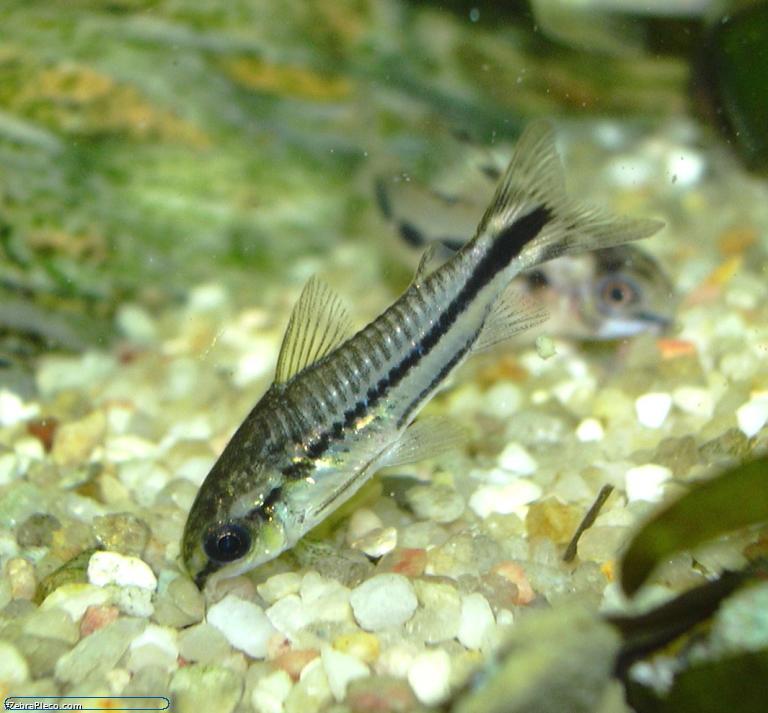
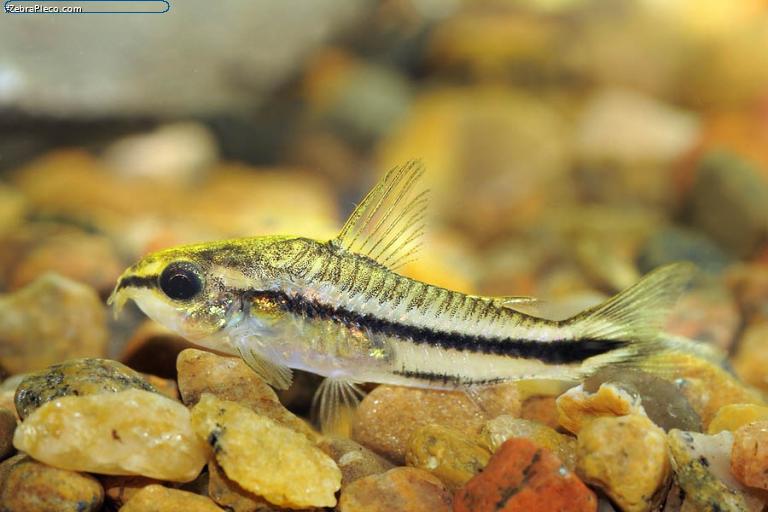
Dark band runs from tip of snout onto the caudal fin of this small species.
Sexual Dimorphism (Sexing)
Females fuller, when viewed from above and larger.
General Remarks
Hardy if diminutive. Acclimatisation in soft water helps but generally this is an easy species to keep.
Taxonomy, Synonyms & Etymology
Classification history, linguistic derivations and variant forms
Synonyms
Corydoras pygmaeus
Pronunciation
gas trow derr muss - pig MAY uss
Etymology
This specific epithet literally means dwarf (pygmaeus=dwarf).
There are 2 other speciesFluviphylax pygmaeus
Xiphophorus pygmaeus with this specific name.
Literature & Resources
Scientific publications, external links and citation tools
Description Reference
Die Aquarien- und Terrarienzeitschrift (DATZ) v. 19 (no. 6), pp 168, 2 figs.
External Databases
Related Searches

