
PAGE_HEADER
Dianema longibarbis Cope, 1872
Image Showcase
Photographs, diagnostic angles and morphological variants



Community & Keeper Tally
Member interactions, breeding records and forum mentions
Aquarium Care & Husbandry
Dietary requirements, tank setup, compatibility and breeding
Feeding & Diet
Virtually all prepared foods. Feed sinking catfish pellets and frozen bloodworm specifically. [View Member Food Stats]
Aquarium Furniture & Decor
Plants are necessary to make this species feel at home. It rests under their shade and will come to rest on their upper leaves as it can often be found midway up the water column.
Compatibility & Suggested Tankmates
Peaceful.
Tankmates: Small to medium characins; dward cichlids. Essentially any small to medium sized community fish. Not a good armoured catfish for the larger cichlid tank; go with Megalechis or Callichthys instead.
Breeding Notes
Unknown, early reports were likely a misidentification of Hoplosternum punctatum, see also D. urostriata.
Habitat & Water Parameters
Natural distribution, biotope water conditions and temperature ranges
Geographic Distribution
South America: Amazon River basin.
Amazon (click on these areas to find other species found there)
Amazon, Upper Amazon, Ampiyacu (click on these areas to find other species found there)
Login to view the map.
Species Description & Identification
Morphology, diagnostic traits and sexual dimorphism
Identification
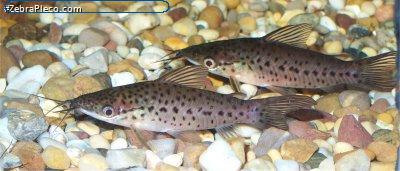
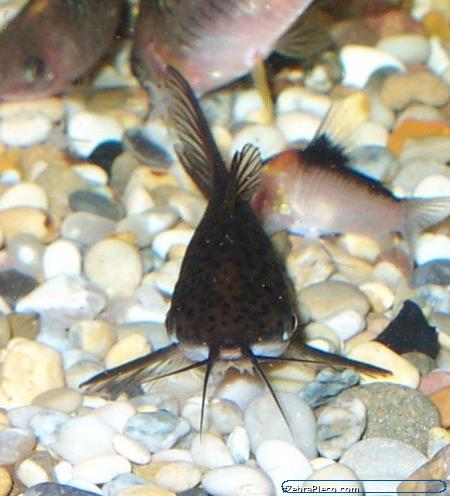
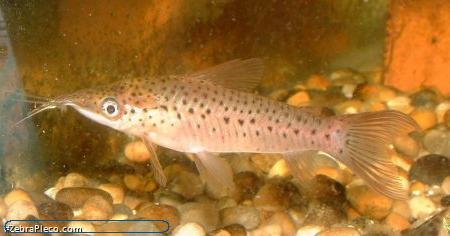
Hoplosternum punctatum and Dianema longibarbis is sometimes confused. Hoplosternum punctatum has smaller eyes and the eye is just a little above the exact centre of the side, see this image; D. longibarbis has large eyes which are placed exactly on the sides, sometimes even a bit on the lower half. See this image and this image.
In adults differences in bodyshape and armour are easier to spot; the pectoral shields in Hoplosternum punctatum leave a space in the centre (females) or overlap (males), but in Dianema these are closely fitted together.
Within the genus of Dianema: D. longibarbis Clear tail fin, the only other member of the genus has horizontal black and white alternating stripes on the caudal fin and is generally larger.
Sexual Dimorphism (Sexing)
Females are larger than males but the difference is slight.
Taxonomy, Synonyms & Etymology
Classification history, linguistic derivations and variant forms
Synonyms
Callichthys adspersus, Decapogon adspersus, Decapogon verissimi
Pronunciation
die ah NEE mah - long ee barb iss
Etymology
Dianema: From the Greek di-, meaning two and nema, meaning filament; in
reference to the long maxillary barbels.
There are 5 other speciesBathyclarias longibarbis
Chiloglanis longibarbis
Chrysichthys longibarbis
Laides longibarbis
Leiarius longibarbis with this specific name.
Literature & Resources
Scientific publications, external links and citation tools
Description Reference
Proceedings of the Academy of Natural Sciences of Philadelphia v. 23, pp 276, Pl. 7 (figs. 1, 1a-b).
External Databases
Related Searches

