PAGE_HEADER
Synodontis polli Gosse, 1982
Image Showcase
Photographs, diagnostic angles and morphological variants




Community & Keeper Tally
Member interactions, breeding records and forum mentions
Aquarium Care & Husbandry
Dietary requirements, tank setup, compatibility and breeding
Feeding & Diet
Ominivore, with a preference for meaty foods. Will readily take flake foods, but should be fed a varied diet, supplemented by frozen and live foods. While spirulina is easily accepted, unlike S. multipunctatus, S. petricola, and even S. dhonti, S. polli will not eat vegetables such as cucumber, zucchini, etc. Plants are untouched. [View Member Food Stats]
Aquarium Furniture & Decor
Best kept in larger tanks. Furnish with rocky hiding places. Plants such as Vallisneria are optional.
Compatibility & Suggested Tankmates
Compatible with most Rift Lake catfish, cichlids and mastacembelids. All except fry and very tiny fish are likely to be safe. Adult males may fight when first introduced, but aggression ceases once dominance and territories are established.
Breeding Notes
Many reports, but none confirmed. Upon investigation, reported spawnings have been of species other than S. polli.
Habitat & Water Parameters
Natural distribution, biotope water conditions and temperature ranges
Geographic Distribution
Africa: Lake Tanganyika.
African Waters, Western Rift Valley Lakes, Tanganyika (click on these areas to find other species found there)
Login to view the map.
Species Description & Identification
Morphology, diagnostic traits and sexual dimorphism
Identification
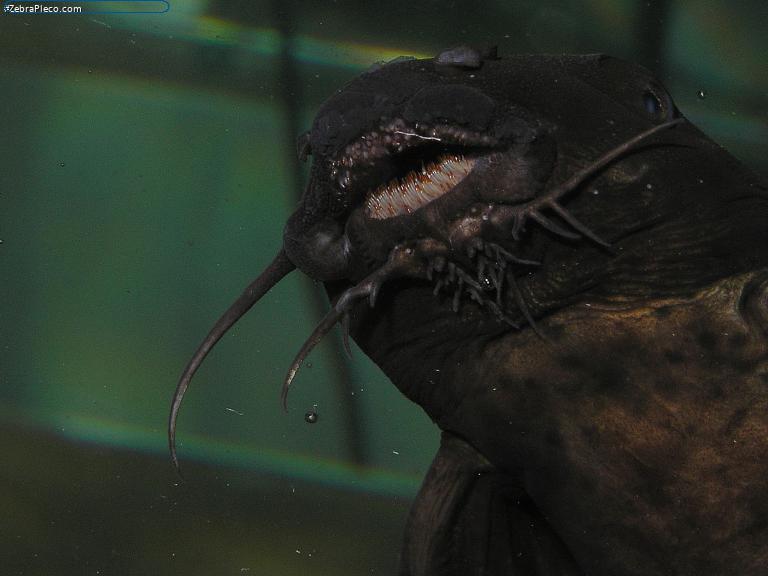
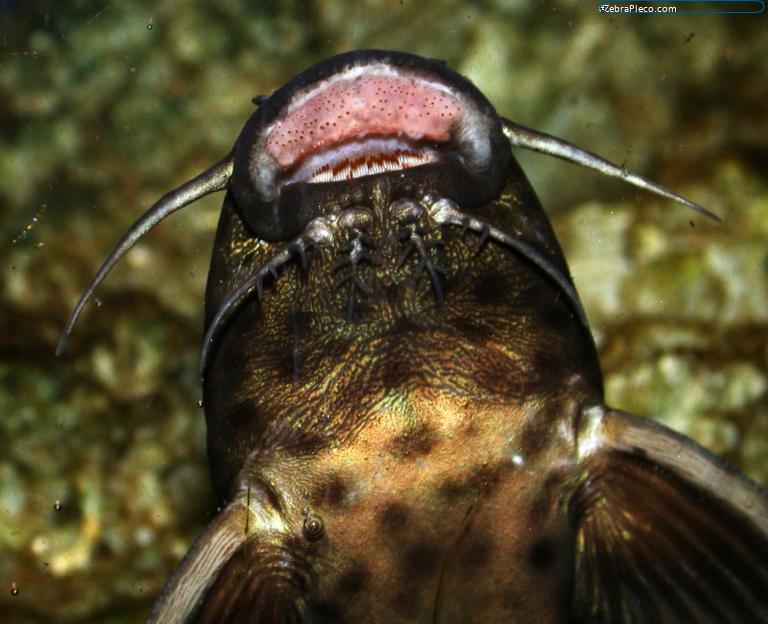
All species in the genus Synodontis have a hardened head cap that has attached a process (humeral process) which is situated behind the gill opening and pointed towards the posterior. The dorsal fin and pectoral fins have a hardened first ray which is serrated. Caudal fin is always forked. There is one pair of maxillary barbels, sometimes having membranes and occasionally branched. The two pairs of mandibular barbels are often branched and can have nodes attached. The cone-shaped teeth in the upper jaw are short. S-shaped and movable in the lower jaw. These fish produce audible sounds when disturbed rubbing the base of the pectoral spine against the pectoral girdle.
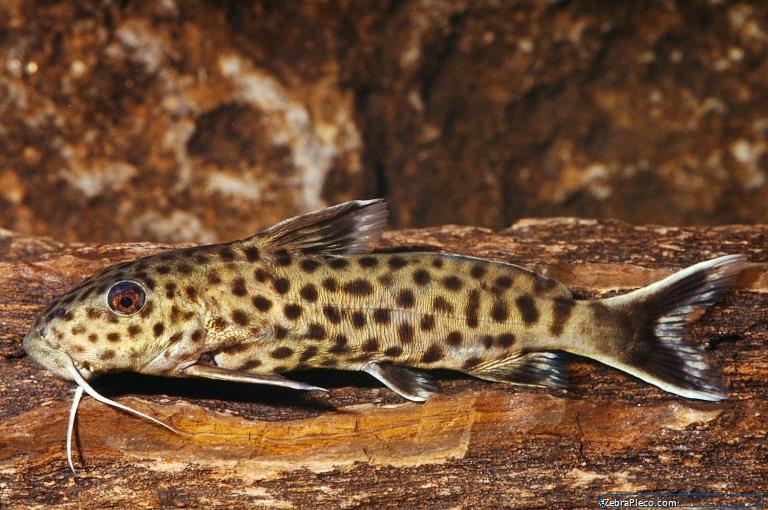
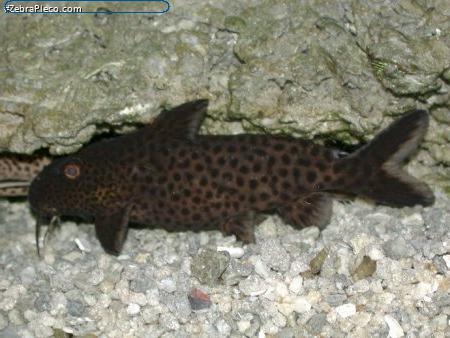
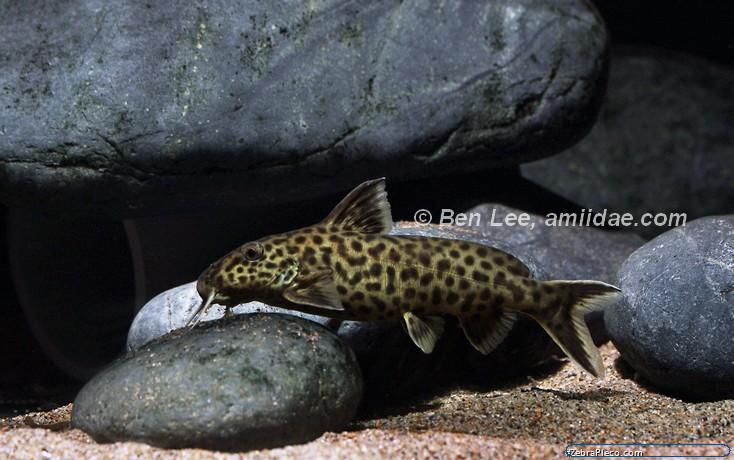
Mouth wide, hence the original name of Synodontis eurystomus, which means ''wide mouth''. Cusp on dorsal edge of humeral process. Adult males are a chocolate brown with numerous black spots. Dull white edging on posterior edges of fins. Barbels short. Juveniles have a lighter coloration and somewhat brighter fin edging.
Sexual Dimorphism (Sexing)
Males are larger and more robust than females. Can be sexed by genital papilla, as per other Synodontis spp.
General Remarks
Nomen novum for Synodontis eurystomus Matthes, 1959, preoccupied by Synodontis eurystomus Pfeffer, 1889. Although the type specimens are from Burundian waters, the species appears to be widely distributed around the lake, with some regional variation in appearance. Schraml [DATZ, 2003] reports possible S. polli variant from Lake Mweru.
Taxonomy, Synonyms & Etymology
Classification history, linguistic derivations and variant forms
Synonyms
Synodontis eurystomus, Synodontis ilebrevis
Pronunciation
sin oh don tiss - poll eye
Etymology
According to Cuvier, Synodontis is an "ancient name for an undetermined fish from the Nile". It is not derived, as often reported, from syn-, together and odous, tooth, presumed etymology of the lizardfish genus Synodus and refers to the closely-spaced lower jaw teeth of both genera. Specifically named after Max Poll, a Belgian ichthyologist who worked extensively from fish from Lake Tanganyika and the Congo drainage.
There are 6 other speciesAphyosemion polli
Chrysichthys polli
Ctenochromis polli
Microsynodontis polli
Oxylapia polli
Tropheus polli with this specific name.
Literature & Resources
Scientific publications, external links and citation tools
Description Reference
Cybium 3e série. Bulletin de la Société Française d'Ichtyologie v. 6 (no. 2), pp 48.
External Databases
Related Searches