PAGE_HEADER
Ancistrus sp. (L530)
Image Showcase
Photographs, diagnostic angles and morphological variants
Community & Keeper Tally
Member interactions, breeding records and forum mentions
Aquarium Care & Husbandry
Dietary requirements, tank setup, compatibility and breeding
Feeding & Diet
Omnivorous Aufwuchs grazer with a preference for vegetable tablets, spirulina, and blanched vegetables alongside bogwood. [View Member Food Stats]
Aquarium Furniture & Decor
Soft sand, leaf litter, bogwood roots, and clay breeding caves.
Compatibility & Suggested Tankmates
Peaceful species well-suited to blackwater community aquaria with gentle tankmates.
Tankmates: Appropriate with most community fish that aren't overly big or aggressive.
Breeding Notes
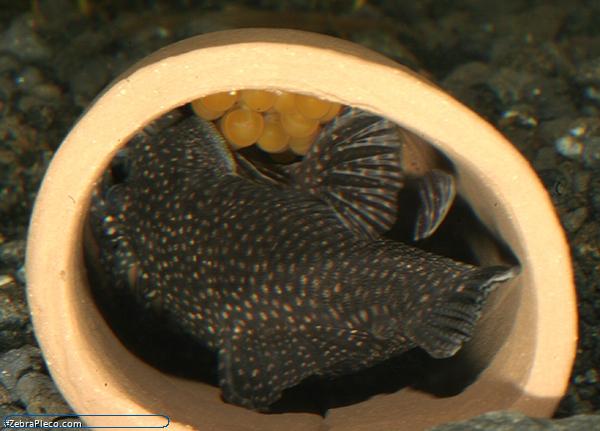
Bred in soft water (conductivity < 400 µS/cm, pH 6.0–6.5, 25–27 °C). Young breeding pairs initially produce 10–20 fry per clutch, later yielding 50–60 fry. Fry grow slowly, developing white spots after a few weeks.
Habitat & Water Parameters
Natural distribution, biotope water conditions and temperature ranges
Geographic Distribution
Northern Brazil: Rio Negro drainage basin; exported via Manaus.
Amazon, Middle Amazon (Solimoes), Negro, Middle Negro (click on these areas to find other species found there)
Amazon, Middle Amazon (Solimoes), Negro (click on these areas to find other species found there)
Login to view the map.
Species Description & Identification
Morphology, diagnostic traits and sexual dimorphism
Identification
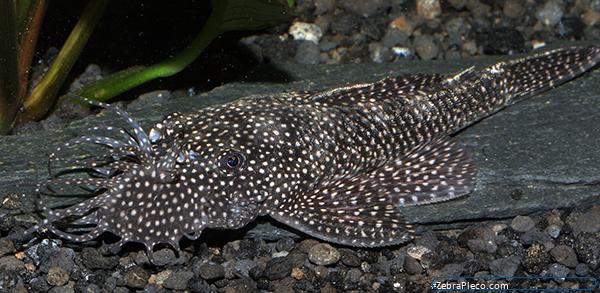
Mature males and sometimes females have soft tentacles (bushy fleshy growths) on the snout - this is unique to the genus Ancistrus.
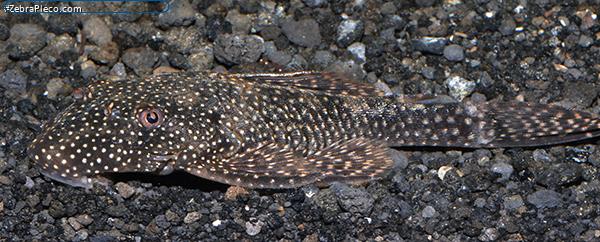
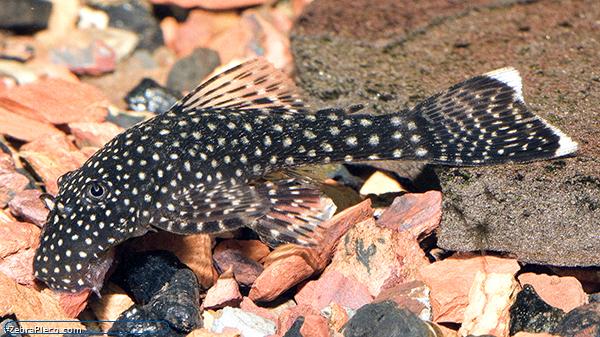
Slender body profile. Deep black body and fins densely covered with bright white spots, creating stark contrast particularly across the fin rays. White spots are also present on the tentacles of males. Juveniles possess a white margin on the caudal fin which disappears with age.
Sexual Dimorphism (Sexing)
Males develop snout tentacles that display the distinctive white spotting pattern.
General Remarks
Occasionally imported from the Rio Negro alongside other species, but predominantly established in the hobby through captive breeding. A smaller aquarium with soft, slightly acidic water is sufficient.
Taxonomy, Synonyms & Etymology
Classification history, linguistic derivations and variant forms
Pronunciation
an SISS truss
Etymology
The name Ancistrus is derived from the Greek word agkistron, meaning hook, in reference to the interopercular odontodes that are hooked.
Literature & Resources
Scientific publications, external links and citation tools
Related Searches