PAGE_HEADER
Farlowella oxyrryncha (Kner, 1853)
Image Showcase
Photographs, diagnostic angles and morphological variants
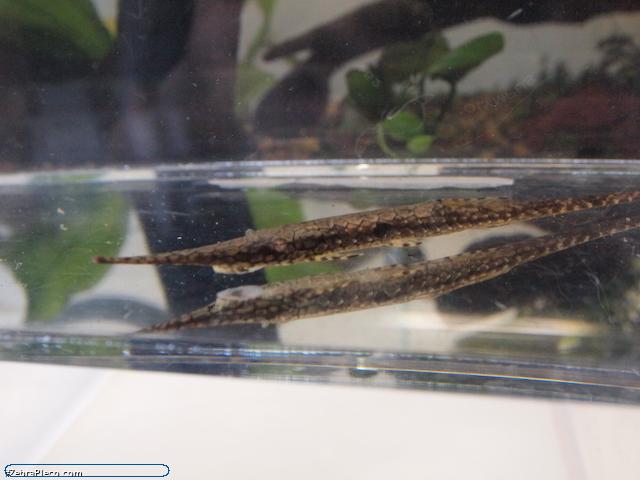
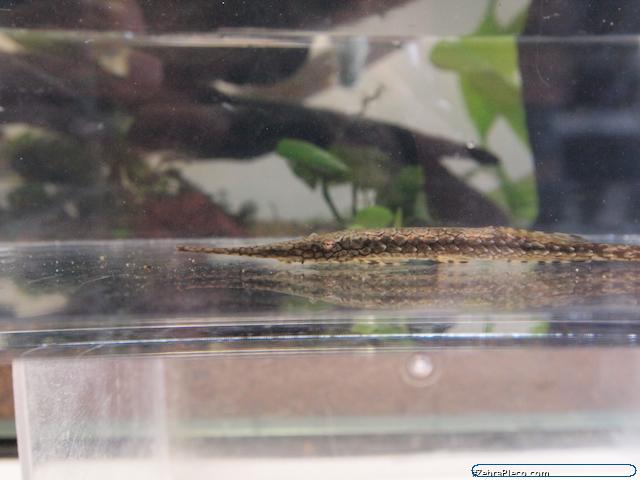
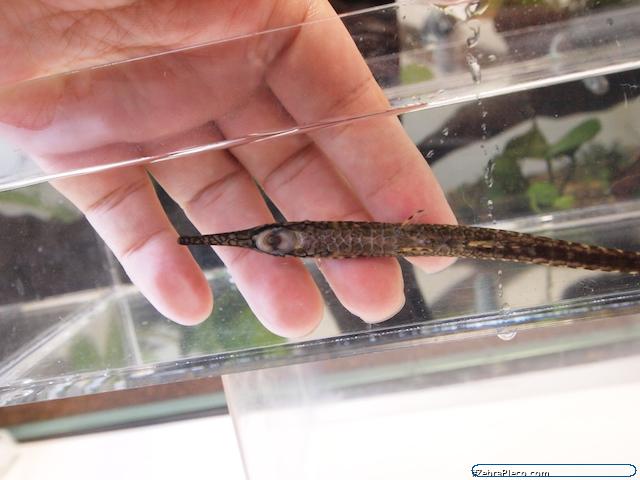
Community & Keeper Tally
Member interactions, breeding records and forum mentions
Aquarium Care & Husbandry
Dietary requirements, tank setup, compatibility and breeding
Compatibility & Suggested Tankmates
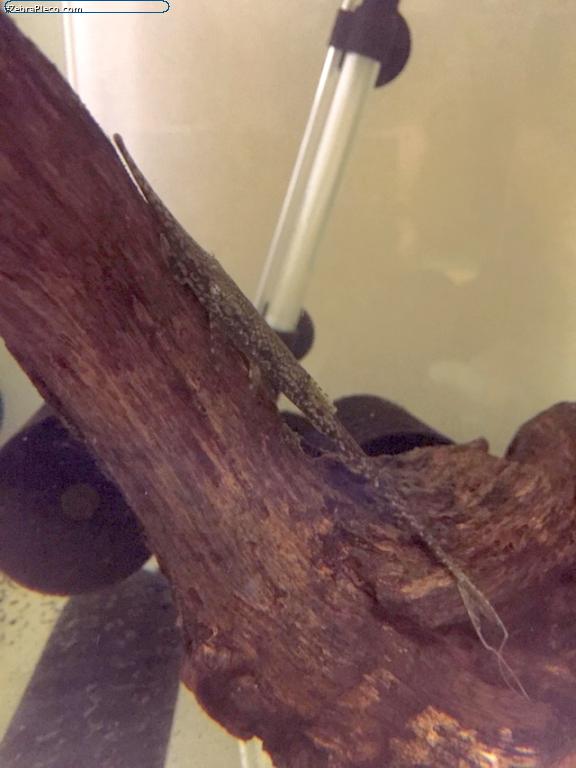
Tankmates: Smaller Tetras or Rasboras are suitably mannered - perhaps hatchetfish are best. Avoid fast or "nippy" fishes such as Danios or Barbs. Will do well with Corydoras catfish, but larger catfish or cichlids are to be avoided.
Breeding Notes
Unreported in the aquarium.
Habitat & Water Parameters
Natural distribution, biotope water conditions and temperature ranges
Geographic Distribution
South America: Amazon and Orinoco River basins; coastal rivers of northeastern Brazil.
Amazon (click on these areas to find other species found there)
Amazon, Middle Amazon (Solimoes), Madeira, Mamoré (click on these areas to find other species found there)
Southern Atlantic Draining Rivers, North East Brazil Coastal Rivers (click on these areas to find other species found there)
Orinoco (click on these areas to find other species found there)
Login to view the map.
Species Description & Identification
Morphology, diagnostic traits and sexual dimorphism
Identification
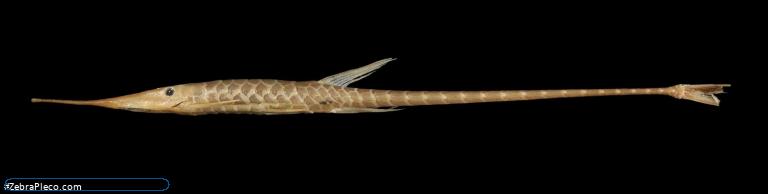
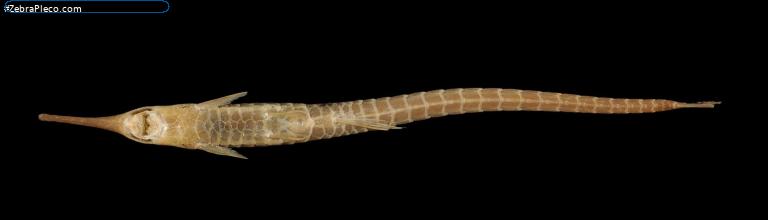
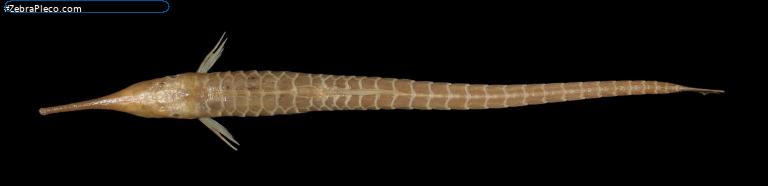
The genus Farlowella is distinguished by its elongate and slender body with a pronounced rostrum (of variable length), having the dorsal fin located near the middle of the body and only slightly anterior to the anal fin (vs. having the dorsal fin conspicuously closer to the head than the tail, and significantly further anterior than the anal fin), and having a brownish color with two lateral dark stripes beginning at the tip of the rostrum, passing through the eyes and ending at the tail. A key to the genus can be found here.
General Remarks
Visually, F. oxyrryncha is not reliably diagnosable from F. hahni. On average, F. oxyrryncha and has lower ratios of snout-mouth length to dorsal fin spine length (0.75-1.27 vs. 1.06-1.36) and of snout-mouth length to anal fin spine length (0.79-1.44 vs. 1.32-1.50) than does F. hahni. However, the two species occur far apart geographically, so knowledge of the collection location is critical for confirming these identifications.
Taxonomy, Synonyms & Etymology
Classification history, linguistic derivations and variant forms
Synonyms
Acestra gladius, Acestra oxyrryncha, Farlowella gladius
Pronunciation
far LOW ella
Etymology
This genus is named after W. G. Farlow, from Harvard University.
Literature & Resources
Scientific publications, external links and citation tools
Description Reference
Denkschriften der Kaiserlichen Akademie der Wissenschaften in Wien, Mathematisch-Naturwissenschaftliche Classe. v. 6, pp 95 [31], Pl. 1 (fig. 7), Pl. 8 (fig. 2).
External Databases
Related Searches