PAGE_HEADER
Batrochoglanis mathisoni Fernández-Yépez, 1972
Image Showcase
Photographs, diagnostic angles and morphological variants
Community & Keeper Tally
Member interactions, breeding records and forum mentions
Aquarium Care & Husbandry
Dietary requirements, tank setup, compatibility and breeding
Feeding & Diet
In the wild their diet largely consists of macro invertebrates, crustaceans and small fish. [View Member Food Stats]
Aquarium Furniture & Decor
In the wild they are known from clearwater piedmont and lowland streams of moderate flow. They can be found hiding under rocks and logs.
Breeding Notes
Unreported in the aquarium.
Habitat & Water Parameters
Natural distribution, biotope water conditions and temperature ranges
Geographic Distribution
Venezuela; Aroa, Yaracuy and Tocuyo drainages.
Venezuela Caribbean Waters, Aroa (click on these areas to find other species found there)
Venezuela Caribbean Waters, Tocuyo (click on these areas to find other species found there)
Venezuela Caribbean Waters, Yaracuy (click on these areas to find other species found there)
Login to view the map.
Species Description & Identification
Morphology, diagnostic traits and sexual dimorphism
Identification
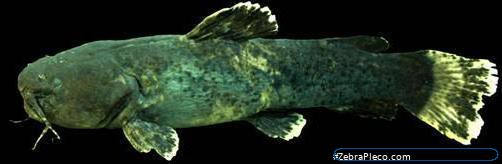
Head depressed, large, wider than long, mouth wide, eyes small. Body short, robust, caudal peduncle compressed. Body black or dark brown with light band from dorsal fin onto pectoral fins and scattered irregular black spots, ventrum light. All fin margins whitish. Caudal fin cream with diffuse, black subterminal band. Maxillary barbels dark, mental barbels whitish. Juveniles have more obvious white spots.
General Remarks
Thought to be extremely rare in the wild with only four specimens found during five years of sampling.
Taxonomy, Synonyms & Etymology
Classification history, linguistic derivations and variant forms
No recorded synonyms or etymology details.
Literature & Resources
Scientific publications, external links and citation tools
Description Reference
Análisis ictiológico del complejo hidrográfico (04) "Río Yaracuy".
External Databases
Related Searches