PAGE_HEADER
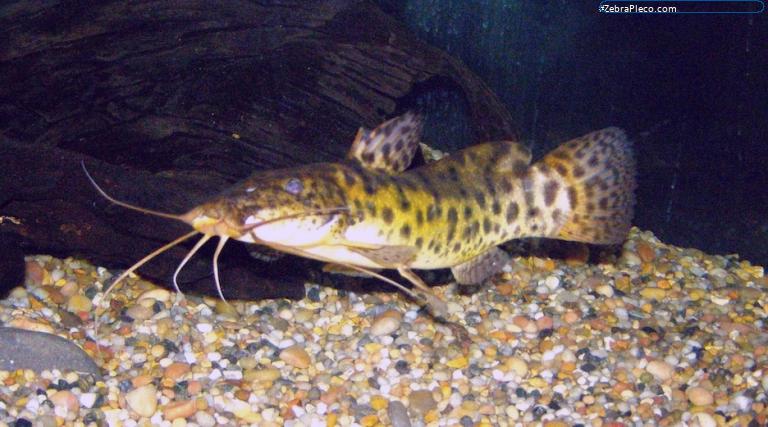
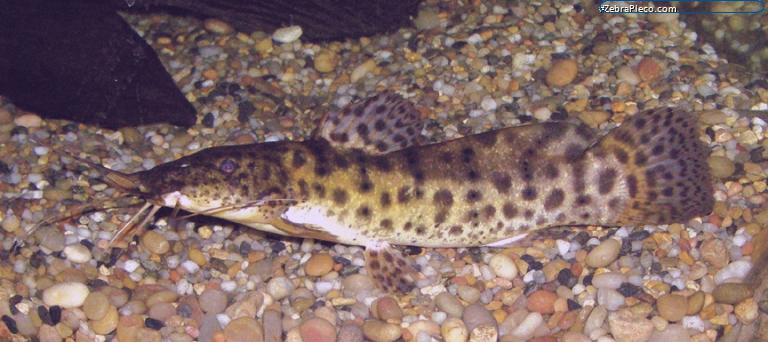
Parauchenoglanis ngamensis (Boulenger, 1911)
Image Showcase
Photographs, diagnostic angles and morphological variants
Community & Keeper Tally
Member interactions, breeding records and forum mentions
Aquarium Care & Husbandry
Dietary requirements, tank setup, compatibility and breeding
Feeding & Diet
In its natural habitat feeds on small fishes and invertebrates, such as snails, shrimp and insects. [View Member Food Stats]
Aquarium Furniture & Decor
In nature, prefers rocky habitats or marginal vegetation in slow flowing rivers and lagoons, often sheltering under trees.
Breeding Notes
Produces relatively few large eggs suggesting parental care, but no details are known.
Habitat & Water Parameters
Natural distribution, biotope water conditions and temperature ranges
Geographic Distribution
Africa: Okavango, upper Zambesi and Kasai River system.
African Waters, Okavango (Cubango) (click on these areas to find other species found there)
African Waters, Zambesi, Upper Zambesi (click on these areas to find other species found there)
Login to view the map.
Species Description & Identification
Morphology, diagnostic traits and sexual dimorphism
Identification
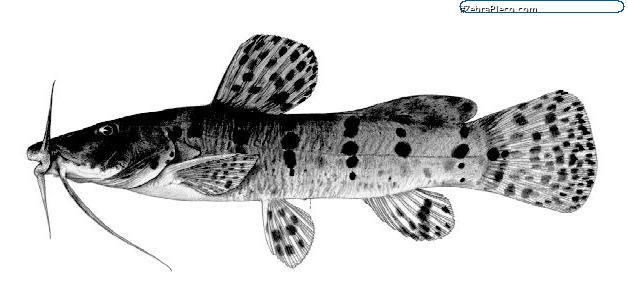
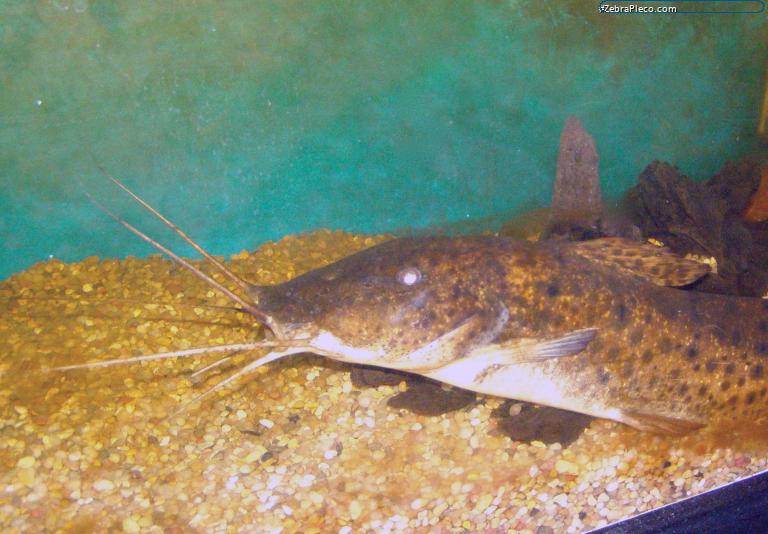
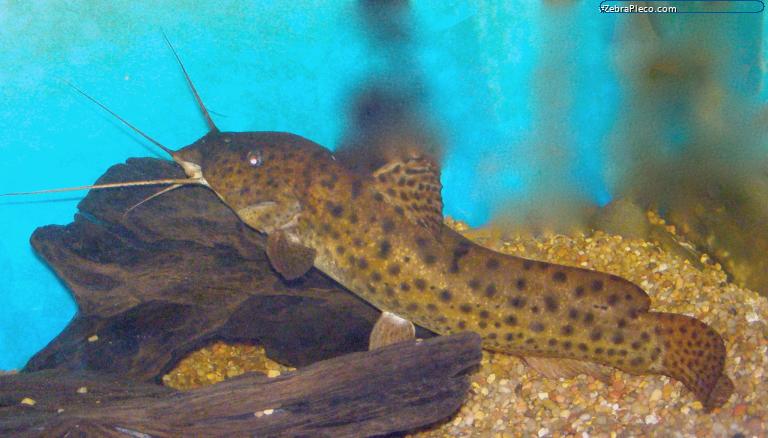
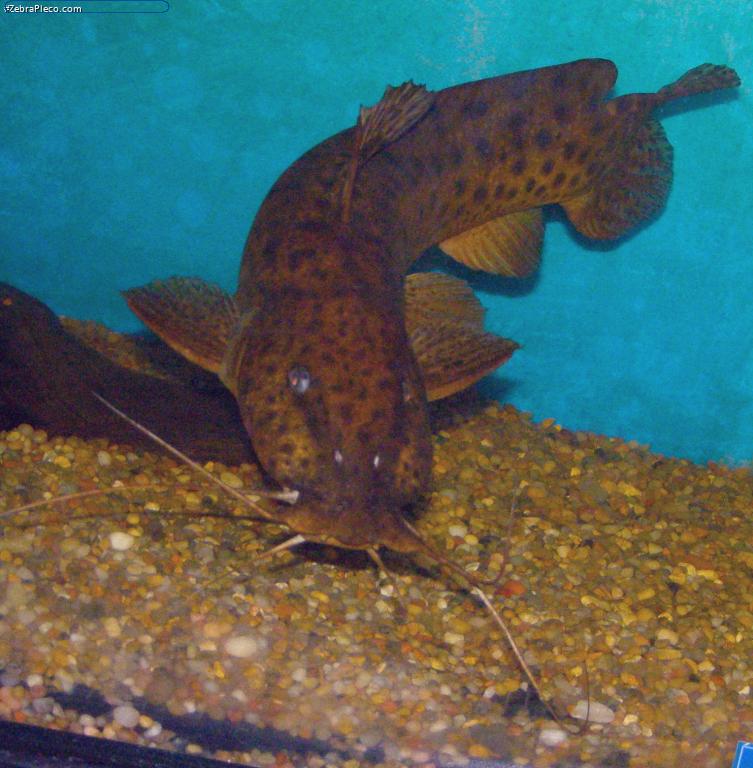
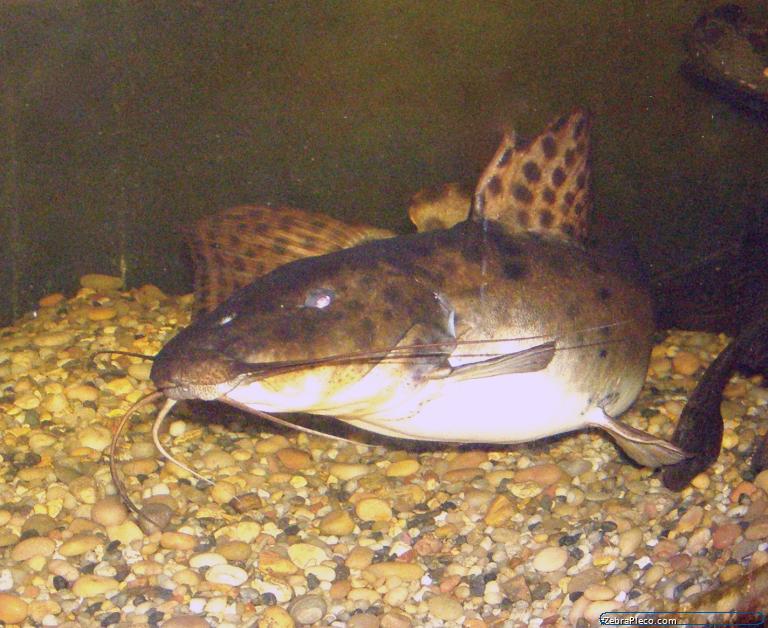
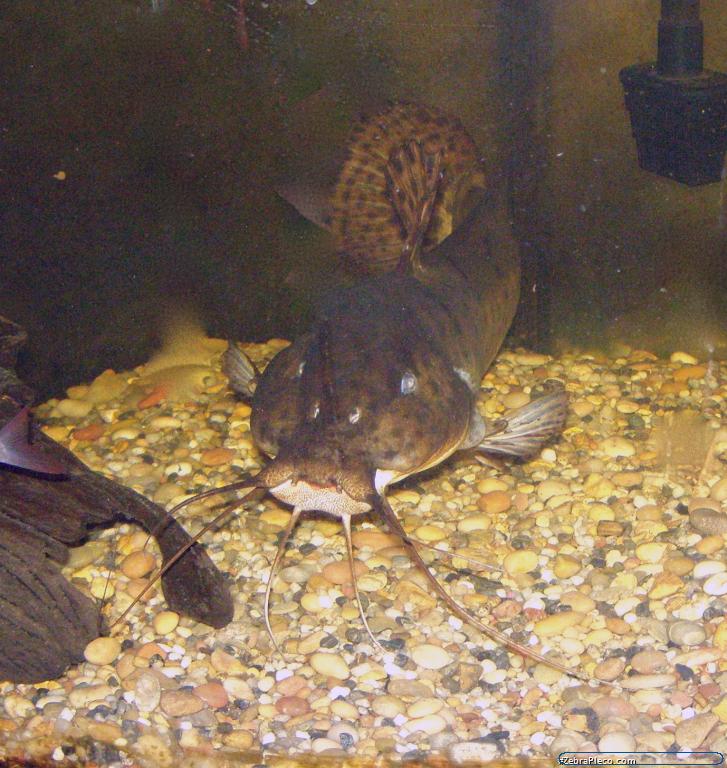
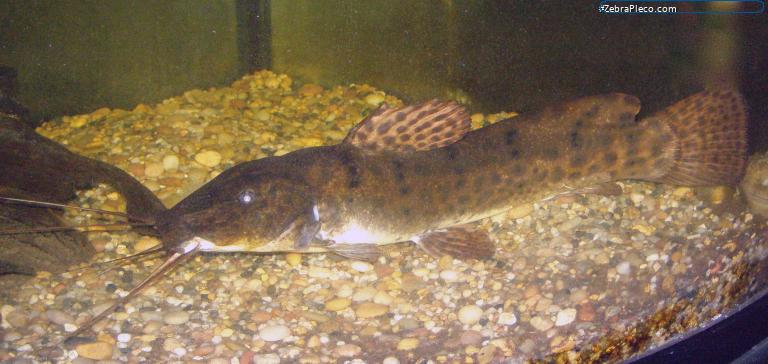
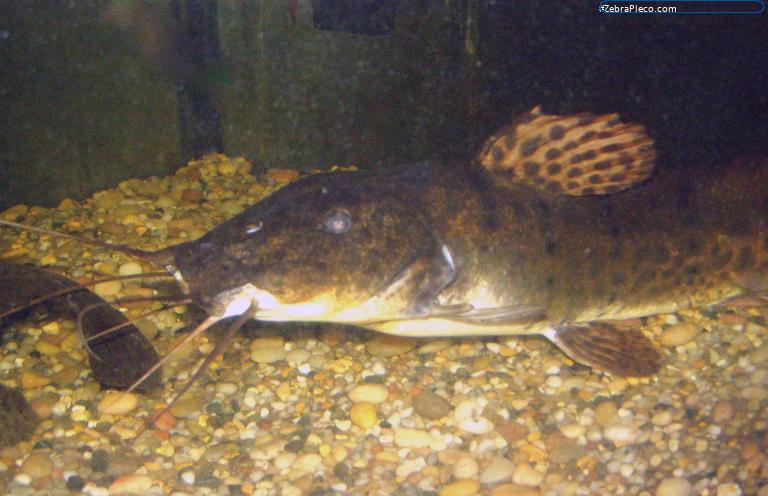
In all Parauchenoglanis the small eyes are not covered by a transparent skin (having a free border). The first dorsal spine is small, the second large and strong followed by seven branched fin rays (rarely eight). Pectoral fin with one spine and 7-8 branched rays, pelvic fin with six rays (of which five are branched), anal fin with 6-10 branched rays. Edge of caudal is straight or rounded.
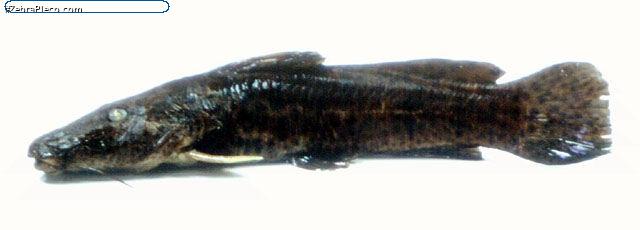
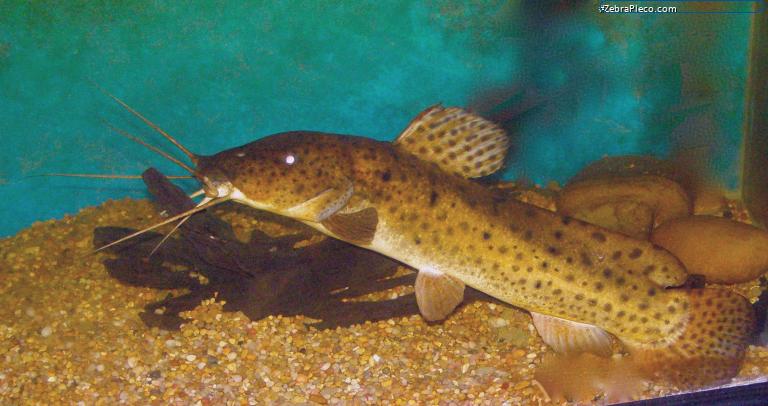
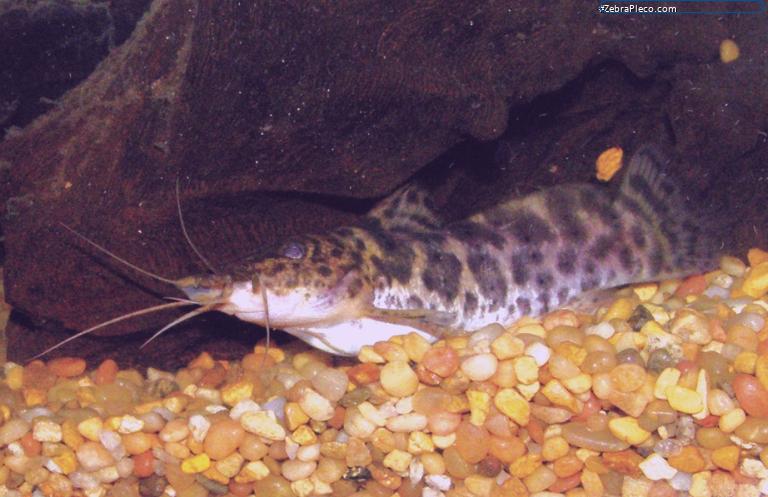
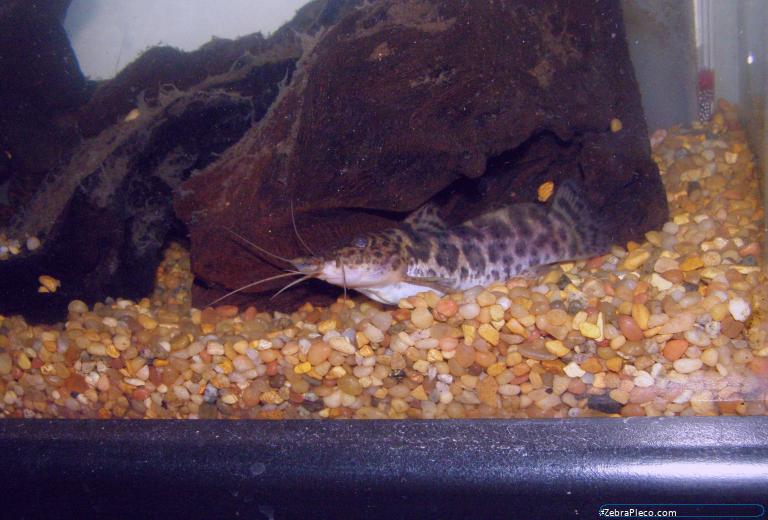
The overall colour of this species varies considerably from bright to virtually blackish brown. Purple hue occasionally present. Belly brown to whitish. Zambezi And Okavango specimens are characterised by five to seven vertical rows of blackish spots on background of lighter spots all over body. Kasai specimens typically lack background pattern, though intermediate forms may be found.
General Remarks
See also Freshwater Fishes of Southern Africa; Skelton. Geerinckx T., Adriaens D., Teugels G.G. & Verraes W., 2004. A systematic revision of the African catfish genus Parauchenoglanis Boulenger, 1911 (Siluriformes: Claroteidae). Journal of Natural History, 38 (6): 775-803. Geerinckx T., Risch L., Vreven E., Adriaens D. & Teugels G.G., 2007. Claroteidae. In Poissons d’eaux douces et saumâtres de Basse Guinée, ouest de l’Afrique Centrale – The fresh and brackish water fishes of Lower Guinea, West Central Africa (Stiassny M.L.J., Teugels G.G. & Hopkins C.D., eds). RMCA (Tervuren) & IRD (Paris), p. 586-629.
Taxonomy, Synonyms & Etymology
Classification history, linguistic derivations and variant forms
Synonyms
Auchenoglanis ngamensis
Etymology
Parauchenoglanis: The Greek prefix para means near; in reference to the resemblance to Auchenoglanis.
There is 1 other speciesClarias ngamensis with this specific name.
Literature & Resources
Scientific publications, external links and citation tools
Description Reference
Catalogue of the fresh-water fishes of Africa v. 2, pp 371, Fig. 287.
External Databases
Related Searches