PAGE_HEADER
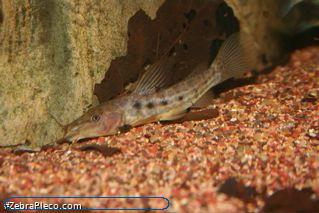
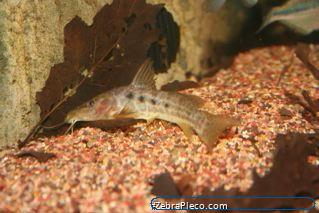
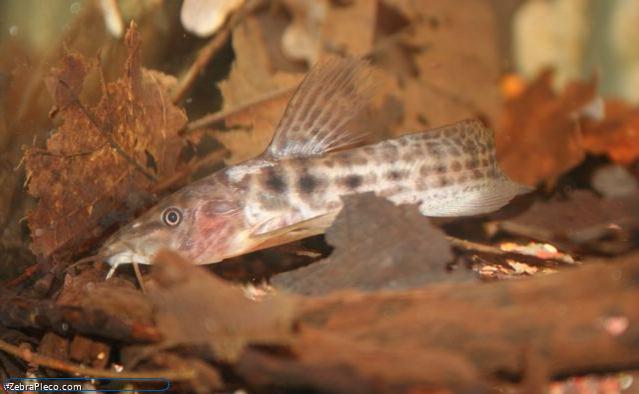
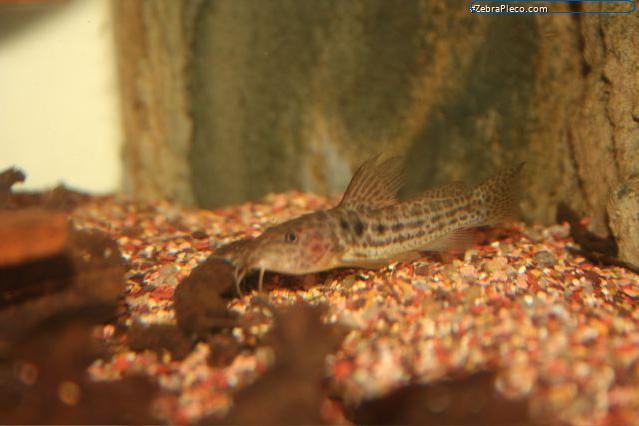
Parauchenoglanis altipinnis (Boulenger, 1911)
Image Showcase
Photographs, diagnostic angles and morphological variants
Community & Keeper Tally
Member interactions, breeding records and forum mentions
Aquarium Care & Husbandry
Dietary requirements, tank setup, compatibility and breeding
Feeding & Diet
In nature, preys on insect larvae, crustaceans, and small fishes - not a fussy eater in the aquarium and will eat most foods. [View Member Food Stats]
Breeding Notes
No member of this genus has been bred in the aquarium.
Habitat & Water Parameters
Natural distribution, biotope water conditions and temperature ranges
Geographic Distribution
Africa: South Cameroon.
African Waters, Congo, Sangha, Dja (Ngoko) (click on these areas to find other species found there)
African Waters, Cameroon waters, Nyong (click on these areas to find other species found there)
Login to view the map.
Species Description & Identification
Morphology, diagnostic traits and sexual dimorphism
Identification
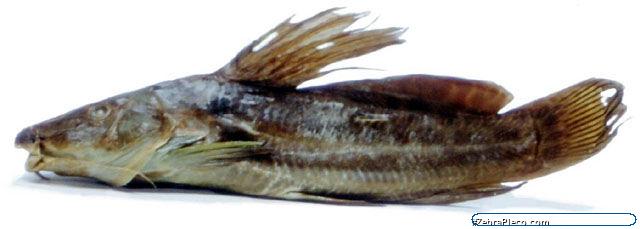
In all Parauchenoglanis the small eyes are not covered by a transparent skin (having a free border). The first dorsal spine is small, the second large and strong followed by seven branched fin rays (rarely eight). Pectoral fin with one spine and 7-8 branched rays, pelvic fin with six rays (of which five are branched), anal fin with 6-10 branched rays. Edge of caudal is straight or rounded.
This species overall pigmentation ranges from greyish to very dark brown. Barely obvious pigmentation pattern on flank generally consisting of one horizontal row of one to six large round spots, becoming more and more faint towards the rear.Belly brown to whitish.Dorsal portion of body,as well as adipose and caudal fins sometimes have some faint reticulate pattern apparent. Other fins uniformly coloured.Dorsal fin long to extremely long when compared to others in its genus. Large adipose fin comparable to P. punctatus
General Remarks
See also Geerinckx T., Adriaens D., Teugels G.G. & Verraes W., 2004. A systematic revision of the African catfish genus Parauchenoglanis Boulenger, 1911 (Siluriformes: Claroteidae). Geerinckx T., Risch L., Vreven E., Adriaens D. & Teugels G.G., 2007. Claroteidae. In Poissons d’eaux douces et saumâtres de Basse Guinée, ouest de l’Afrique Centrale – The fresh and brackish water fishes of Lower Guinea, West Central Africa (Stiassny M.L.J., Teugels G.G. & Hopkins C.D., eds). RMCA (Tervuren) & IRD (Paris), p. 586-629.
Taxonomy, Synonyms & Etymology
Classification history, linguistic derivations and variant forms
Synonyms
Auchenoglanis altipinnis
Etymology
Parauchenoglanis: The Greek prefix para means near; in reference to the resemblance to Auchenoglanis.
There are 3 other speciesMyleus altipinnis
Pimelodella altipinnis
Rineloricaria altipinnis with this specific name.
Literature & Resources
Scientific publications, external links and citation tools
Description Reference
Catalogue of the fresh-water fishes of Africa v. 2, pp 372, Fig. 288.
External Databases
Related Searches