PAGE_HEADER
Image Showcase
Photographs, diagnostic angles and morphological variants
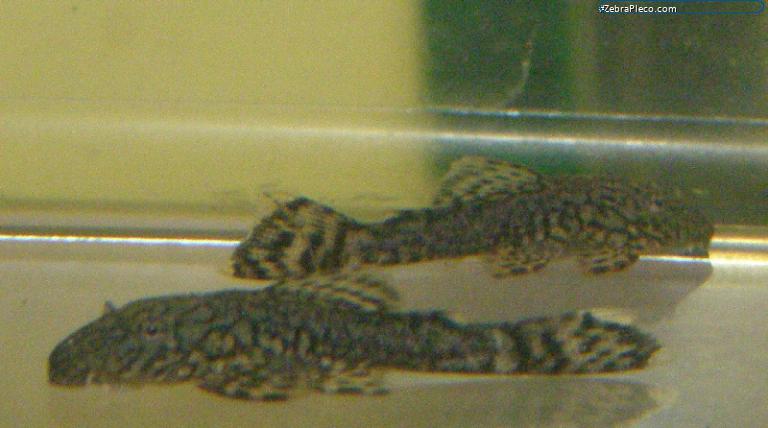
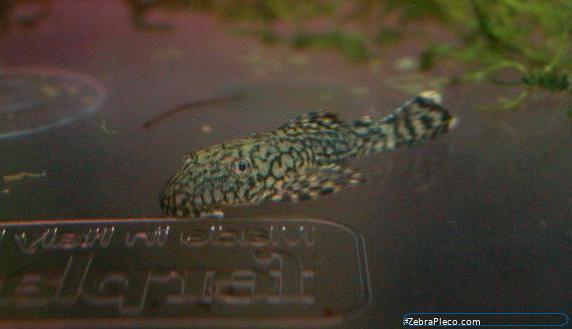
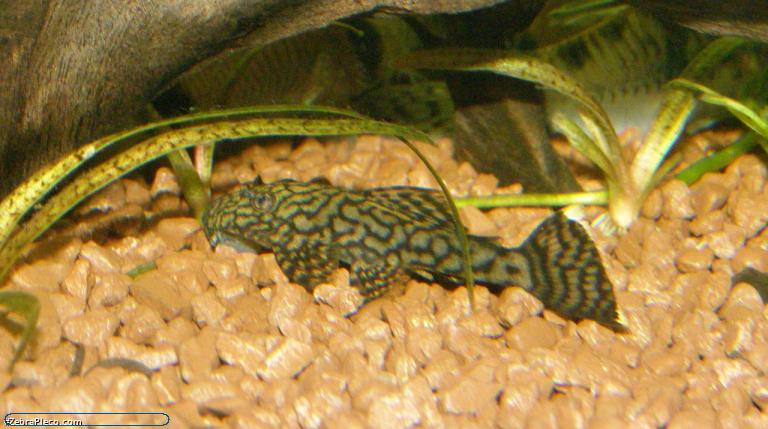
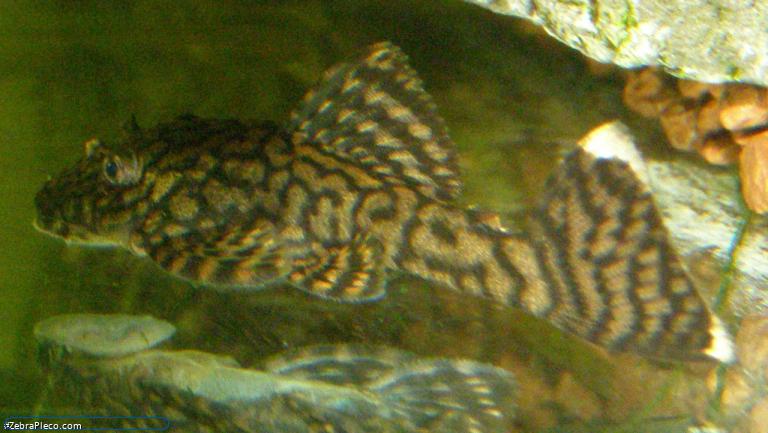
Community & Keeper Tally
Member interactions, breeding records and forum mentions
Aquarium Care & Husbandry
Dietary requirements, tank setup, compatibility and breeding
Feeding & Diet
Omnivorous Aufwuchs grazer requiring natural bogwood for dietary roughage. [View Member Food Stats]
Aquarium Furniture & Decor
Soft sand or fine gravel substrate, smooth river stones, single-ended breeding caves, and natural bogwood.
Compatibility & Suggested Tankmates
Peaceful community resident with rheophilic tetras, dwarf cichlids, and other loricariids.
Tankmates: Appropriate with most community fish that aren't overly big or aggressive.
Breeding Notes
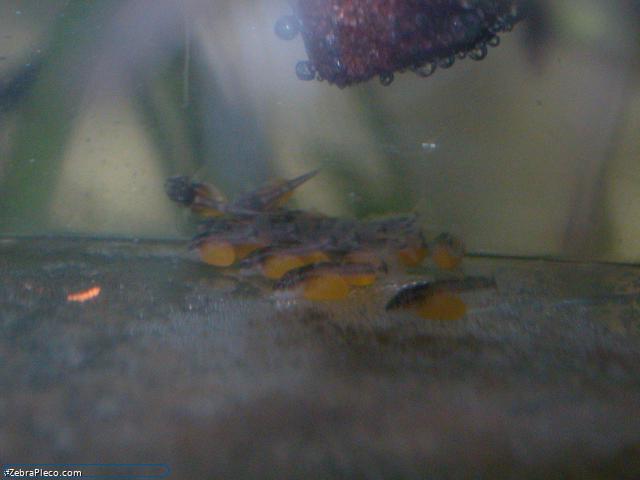
Spawns in caves after significant water changes. Bred in a 200-litre aquarium (pH 6.5–7.3, conductivity 300–450 µS/cm, 28–29 °C). Sexual maturity is reached at 6–7 cm SL. First clutches contain 40–50 eggs, with larger numbers produced by older specimens.
Habitat & Water Parameters
Natural distribution, biotope water conditions and temperature ranges
Geographic Distribution
Northeastern Brazil: Rio Tocantins drainage basin.
Amazon, Lower Amazon, Tocantins, Lower Tocantins (click on these areas to find other species found there)
Amazon, Lower Amazon, Tocantins (click on these areas to find other species found there)
Login to view the map.
Species Description & Identification
Morphology, diagnostic traits and sexual dimorphism
Identification
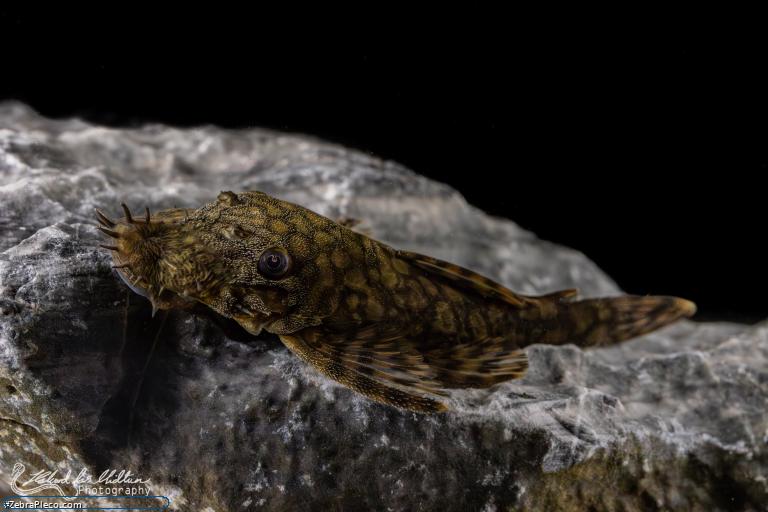
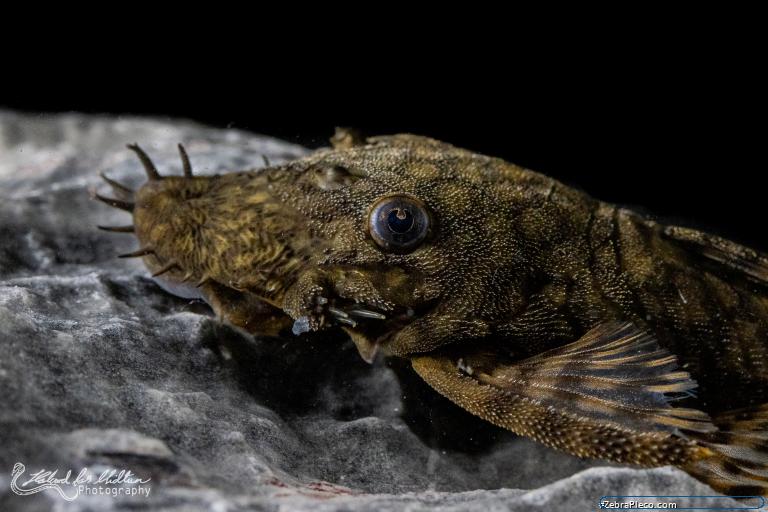
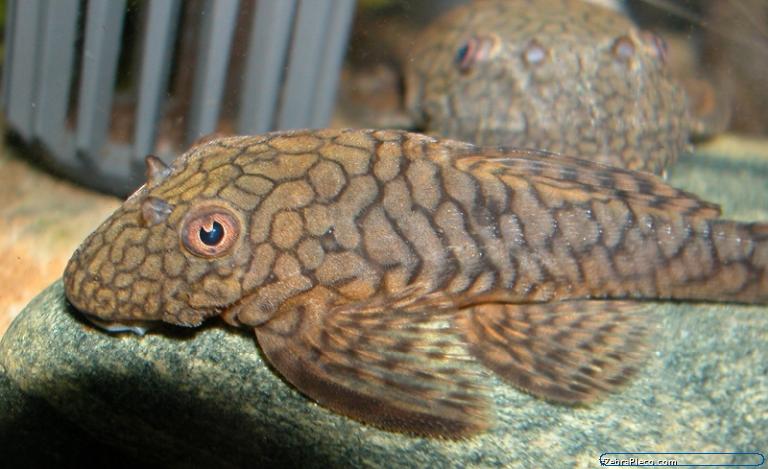
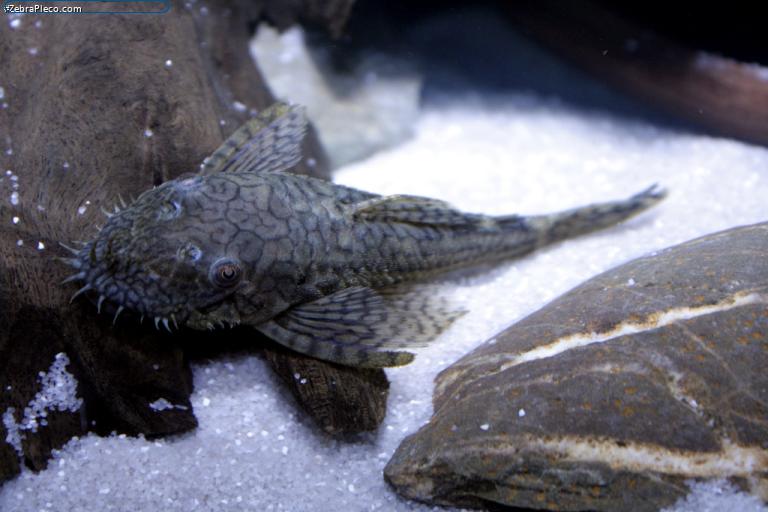
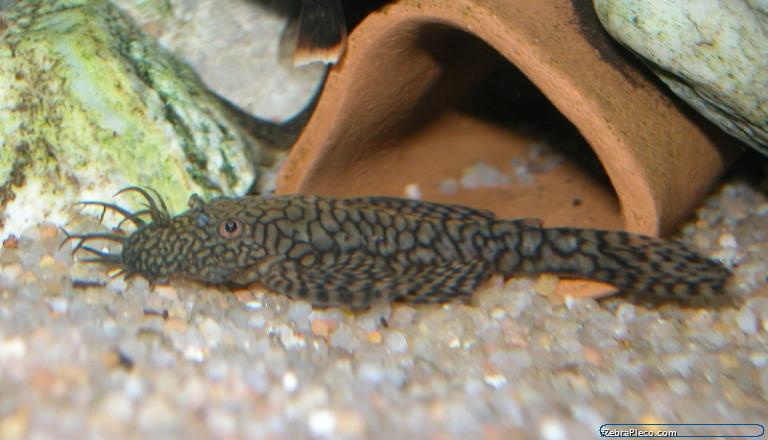
Mature males and sometimes females have soft tentacles (bushy fleshy growths) on the snout - this is unique to the genus Ancistrus.
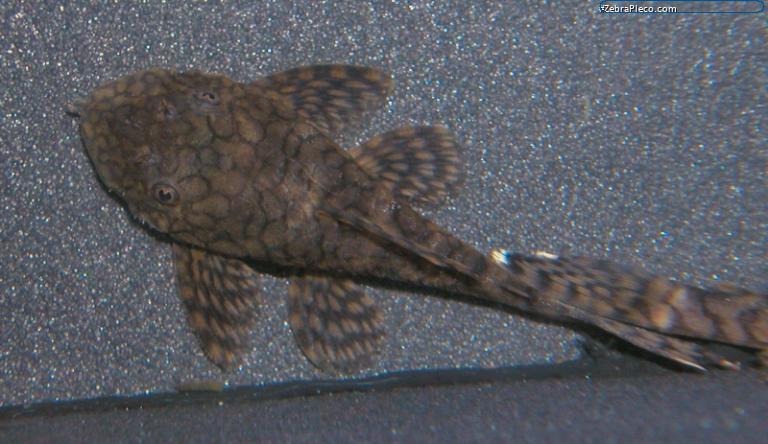
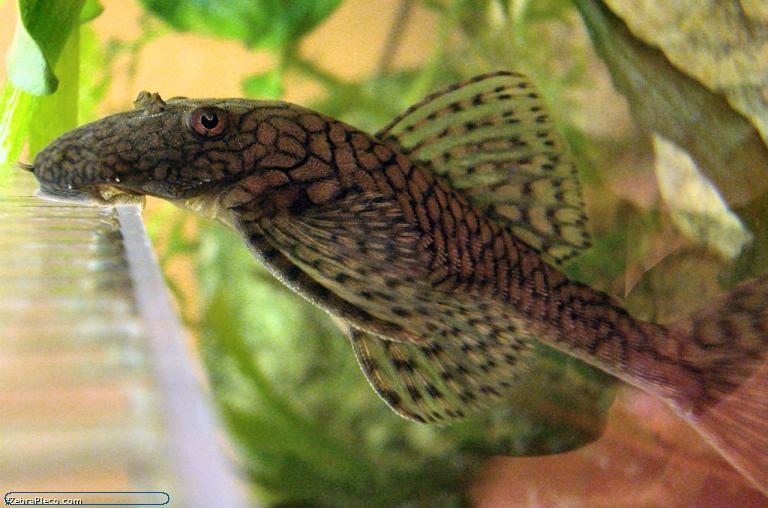
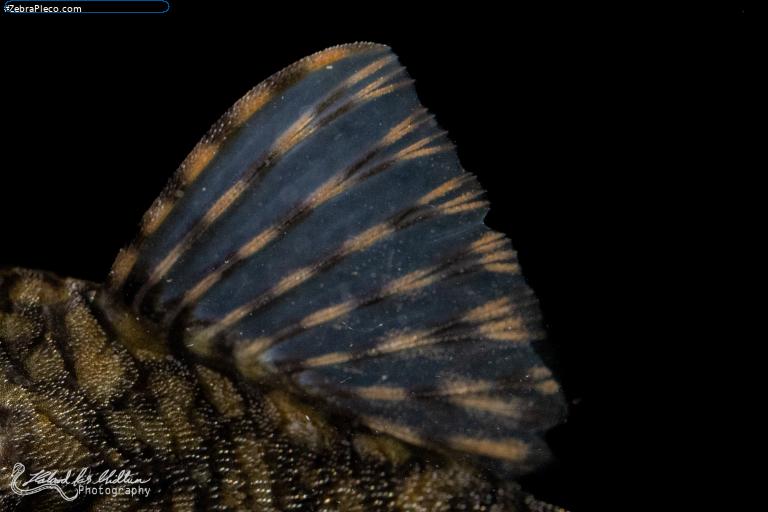
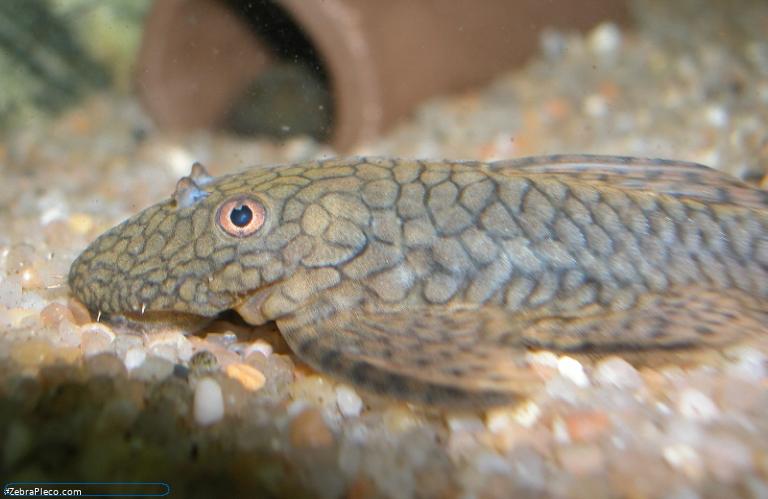
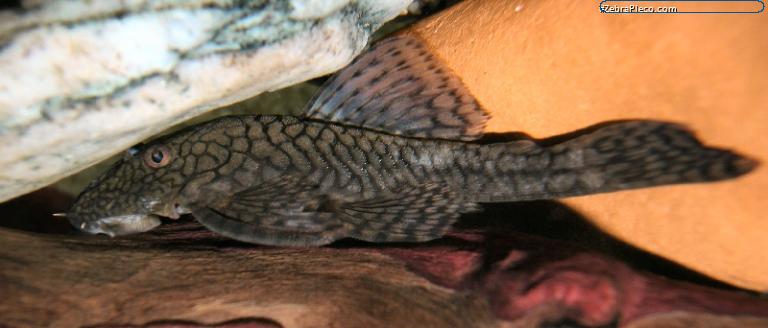
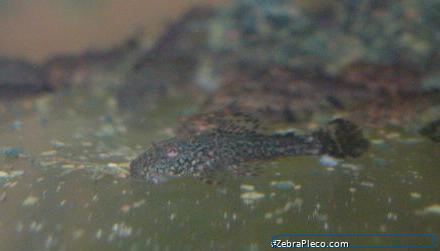
Differs from Ancistrus sp. (L156) from the same river system by its grey-brown, broader and more flattened body, and a fine black vermiculate pattern on the head that becomes coarser towards the caudal peduncle. Fins feature wavy dark lines.
Sexual Dimorphism (Sexing)
Males develop medium-length, relatively fine, partly branched tentacles on the head and snout.
General Remarks
Well suited for small to medium-sized aquariums with warm, oxygen-rich water.
Taxonomy, Synonyms & Etymology
Classification history, linguistic derivations and variant forms
Pronunciation
an SISS truss
Etymology
The name Ancistrus is derived from the Greek word agkistron, meaning hook, in reference to the interopercular odontodes that are hooked.
Literature & Resources
Scientific publications, external links and citation tools
Related Searches