PAGE_HEADER
Chaetostoma anomalum Regan, 1903
Image Showcase
Photographs, diagnostic angles and morphological variants
Community & Keeper Tally
Member interactions, breeding records and forum mentions
Aquarium Care & Husbandry
Dietary requirements, tank setup, compatibility and breeding
Aquarium Furniture & Decor
Well rounded stones stacked to replicate a river bottom and provide caves.
Breeding Notes
Unreported in the aquarium.
Habitat & Water Parameters
Natural distribution, biotope water conditions and temperature ranges
Geographic Distribution
South America: Lake Maracaibo basin, upper Chama, Capazon and Escalante River basins in Venezuela.
Lake Maracaibo, Capazon (click on these areas to find other species found there)
Lake Maracaibo, Chama (click on these areas to find other species found there)
Lake Maracaibo, Escalante (click on these areas to find other species found there)
Login to view the map.
Species Description & Identification
Morphology, diagnostic traits and sexual dimorphism
Identification
The genus Chaetostoma is not straightforward to identify, but as a general rule, the species has spines behind the gill-cover (interopercular odontodes), no plates on the abdomen, and aside from C. platyrhynchus also lack plates on the snout edge. Different from Ancistrus by not having fleshy tentacles on the snout.
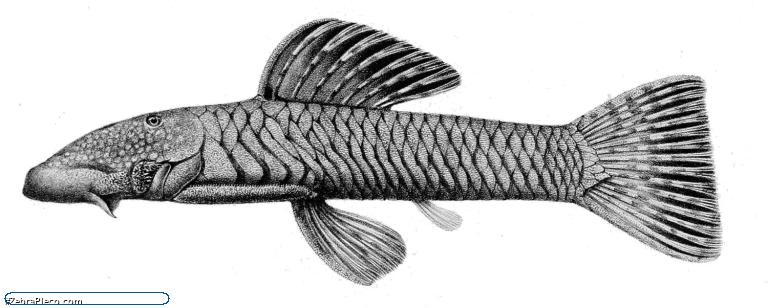
From Regan (1903): Head much depressed, without distinct ridges or prominences. Eye very small, its diameter 8 - 12 times in the length of head. Dorsal fin longer than high, the anterior rays scarcely longer than the posterior. Adipose fin usually rudimentary or absent. Pectoral spine barely reaching the root of the ventral. Caudal obliquely truncated. Scutes of body not keeled, with short marginal spines, about 26 in a longitudinal series. Olive-brown above with light spots, with light spots in some specimens; dorsal and caudal blackish, sometimes barred with light spots. Most similar to Chaetostoma microps.
Sexual Dimorphism (Sexing)
Males develop cheek bristles and stay smaller and narrower than the more robust females.
Taxonomy, Synonyms & Etymology
Classification history, linguistic derivations and variant forms
Synonyms
Chaetostomus anomalus
Pronunciation
KATE oh STOW mah
Etymology
Greek, chaite = hair + Greek, stoma = mouth.
Literature & Resources
Scientific publications, external links and citation tools
Literature & References
External Databases
Related Searches